




Regency Period Table Clock
A regency period table clock brings precise mechanics and architectural timber into the room, built to mark the hours with formal elegance.
Regency Period Table Clock
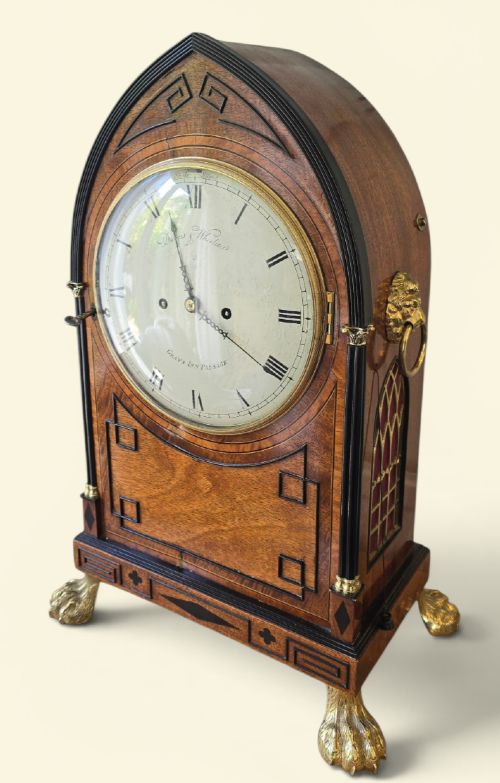
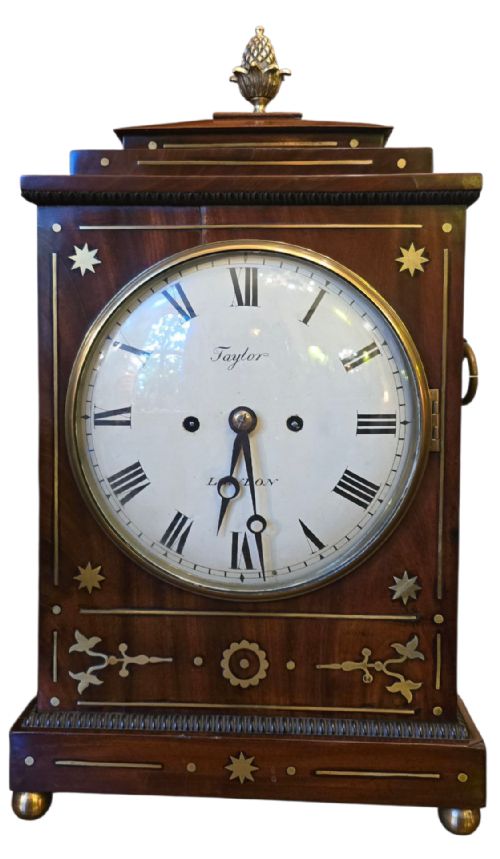
A regency period table clock encompasses mantel and bracket clocks originating from the Regency, George IV, and broader Georgian eras. You are most likely to meet mahogany or rosewood bracket clocks alongside gilt bronze mantel clocks from the nineteenth century.
Makers housed these movements in architectural wooden cases, lancet-top designs, and striking figural arrangements featuring goats, palm trees, and cherubs. The objects function as both timekeepers and sculptural ornaments designed for prominent placement on tables and mantelpieces.
How They Were Made
Craftsmen built timber cases from dense woods such as mahogany, rosewood, and ebony, frequently embellishing them with intricate brass inlay and brass mounts. Ormolu and gilt bronze provided opulent metal framing for figural and architectural designs.
Mechanisms relied on fusee movements driven by chains, alongside verge and anchor escapements to regulate the beat. Enamel dials recorded the hours beneath protective glass covers set into the heavy cases.
Regency Period Table Clock Retail Price Guide 2026
Typical asking prices for regency period table clock among the pieces listed under this phrase on Sellingantiques today, from the lower quarter to the upper quarter. They describe what is for sale here now, not the wider market.
Listings feature mahogany, rosewood, and ebony timbers paired with gilt bronze, brass, and enamel.
What Varies in Quality
The refinement of the brass inlay and the crispness of the gilt bronze or ormolu cast mark the distinction between standard and superior examples. Artisans who shaped complex figural cases or architectural elements achieved a higher standard of decorative art.
The sophistication of the internal movement, particularly signed single chain fusee mechanisms by noted makers, separates utilitarian timepieces from masterworks. The choice of cabinet timber, from plain mahogany to figured rosewood with precise brass work, governs visual impact.
Desbois and Wheeler·William Hardy London·FB Adams London·Baetens London·Fatton Eleve De Breguet
The Regency Period Table Clock Glossary
- Bracket clock
- A portable clock originally designed to sit upon a wall bracket, though later placed on tables and mantelpieces. These house intricate mechanical movements within wooden cases.
- Fusee
- A conical pulley used in spring-driven clocks to equalise the torque of the mainspring as it unwinds. This mechanism ensures consistent force is delivered to the gear train.
- Ormolu
- Gilt bronze created by applying a high-carat gold and mercury amalgam to a bronze base and firing it to drive off the mercury. The technique yields a rich, durable golden surface.
- Verge escapement
- An early type of escapement mechanism that controls the release of power in a clock. It works in conjunction with a balance spring or balance wheel to govern the tick.
- Dial
- The face of the clock where hours and minutes are displayed, typically fashioned from white enamel with painted numerals. It sits behind a hinged glass bezel.
Regency Period Table Clock: Frequently Asked Questions
What is a fusee movement?
A fusee movement uses a conical drum and a cord or chain to regulate the power from the mainspring. This ingenious device ensures the clock receives even tension as the spring unwinds over several days.
Clocks featuring this mechanism maintain superior timekeeping accuracy compared to simpler spring-driven alternatives.
How do I wind the clock?
Winding requires a specialised key inserted into the winding square on the enamel dial. You turn it gently until you feel resistance, taking care not to overwind the mainspring.
Most examples listed require attention every eight days to maintain continuous operation.
Where should I place a bracket clock?
These clocks belong on sturdy surfaces like mantelpieces, sideboards, or dedicated wall brackets where vibrations are minimal. A stable, level foundation ensures the pendulum or balance wheel beats evenly.
Keep them away from direct sunlight and temperature fluctuations that might affect the wood and delicate metals.
How do I identify Regency style?
Regency style draws heavily on classical antiquity, incorporating architectural motifs, brass inlay, and formal symmetry. Cases often feature rich mahogany or rosewood paired with gilt bronze mounts.
Ornate figural elements depicting animals or mythological figures also mark this distinct nineteenth-century aesthetic.