


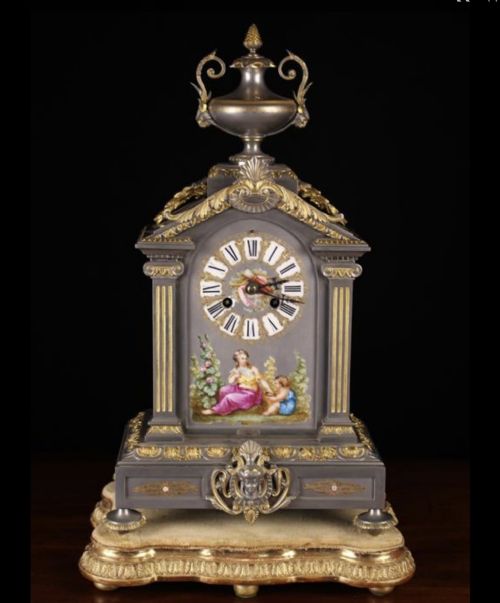


Empire Style Desk Clock
An empire style desk clock brings classical French and Regency presence to a room, driven by heavy gilt bronze and substantial marble.

Empire Style Desk Clock
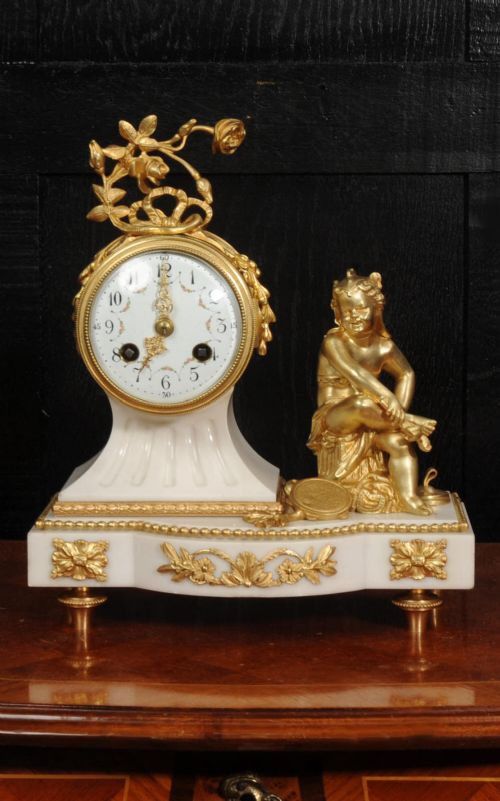
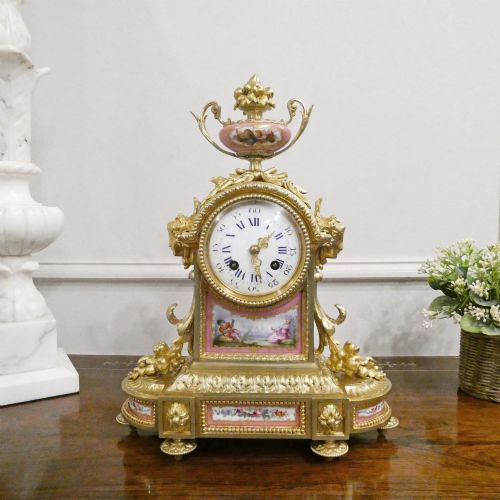
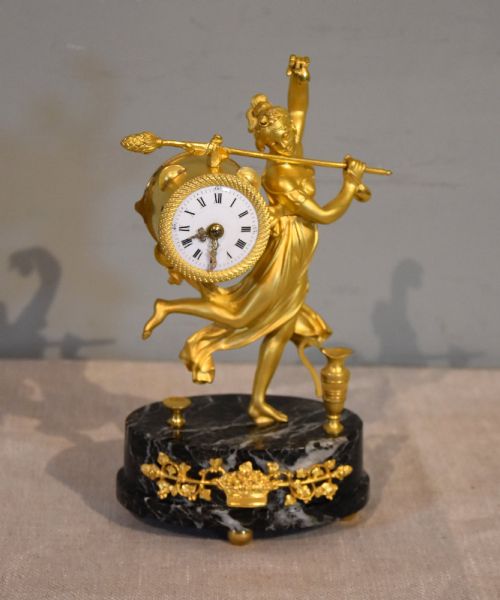
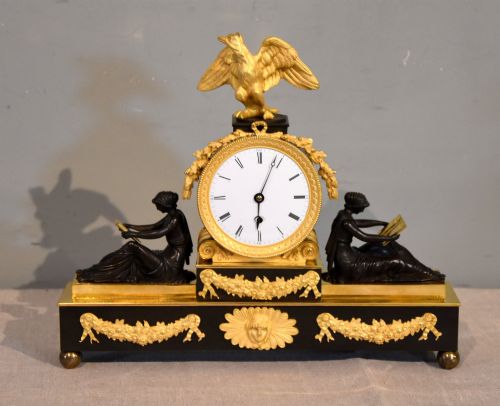
When you search for an empire style desk clock, you encounter heavy nineteenth-century mantel clocks, architectural timepieces, and portico designs rooted in French and Regency aesthetics. These pieces often incorporate classical figural motifs, military themes, and architectural elements like columns and plinths.
The most common version on this page is the French ormolu and marble mantel clock, frequently housing movements by makers such as Japy Freres alongside English Regency fusee variations in bronze and brass.
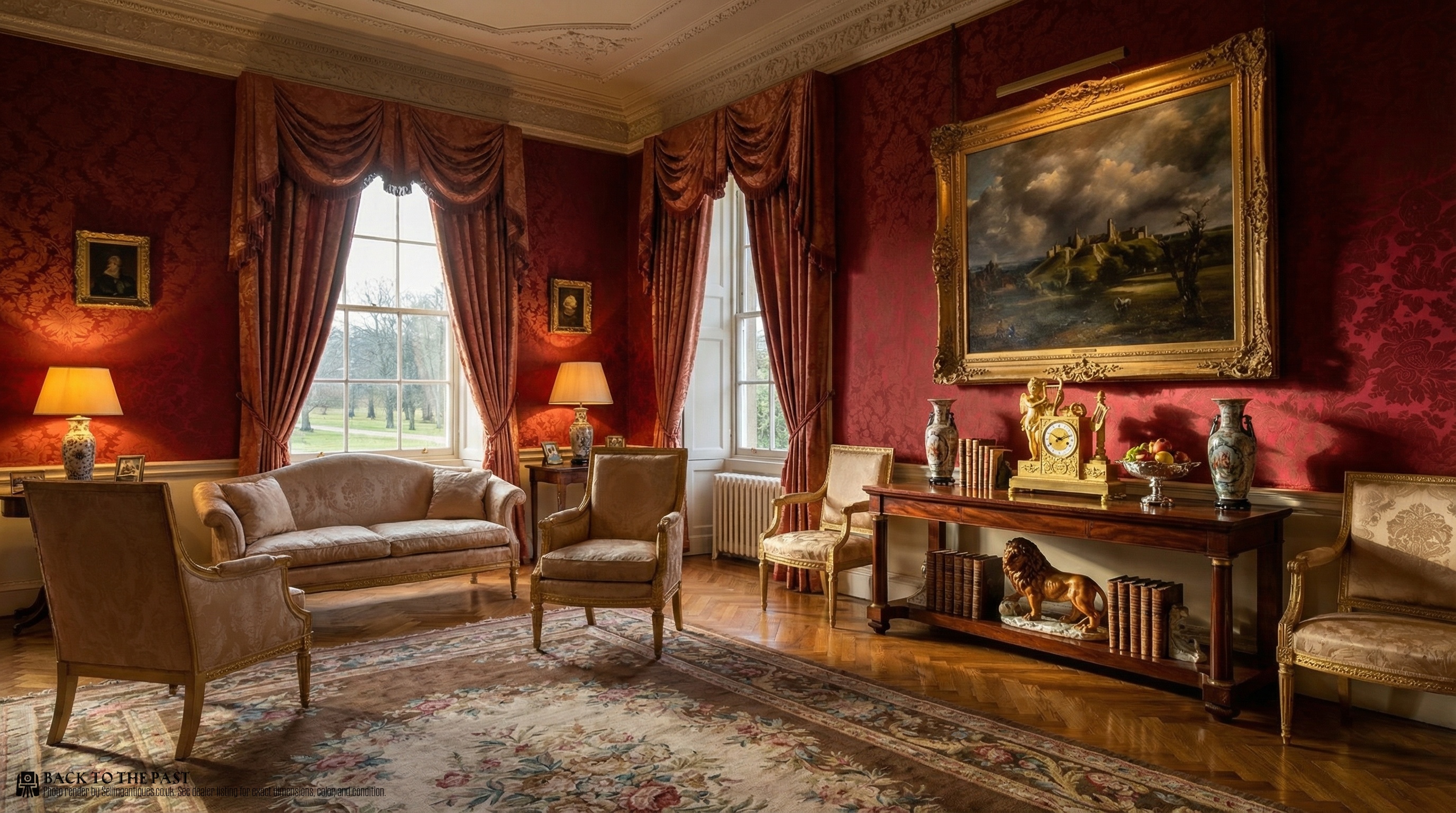
Materials and construction
These clocks rely on the pairing of cast ormolu, gilt bronze, and patinated bronze with dense white, green, or Sienna marble bases. The metal components are cast, chased, and fire-gilt, creating sharp contrasts between polished metallic highlights and dark patination.
Movements are mechanical, typically featuring eight-day spring-driven mechanisms or English chain fusee systems. Dials utilise white enamel with delicate painted numerals, often protected beneath bevelled glass panels and cast brass bezels.
Empire Style Desk Clock Retail Price Guide 2026
Typical asking prices for empire style desk clock among the pieces listed under this phrase on Sellingantiques today, from the lower quarter to the upper quarter. They describe what is for sale here now, not the wider market.
Listings feature nineteenth-century French and English horology, combining gilt bronze, marble, and brass across mantel clocks and portico designs.
What separates the fine examples
The integration of materials dictates distinction, notably where marble plinths fit flush against heavy bronze mounts without gaps. Furthermore, the presence of a signed movement from a known maker elevates the piece from a standard commercial production to a masterwork.
Japy Freres·Henry Berkeley Square London·FB Adams London
The Empire Style Desk Clock Glossary
- Ormolu
- A technique of applying finely ground high-carat gold to a bronze base using mercury, producing a warm golden lustre. It defines the decorative surface of nineteenth-century French luxury goods.
- Fusee
- A conical pulley used in mechanical clocks to maintain even power delivery as the mainspring unwinds. This mechanism is particularly characteristic of English Regency timepieces.
- Portico clock
- A distinct architectural clock style featuring a tall, slender case supported by four columns. They frequently incorporate a suspended pendulum swinging within the central open space.
- Garniture
- A matching set consisting of a central clock flanked by decorative side ornaments such as urns or candelabra. These sets were designed to create a unified display across a mantelpiece.
- Capucine
- A portable striking clock originating in France, often fitted with a carrying handle and protective outer case. They combine domestic utility with military convenience.
Empire Style Desk Clock: Frequently Asked Questions
How do I wind a mechanical desk clock?
Use the designated key on the dial face to turn the winding arbours clockwise until resistance meets you. Take care not to overwind the mainspring.
Ensure you stop the moment tension increases to protect the vintage mechanism from internal damage.
Where should I place a heavy marble clock?
Position the clock on a stable, level surface capable of supporting considerable weight, such as a sturdy mantelpiece or heavy desk. Uneven placement can cause the pendulum to bind and stop the movement.
Keep the piece away from direct sunlight and damp walls to preserve the marble polish and delicate ormolu surface.
How do I tell French and English styles apart?
French pieces rely heavily on bright ormolu, coloured marbles, and classical figures associated with the Empire and Louis XVI styles. English Regency examples frequently feature dark patinated bronze, strict classical geometry, and chain fusee movements.
Examining the backplate of the movement often reveals maker signatures that clarify the geographic origin.
Why does my clock keep stopping?
A stopped clock usually indicates that the case is sitting out of level, which disrupts the delicate tick of the escapement. Adjust the feet or move the entire piece slightly until the beat sounds even.
If levelling fails, the movement likely requires professional cleaning and lubrication to remove hardened old oils.