



Antique Empire Timepiece
An antique empire timepiece brings neoclassical grandeur and precision engineering into a room, offering both sculptural presence and mechanical history.
Antique Empire Timepiece
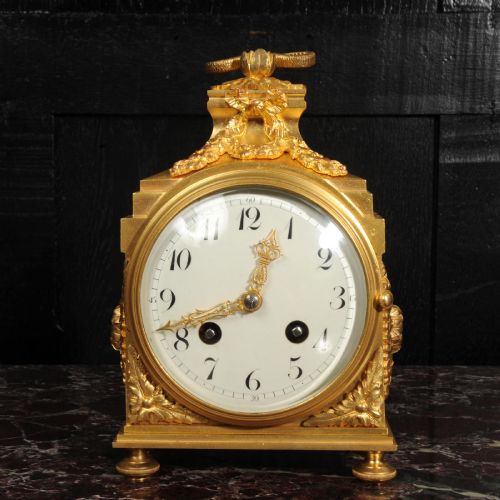
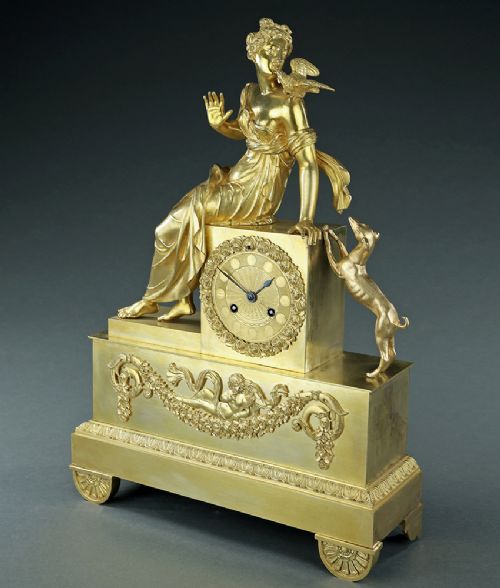
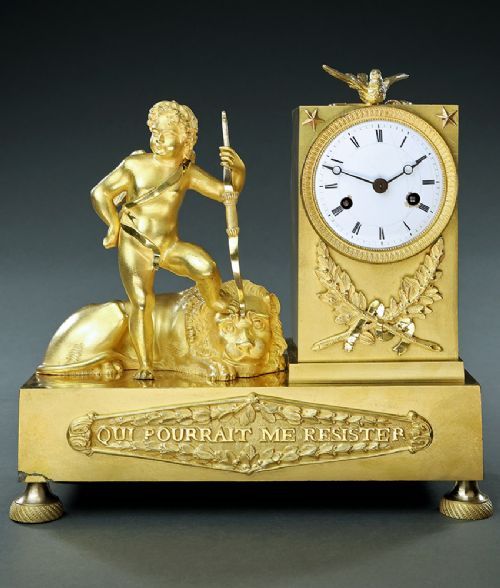
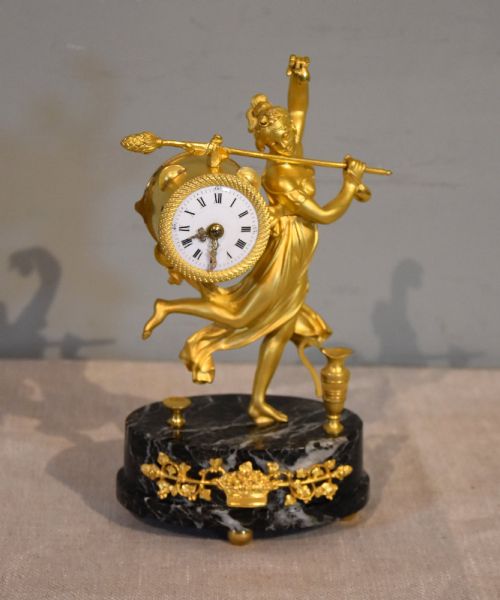
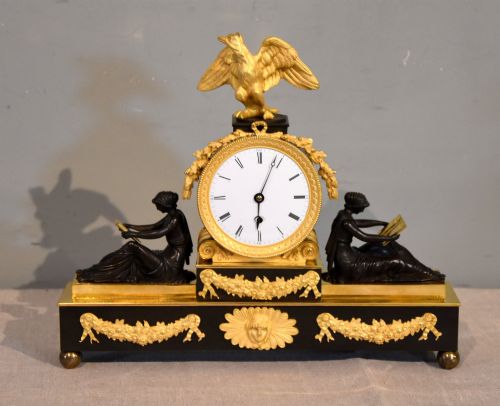
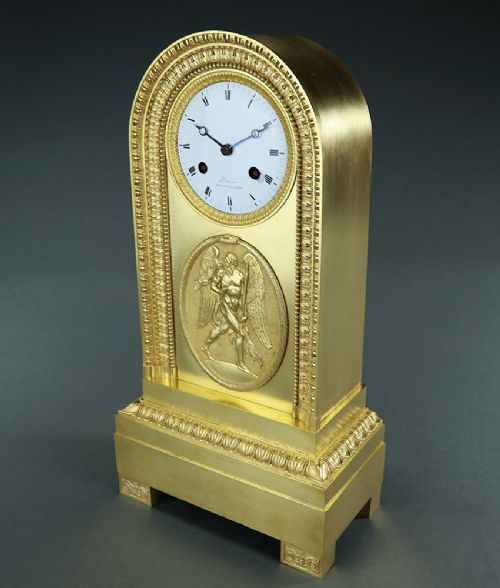
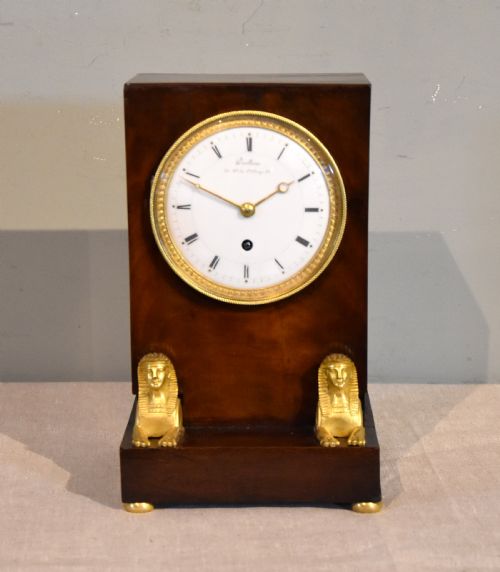
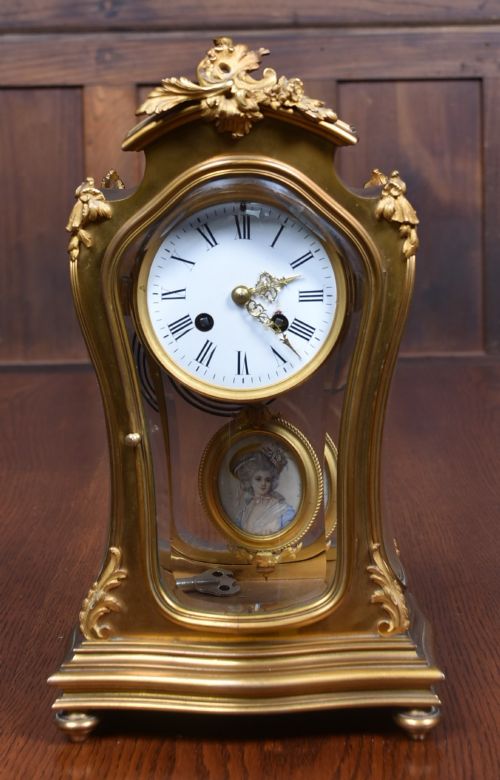
When you search for an antique empire timepiece, you encounter grand mechanical objects designed to mark the hours while serving as sculptural centerpieces. The selection on this page leans heavily toward French mantel clocks, portico clocks, and figural clock garnitures originating from the nineteenth century. These pieces draw on neoclassical vocabulary, often pairing patinated bronze figures with gilt bronze or ormolu mounts.
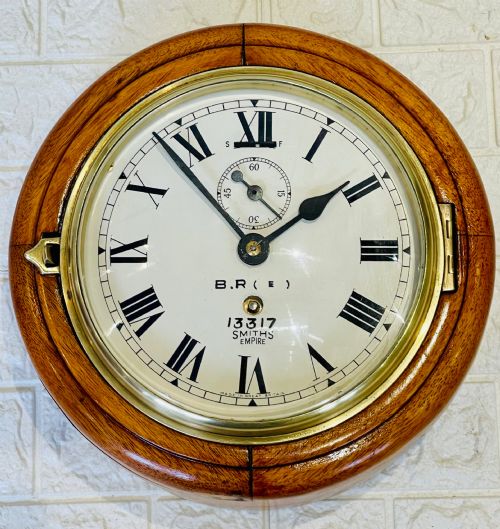
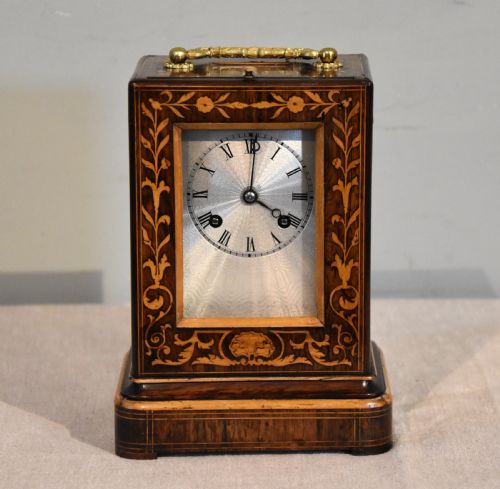
Alongside continental examples, the listings include British mantel and wall clocks from the Regency era up to the mid-twentieth century, featuring materials like mahogany, rosewood, and marble. Forms range from architectural portico designs to compact carriage clocks and bulkhead timepieces. You will find both striking movements and simpler timepieces designed strictly to record the hours without a bell.
How they were made
Maker workshops relied on mercury gilding and fire-gilding techniques to apply gold leaf to bronze bases, creating the rich ormolu surfaces characteristic of the empire style. Cast bronze components were meticulously chased by hand to sharpen details on drapery, foliage, and figural subjects before assembly.
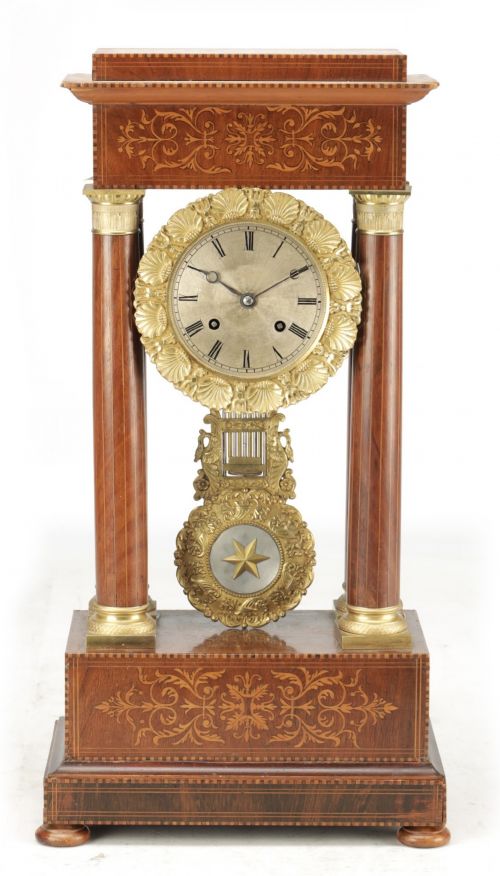
Cabinetmakers constructed architectural portico and bracket cases using dense timbers like mahogany, ebonised wood, and rosewood, frequently incorporating marble plinths. Dial faces combined white enamel with delicate hand-painted numerals and fine brass hands, driven by brass fusee or spring-driven movements.
Poodle dogs and goats occasionally share the dial territory with classical figures crossing alpine passes.
What varies in quality
The degree of hand-chasing on the bronze and ormolu mounts dictates the visual sharpness and depth of the cast ornament. Finer examples display crisp definition in hair, fabric folds, and botanical motifs, whereas lesser pieces show softer, blurred contours from worn moulds.
The complexity and originality of the movement separate standard production from superior workshop output. High-grade models incorporate signed backplates, precision escapements, and fully integrated striking or repeating mechanisms housed within substantial marble or bronze carcasses.
Samuel Marti·Pons De Paul·Deniere Et Fils·Baetens London·Hessen Paris
The Antique Empire Timepiece Glossary
- Ormolu
- Gilt bronze produced by applying a mixture of mercury and gold to a bronze base and heating it. This technique creates a durable, golden metallic surface found on many neoclassical clock cases.
- Portico clock
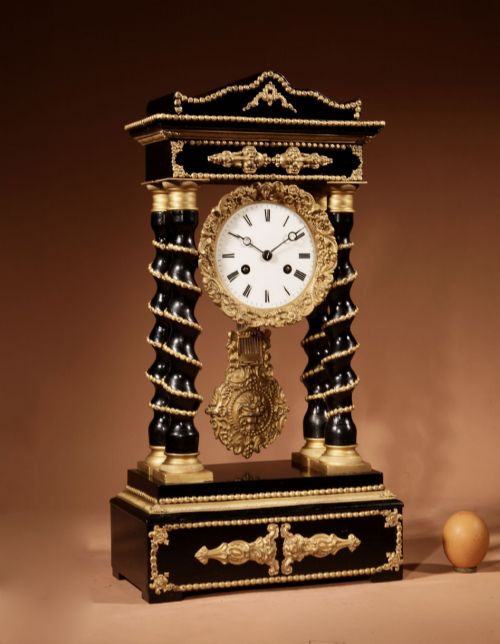
- A mantel clock featuring a rectilinear architectural case supported by four or more columns. The pendulum often swings visibly within the central open space between the pillars.
- Fusee
- A conical pulley used in spring-driven clocks to maintain even power delivery as the mainspring unwinds. This mechanism improves timekeeping accuracy across the duration of the wind.
- Garniture
- A set consisting of a central clock flanked by matching decorative objects such as urns or candelabra. These matched groupings were designed to decorate a mantelpiece as a cohesive visual unit.
- Carriage clock
- A small, portable spring-driven timepiece equipped with a carrying handle and glass panels on all sides. Originally built for travel, they often feature repeating mechanisms to sound the time on demand.
Antique Empire Timepiece: Frequently Asked Questions
How do I wind an antique timepiece?
Most spring-driven models require a matching winding key inserted into the dial face to tension the mainspring barrels.
Take care not to over-wind the mechanism, stopping as soon as you feel firm resistance to protect the internal teeth.
What is the difference between a clock and a timepiece?
A timepiece simply measures and displays the current hour and minute without striking bells or chiming.
A clock includes a secondary train of gears and a bell or gong to sound the hours and fractions thereof.
Where should I place a heavy marble mantel clock?
Position the piece on a sturdy, level surface such as a stone mantelpiece or a heavy wooden sideboard capable of supporting substantial weight.
Ensuring a level foundation prevents the pendulum from catching on the internal movement housing.
How do I set the correct time?
Move the minute hand gently in a clockwise direction until the hands indicate the correct hour.
Avoid turning the hands backward past striking points, as this can jam or damage the internal rack and snail mechanism.