




Regency Desk Timepiece
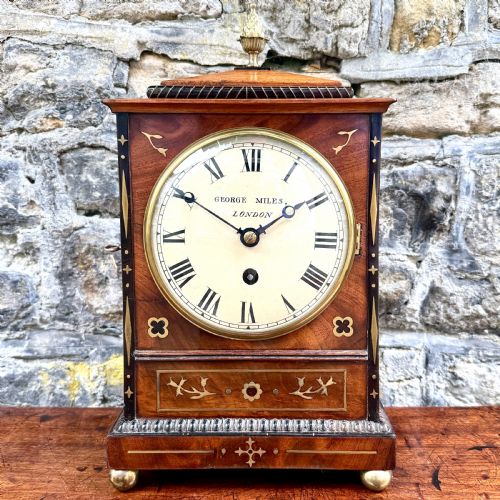
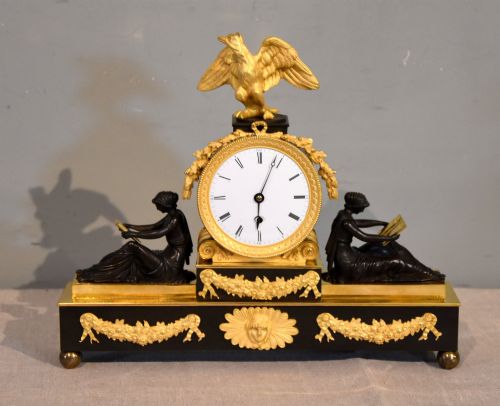
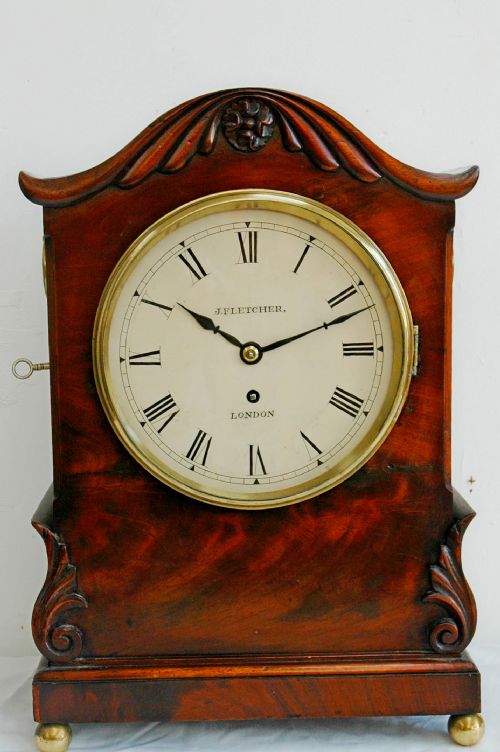
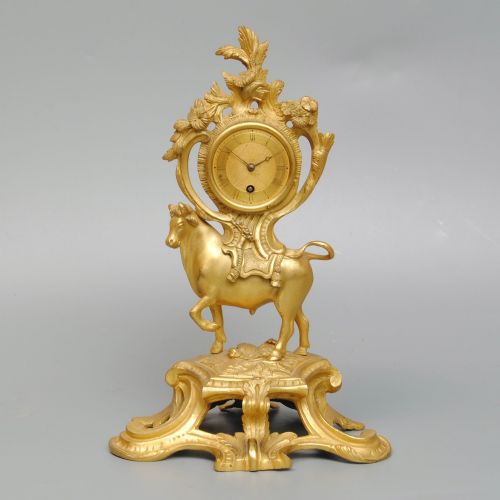
These regency desk timepiece examples are compact mechanical clocks built to sit on a writing surface, bringing refined period brass and mahogany into a room.
Regency Desk Timepiece
When you search for a regency desk timepiece, you are looking at small mechanical clocks created to keep accurate time in a library, study or parlour. These pieces span the Regency, Georgian and 19th Century periods, incorporating styles from English Regency to French Empire and French Regency.
You are most likely to meet mahogany library clocks and ormolu mantel timepieces on this page. Formats range from simple wooden cases to elaborate figural designs featuring animals, cherubs and palm trees.
How they were made
Cabinetmakers constructed the wooden housings using dense timbers like mahogany and rosewood, often housing single fusee movements designed to maintain even power as the mainspring unwound. Metalwork was cast in brass, patinated bronze and ormolu, sometimes combining gilded bronze with carved marble bases.
Dials were typically finished in white enamel with black markings, protected behind flat or curved glass panes. Metal mounts were chased and gilt, while specialised movements were signed by London and Paris makers.
Regency Desk Timepiece Retail Price Guide 2026
Typical asking prices for regency desk timepiece among the pieces listed under this phrase on Sellingantiques today, from the lower quarter to the upper quarter. They describe what is for sale here now, not the wider market.
Certain clocks feature curious figural scenes, including goats, palm trees and cherubs reaching for birds.
What varies in quality
The degree of hand-chasing in the ormolu and bronze mounts separates standard production from finer pieces. Crisp detail in figural elements like foliage, animals or cherubs indicates superior craftsmanship.
The sophistication of the internal movement also dictates quality, particularly the presence of a well-executed chain fusee mechanism rather than a simpler spring barrel. The integration of high-grade marble, quality timbers and clean enamel dials further distinguishes the tier of a timepiece.
Baetens London·Bush of London·Viner London·Hessen Paris·William Hardy London·McCabe London·Henry Berkeley Square London·FB Adams London·Payne of London
The Regency Desk Timepiece Glossary
- Timepiece
- A clock that tells the time without striking hours or quarters. It uses a movement focused solely on regular motion.
- Fusee
- A conical pulley used with a cord or chain to equalize the torque of the mainspring as it winds down. This mechanical addition helps maintain steady timekeeping.
- Ormolu
- Finely chopped gold amalgamated with mercury, applied to bronze and heated to leave a durable golden coating. It provides the characteristic bright finish seen on many period mounts.
- Single Fusee
- A single-train movement driven by a fusee and chain or cord. It powers the time-only mechanism without a striking train.
Regency Desk Timepiece: Frequently Asked Questions
What is a desk timepiece?
A desk timepiece is a small clock designed for a library table or writing desk. These objects were built to occupy minimal space while providing reliable timekeeping.
They rely on mechanical movements driven by springs and fusees, housed in cases of mahogany, marble or gilt bronze.
How do I wind it?
Winding requires a specific key inserted into the dial to tension the mainspring gently. Care must be taken not to overwind the mechanism.
Most fusee movements require winding once a week to maintain proper tension and accurate time.
Where were they placed?
These clocks typically sat on writing desks, library tables or mantelpieces in principal rooms. Their compact proportions allowed them to be moved easily around a home.
They served both a practical purpose for gentlemen and scholars and a decorative role in interior styling.
How do I date a timepiece?
Dating relies on stylistic clues, case materials, dial signatures and the evolution of mechanical movements. Georgian and Regency pieces often display characteristic classical motifs.
Maker signatures on the dial or movement backplate provide a direct link to active working periods.