
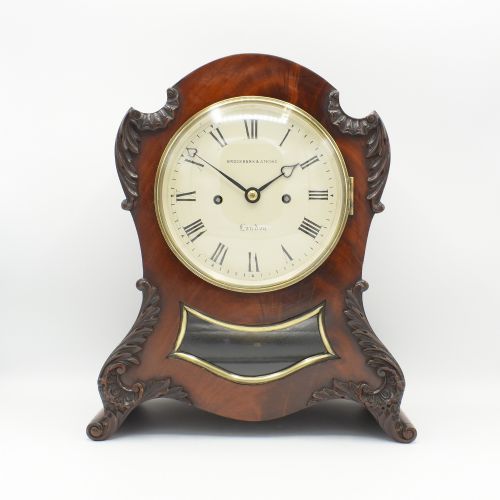
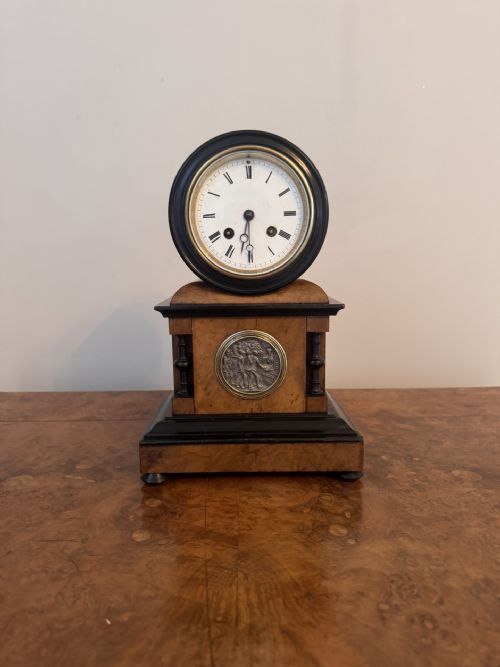
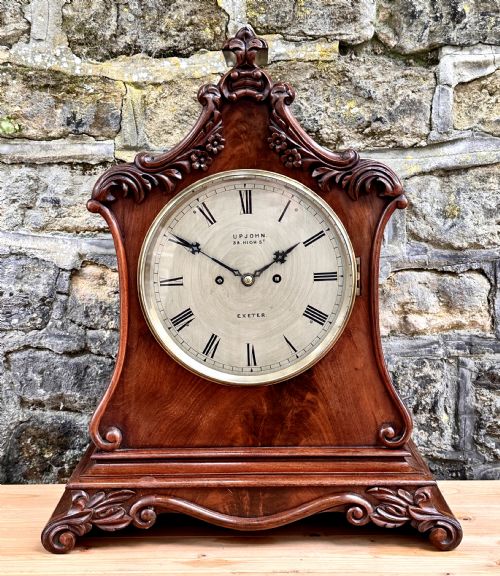


Dark Wood Shelf Clock
A dark wood shelf clock brings mechanical movement and rich timber grain to a mantelpiece or bracket.
Dark Wood Shelf Clock
When you search for a dark wood shelf clock, you are looking at timepieces designed to sit upon furniture surfaces, ranging from compact mantel designs to substantial bracket clocks. These pieces take various forms including pagoda tops, architectural cases, and carved cuckoo designs intended for domestic interiors.
The dark wood shelf clock most likely to meet you on this page is a Victorian or nineteenth-century mahogany or rosewood example, often featuring brass inlay or glass viewing panels. Alongside these, you will encounter Regency, Edwardian, and twentieth-century German productions spanning the Art Deco and Bauhaus periods.

How they were made
Cases utilise dense timbers such as mahogany, rosewood, walnut, and ebonised wood, frequently shaped with carving, marquetry, or contrasting boxwood stringing. Brass components provide structural mounts, dials, bezels, and intricate fusee or striking movements.
Interiors rely on mechanical precision, incorporating enamel or brass dials beneath protective glass faceplates. Many examples combine traditional joinery with metalwork to house complex 8-day movements and bell-striking mechanisms.
Dark Wood Shelf Clock Retail Price Guide 2026
Typical asking prices for dark wood shelf clock among the pieces listed under this phrase on Sellingantiques today, from the lower quarter to the upper quarter. They describe what is for sale here now, not the wider market.
Listings feature woods including mahogany, rosewood, walnut, boxwood, and ebonised wood spanning the nineteenth and twentieth centuries.
What varies in quality
The distinction between standard and exceptional pieces rests upon the crispness of the timber carving, the precision of brass inlay, and the refinement of the movement. Master makers invested greater care in proportion, timber selection, and decorative detail.
Horological complexity and signature craftsmanship elevate certain models, particularly those featuring twin fusee movements or works by documented makers. The harmony between the cabinetwork and the mechanical housing dictates the overall standing of the piece.
Brockbanks & Atkins·Barrett London·Paul Garnier·Henry Marc·Beha
The Dark Wood Shelf Clock Glossary
- Fusee
- A conical pulley used in spring-driven clocks to maintain even power delivery as the mainspring unwinds. This mechanism helps ensure steady timekeeping across the duration of the wind.
- Bracket clock
- A portable timekeeper originally designed to sit on a wall bracket to aid resonance and visibility. Later versions functioned primarily as mantel or table clocks.
- Marquetry
- Decorative veneer work forming pictorial or geometric patterns using various coloured woods. It requires skilled cutting and fitting into the primary case surface.
- Ebonised wood
- Timber treated to imitate ebony, giving a deep black finish popular in nineteenth-century case design. This treatment highlights gilt brass mounts and enamel dials.
Dark Wood Shelf Clock: Frequently Asked Questions
What is a fusee movement?
A fusee movement uses a conical drum to equalise the pull of the mainspring as it loses tension. This clever mechanical device keeps the driving force constant for more accurate timekeeping.
You will often find fusee movements in better quality nineteenth-century bracket clocks and mantel timepieces.
How do I wind my clock?
Winding requires inserting the appropriate key into the dial winding holes and turning gently until resistance is felt. Care should be taken not to over-wind the mechanism.
Most mechanical shelf clocks require attention every week or eight days depending on the movement type.
Where should I place it?
Shelf clocks need a stable, level surface away from direct sunlight, draughts, and damp environments. A sturdy mantelpiece, sideboard, or dedicated wall bracket works best.
Ensuring the clock is level helps the pendulum swing evenly and prevents the mechanical beat from stopping.
How do I identify a Victorian clock?
Victorian timepieces often display rich mahogany or walnut cases, sometimes incorporating ebonised finishes, brass accents, and glass viewing doors. Stylistic influences range from plain classical forms to heavier architectural designs.
Maker signatures on the dial or movement backplate frequently confirm the period of production.