
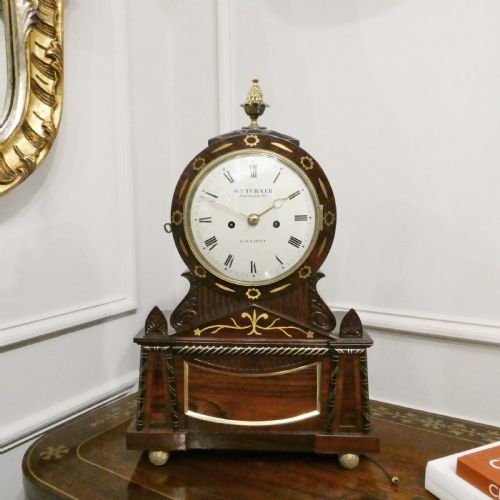


Regency Rosewood Table Clock
These regency rosewood table clock examples bring rich timber and precise brasswork straight into a room, offering both traditional timekeeping and fine period decoration.
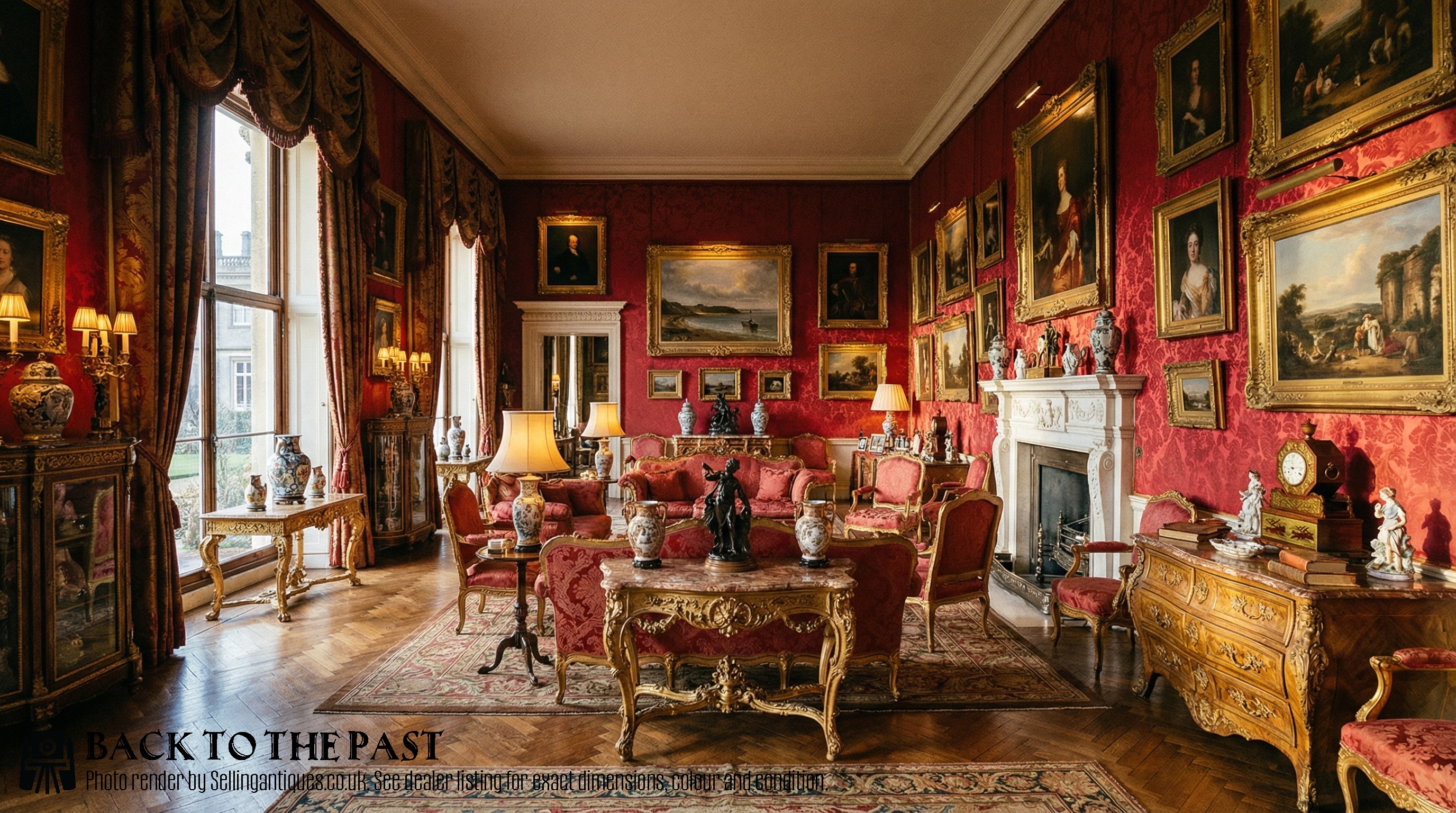
Regency Rosewood Table Clock
A regency rosewood table clock combines dense tropical timber with compact proportions, designed for placement on mantels, brackets, or library tables. The selection ranges from architectural bracket clocks to simpler library timepieces spanning the nineteenth century.
Most pieces show influences from the Regency, Georgian, and Victorian eras, often featuring classical proportions alongside Gothic Revival details. Makers such as Turner of London, George Orpwood, and Seller of Reading represent the core of these offerings.
Forms vary from drum head shapes and English five-glass cases to twin fusee bracket clocks. These variations reflect both domestic domestic placement and the functional demands of high-precision movements.
Materials and construction
Cases rely heavily on richly figured rosewood, sometimes complemented by ebonised wood or mahogany accents. Artisans frequently integrated brass inlay, silvered metal dials, and delicate mother-of-pearl details into the timber surfaces.
Movements span single fusee, twin fusee, and quarter striking mechanisms, protected behind bevelled glass panels. The integration of enamel dials and heavy brass fittings ensured both visual contrast and structural longevity.
Judging quality and execution
Finer examples distinguish themselves through the precision of their brass inlay and the complexity of their internal movements, such as year-going or quarter-striking configurations. The depth of figure in the rosewood veneer also signals a higher tier of production.
Signature work by established makers commands attention, where the proportions of the case align harmoniously with the dial layout. Simpler library timepieces rely on clean architectural lines rather than elaborate decorative brasswork.
Turner of London·George Orpwood·Seller of Reading·Walker and Hall·Plumbly and Tupman·L. Donne
The Regency Rosewood Table Clock Glossary
- Fusee
- A conical pulley used in spring-driven clocks to maintain even power as the mainspring unwinds. This mechanism improves timekeeping accuracy throughout the running period.
- Bracket clock
- A portable clock originally designed to sit on a wall bracket to distribute sound effectively throughout a room. Later examples functioned primarily as prominent table or mantel ornaments.
- Library clock
- A medium-sized timepiece intended for domestic studies or libraries, often featuring clean lines and clear dials. These clocks prioritize readability and understated elegance over complex striking trains.
- Drum head clock
- A timepiece featuring a circular clock head mounted on a stepped or tapering plinth base. This distinct silhouette resembles a side drum viewed from the side.
- Quarter striking
- A movement mechanism that chimes the quarters of the hour in addition to striking the full hour. This feature requires a twin fusee setup or additional gear trains.
Regency Rosewood Table Clock: Frequently Asked Questions
Where should I place a table clock?
These clocks suit solid mantelpieces, sturdy library tables, or dedicated wall brackets where their heavy rosewood cases remain stable. Placing them away from direct sunlight and dampness protects both the wood and the delicate internal mechanics.
Ensure the surface is completely level so the pendulum or balance wheel operates evenly. This stability allows the fusee movement to keep reliable time without straining the escapement.
How do single and twin fusee movements differ?
A single fusee movement drives the timekeeping portion only, offering steady accuracy through its conical pulley system. It requires simpler maintenance and usually focuses entirely on hours and minutes.
A twin fusee movement adds a second train to power a striking or chiming mechanism. These setups are more complex, heavier, and generally found in larger bracket clocks designed to sound the hours or quarters.
How do I identify a Regency period piece?
Regency pieces often display classical architectural motifs, bold rosewood grain, and precise brass stringing or inlay. The proportions tend to draw inspiration from classical antiquity, reflecting the design vocabulary of the early nineteenth century.
Later Victorian variations frequently introduce heavier Gothic Revival details or simplified library formats. Comparing the dial layout and secondary woods helps confirm the era of manufacture.