
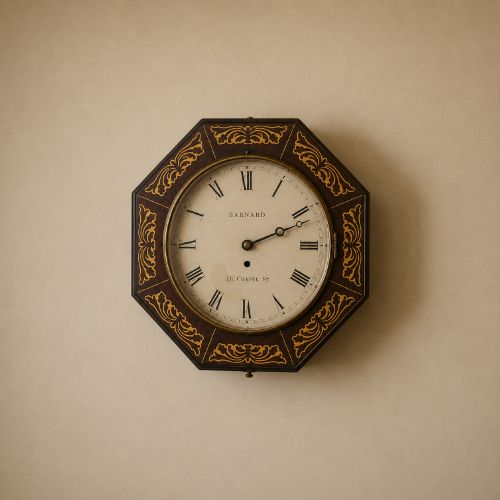


Octagonal Brass Inlaid Clock
An octagonal brass inlaid clock brings geometric restraint and warm timber tones to a wall or mantel, combining precision mechanics with decorative metalwork.
Octagonal Brass Inlaid Clock
An octagonal brass inlaid clock displays a distinctive eight-sided geometric form housing a timepiece, frequently designed for wall hanging or mantel placement. These pieces emerge across the nineteenth century, encompassing Regency, Georgian, and Victorian periods.
The most common examples on this page are fusee wall clocks and mantel clocks featuring mahogany or rosewood cases. English and French workshops produced these items, alongside notable regional makers from London, Bridgwater, and Scotland.
Makers utilised contrasting woods such as ebonised timber and boxwood alongside mother-of-pearl and metal wire to embellish the octagonal frames. Buyers encounter both drop dial regulators and striking mantel formats within these styles.
How they were made
Craftsmen built the cases using dense timbers like mahogany and rosewood, often applying ebonised finishes to create a dark, uniform surface. Brass inlay, sometimes paired with mother-of-pearl and metal wire, was meticulously set into channels carved into the timber.
Dial surrounds and bezels incorporated glass to protect the face, whilst fusee movements provided reliable timekeeping by equalising the power of the mainspring as it unwound.
Listings feature rosewood, mahogany, and ebonised wood cases decorated with brass inlay, mother-of-pearl, and metal wire across the nineteenth century.
What varies in quality
The sophistication of the brass inlay work dictates much of the visual merit, ranging from simple geometric lines to intricate floral and scroll motifs involving mother-of-pearl and metal wire. Timber selection also defines the tier of the piece, with rich, figured rosewood and well-grained mahogany representing higher production standards.
Mechanical execution within the movement, particularly the inclusion of a fusee mechanism rather than a standard spring barrel, separates utilitarian timepieces from precision instruments made by established urban firms.
Barnard·Halliday and Rich Bridgwater·Kleyser of London·Walker and Hall
The Octagonal Brass Inlaid Clock Glossary
- Fusee
- A conical pulley used in spring-driven clocks to maintain equal force throughout the running period. This mechanism ensures accurate timekeeping as the mainspring loses tension.
- Drop dial
- A clock case featuring a circular dial section at the top and a short, extended trunk below. This configuration accommodates a longer pendulum in a compact wall-hung format.
- Ebonised
- Wood treated with a dark stain or finish to imitate ebony. This technique was popular in nineteenth-century decorative arts to create stark contrast against brass work.
- Regency
- A British design period spanning the early nineteenth century. Furniture and clocks from this era frequently draw on classical motifs and rich timbers.
- Mantel clock
- A portable timekeeper designed to stand on a shelf or fireplace mantel. These pieces rely on flat bases for stability.
Octagonal Brass Inlaid Clock: Frequently Asked Questions
Where should I hang a wall clock?
Wall clocks require a secure fixing directly into a stud or wall plug to support the weight of the timber case and brass movement. Placing them at eye level ensures the dial is easily read and prevents accidental knocks.
Avoid positions subject to dampness or direct sunlight, which can warp the timber veneer and discolour the dial over time.
How do fusee movements work?
A fusee movement uses a conical pulley connected to the mainspring via a fine chain or cord. As the spring unwinds and loses strength, the chain pulls on a wider section of the cone to maintain consistent torque.
This clever mechanical device ensures the clock maintains an even beat and accurate time until the spring requires winding again.
How do I identify a Regency clock?
Regency clocks typically date from the early nineteenth century and feature restrained classical proportions. They often utilise rosewood or mahogany with precise brass stringing or inlay.
Look for crisp case geometry and traditional dial layouts that reflect the aesthetic preferences of the period.
What maintenance do antique clocks need?
Mechanical clocks benefit from professional cleaning and lubrication every few years to prevent wear on the brass gear trains. Regular gentle dusting of the timber case and glass bezel preserves the finish.
Ensuring the clock hangs or stands completely level is essential for keeping the pendulum in beat and the movement running reliably.