
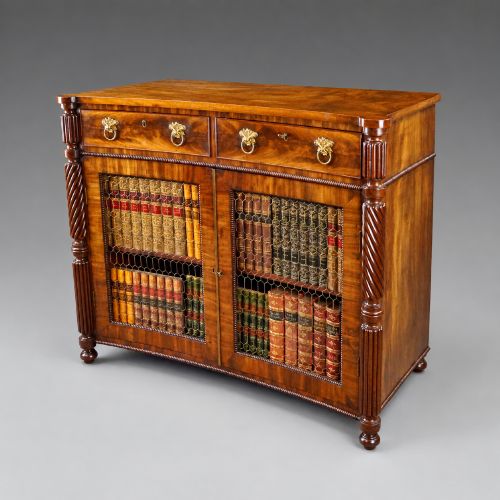
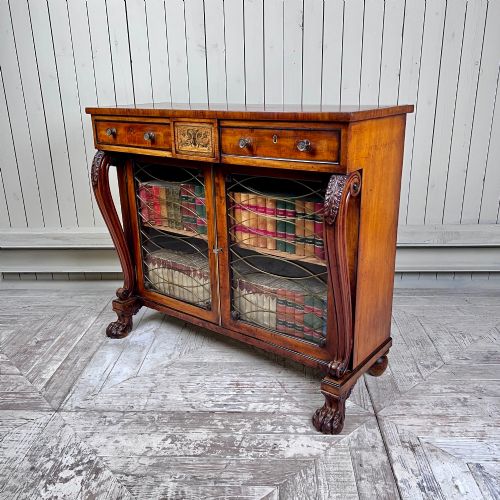
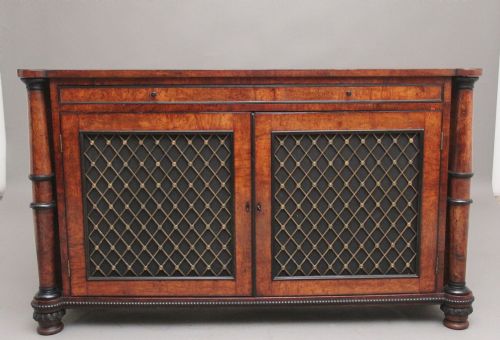
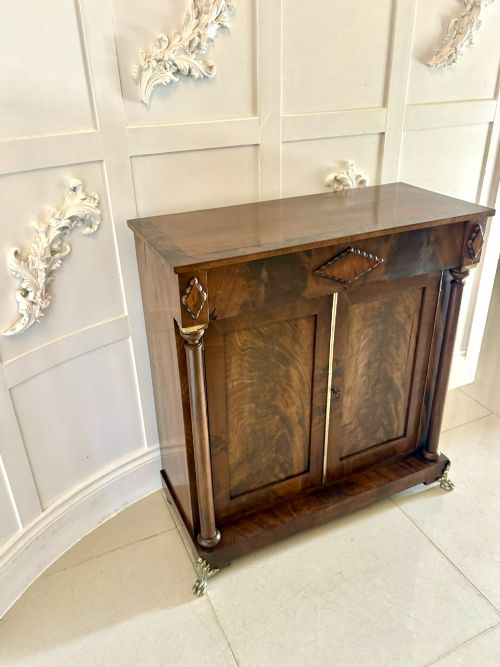

Regency Brass Chiffonier
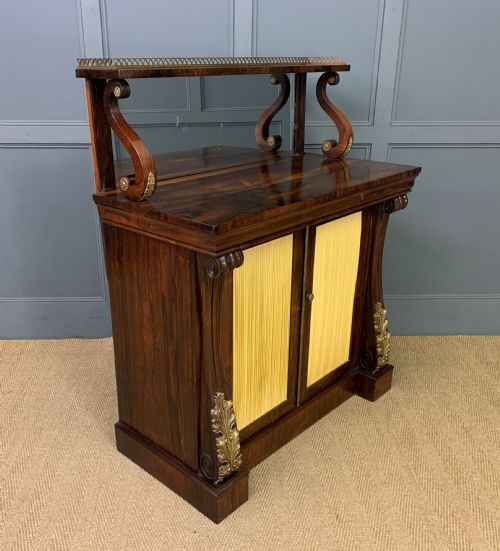
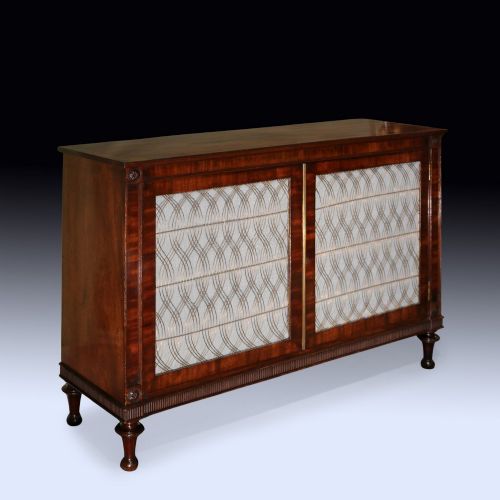
A regency brass chiffonier combines elegant timber surfaces with crisp metal mounts, offering a practical low storage piece designed for the refined interior.
Regency Brass Chiffonier
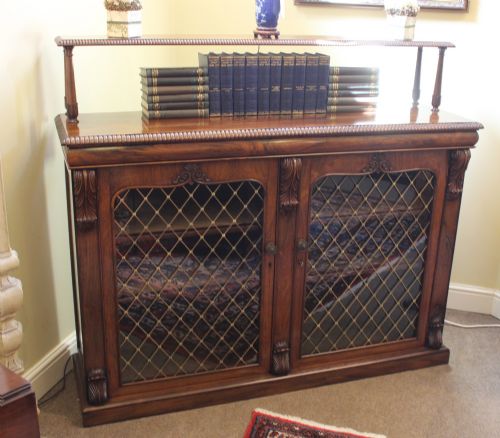
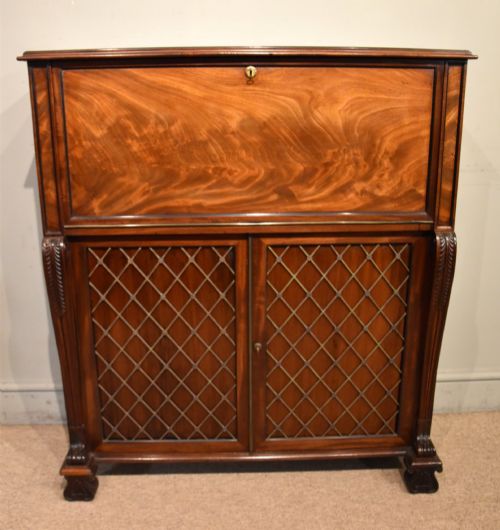
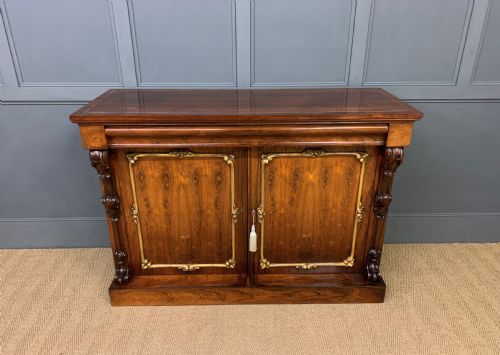
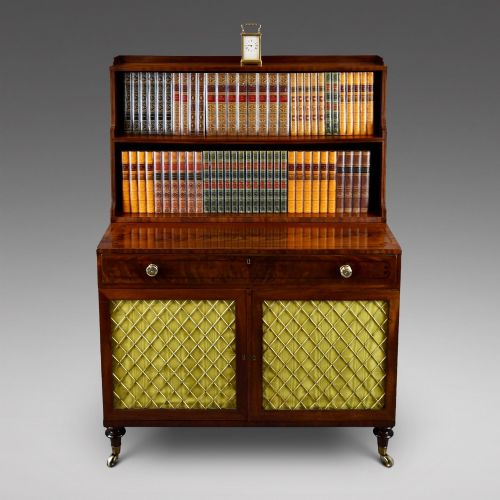
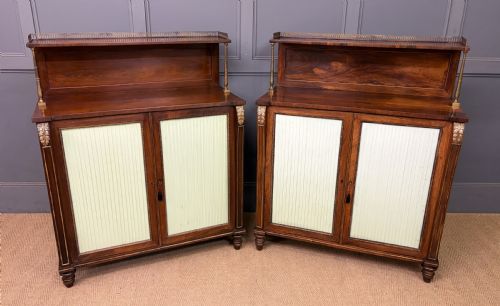
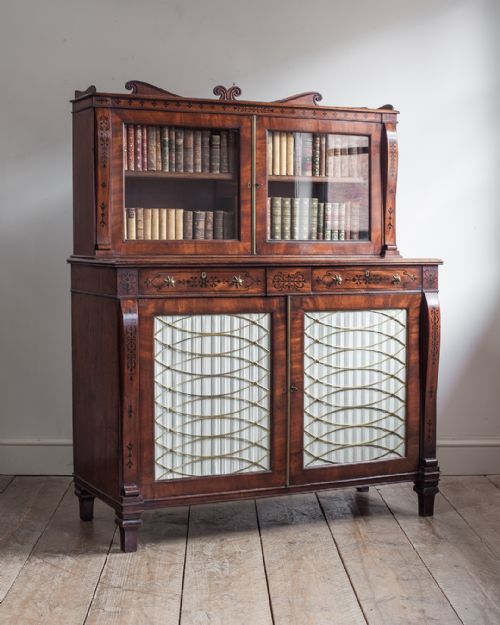
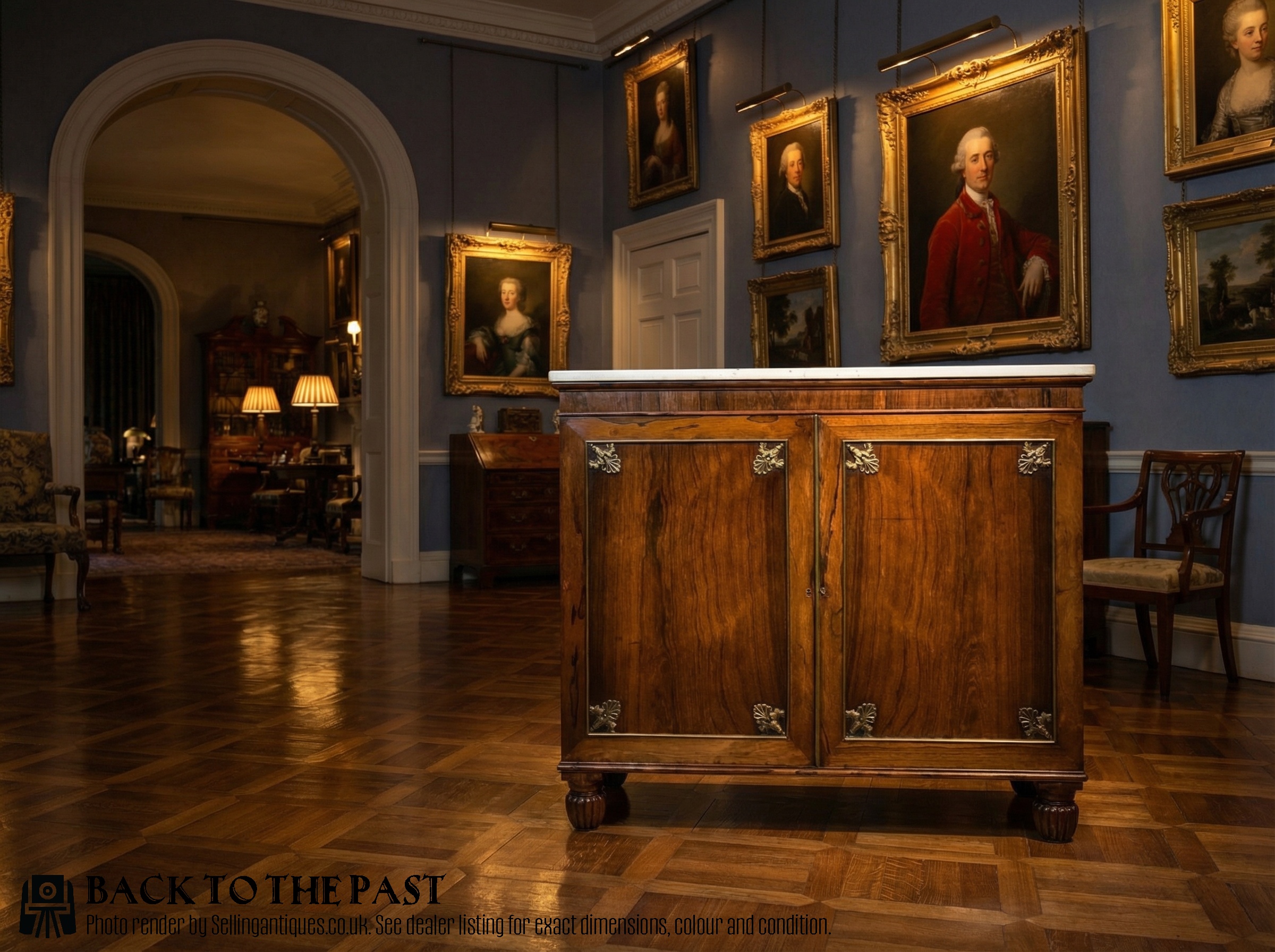
A regency brass chiffonier represents a specialised form of side cabinet that evolved during the early nineteenth century to hold books, plate, or writing materials. These low pieces frequently incorporate glazed or fabric-backed doors alongside open shelving, serving both display and storage functions in the home.
The versions encountered most often on this page date from the Regency period and the wider nineteenth century, constructed primarily in rich rosewood or mahogany. Many examples feature distinctive brass stringing, inlay, or grilles that reflect the neoclassical taste of the era.
Materials and construction methods
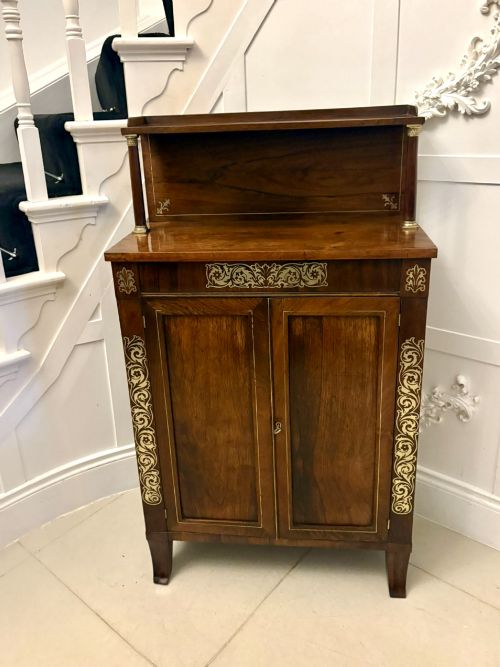
Cabinet makers utilised dense native and imported timbers, notably figured mahogany and dark rosewood, sometimes accented with satinwood, ebony, or pollard oak veneers. These solid and veneered carcases were frequently mounted with cast or chased brass details, including galleries, grilles, and intricate inlaid arabesques.
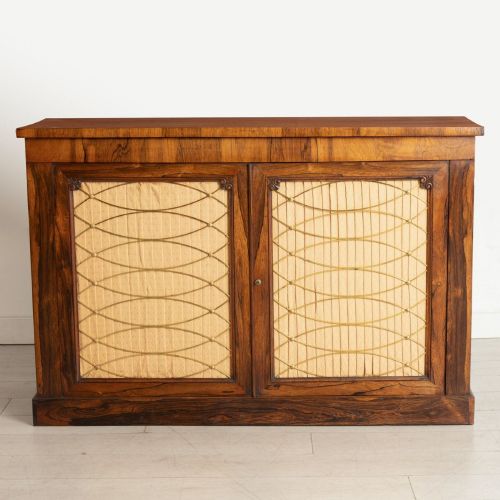
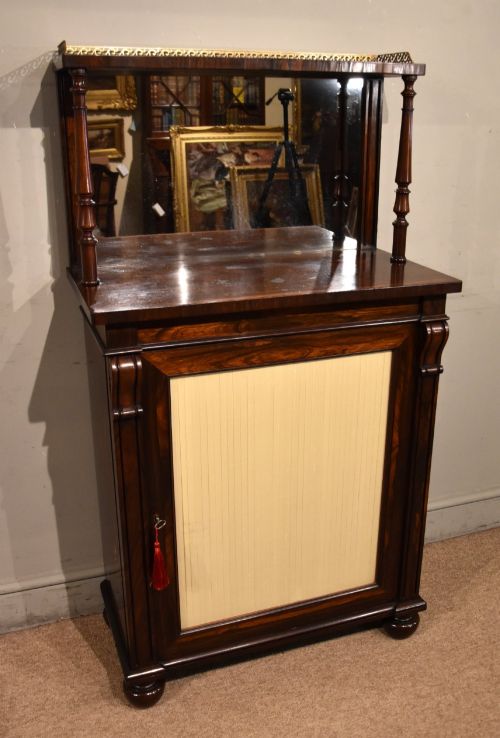
Fine construction is evident in the meticulous integration of brass stringing into the wooden door panels and friezes, alongside the inclusion of mirror glass backs and pleated fabric panels behind brass grilles. These techniques demanded high levels of joinery skill to ensure the timber and metal accommodated natural movement over time.
Secret compartments hidden behind drop-front secretaire drawers offered Regency homeowners a secure spot to stash confidential love letters.
Distinguishing quality across examples
The refinement of the timber figure and the precision of the brass inlay largely determine the standing of an individual piece. Superior examples display dense, well-matched grain patterns in the rosewood or mahogany, paired with finely cut brass work that remains flush with the surrounding wood.
Proportion and secondary details also dictate worth, as narrower proportions or pieces associated with known workshops command greater attention. The quality of the interior fittings, such as adjustable shelving and secondary mahogany drawer linings, further separates standard production from exceptional cabinet work.
Gillows·William Trotter
The Regency Brass Chiffonier Glossary
- Chiffonier
- A low side cabinet, typically featuring enclosed cupboards below and sometimes shelving above. It developed from the sideboard during the early nineteenth century.
- Brass stringing
- Fine lines of brass inlay set into the timber surface to create geometric or classical patterns. This technique defined much of the decorative output of the Regency period.
- Brass grille
- A metal mesh fitted into cabinet doors in place of wood or glass, backed with pleated fabric. It allowed air circulation while concealing the contents.
- Rosewood
- A heavy, dark timber with distinct figuring, widely utilised for high-status furniture during the Regency and Victorian eras. Its rich reddish-brown tones provided an ideal contrast for brass mounts.
- Secretaire
- A writing drawer or compartment incorporated into a cabinet, featuring a drop-front that reveals small pigeonholes and small drawers. It added multi-functional use to side cabinets and chiffoniers.
Regency Brass Chiffonier: Frequently Asked Questions
What is a regency brass chiffonier used for?
These cabinets served primarily as side storage units in dining rooms, drawing rooms, or libraries for holding books, porcelain, or silver.
Today, they function well as decorative display surfaces or media consoles while retaining their traditional character.
How do I identify a Regency period piece?
Look for classical proportions, characteristic timbers such as rosewood and mahogany, and specific decorative motifs like brass stringing and Egyptian revival elements.
Examining the construction methods and secondary woods inside drawers also helps confirm the early nineteenth-century date.
Where should I place a chiffonier at home?
Their shallow depth makes them suitable for hallways, alcoves, or dining rooms where floor space is limited.
Keep them away from direct sunlight and strong heat sources to protect the delicate rosewood or mahogany veneers.
What is the difference between a chiffonier and a sideboard?
A chiffonier is typically smaller and more enclosed than a traditional sideboard, often featuring a small shelf superstructure on top.
Many examples include fitted cupboards or secretaire drawers rather than the open serving decks found on larger dining room sideboards.