
Regency Bow Front Drawers
Regency bow front drawers are curving English storage pieces that bring architectural grace and deep mahogany tone to any interior.
What Regency Bow Front Drawers Are
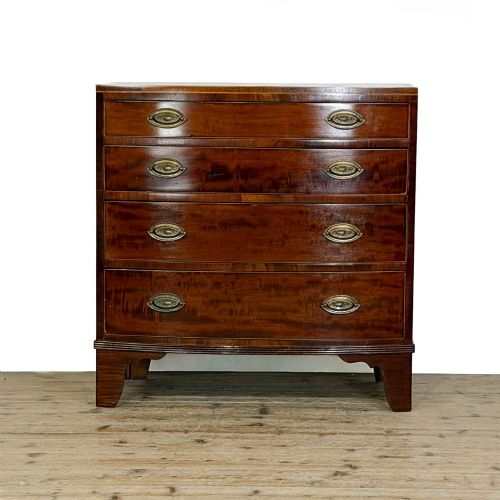
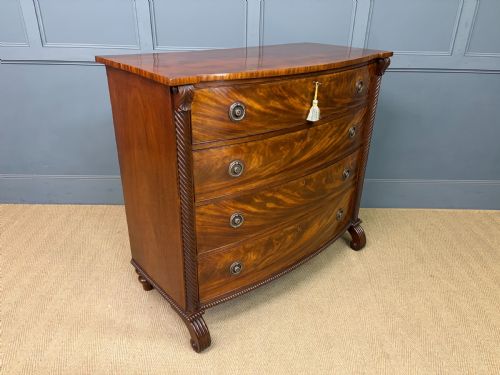
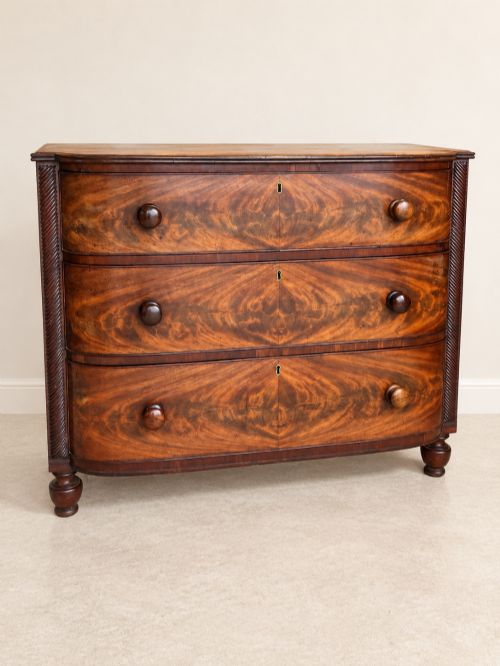
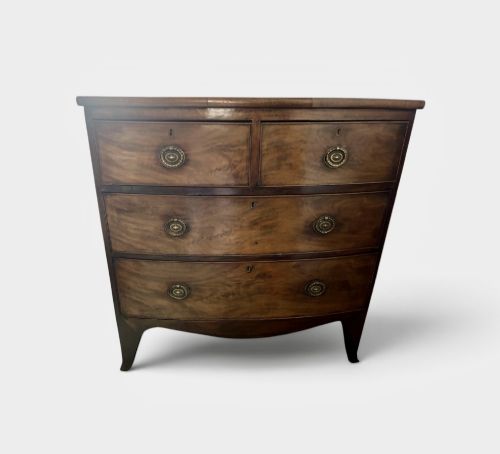
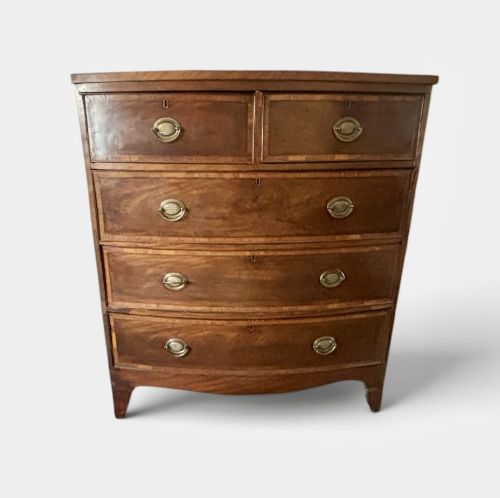
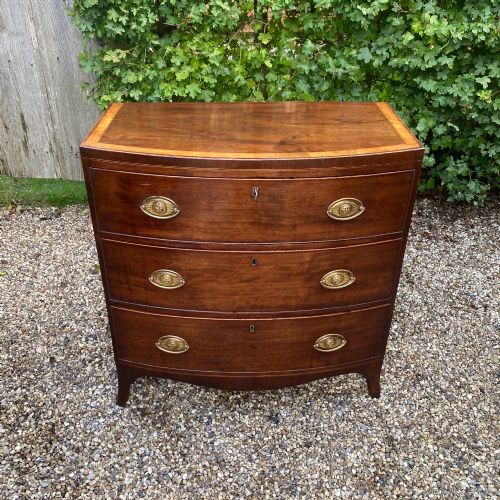
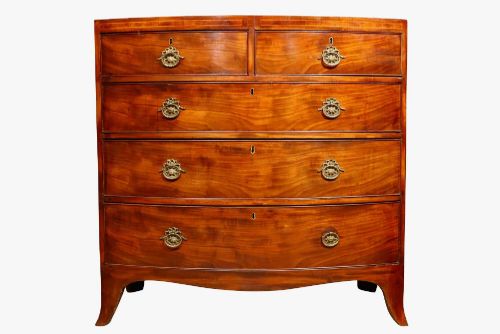
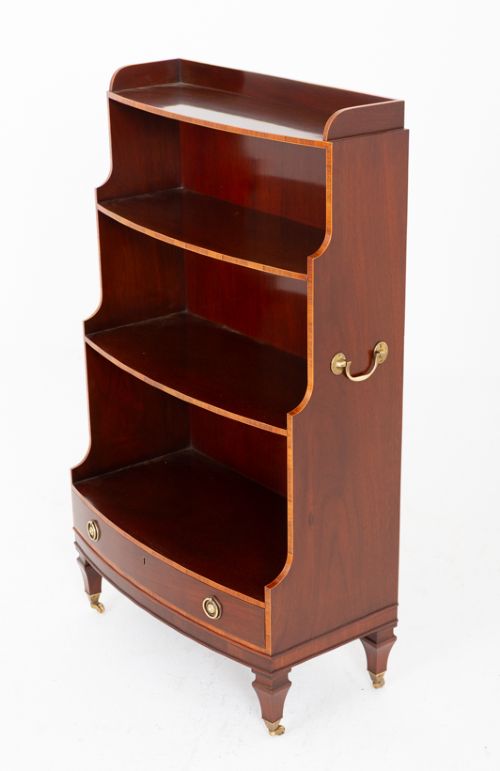
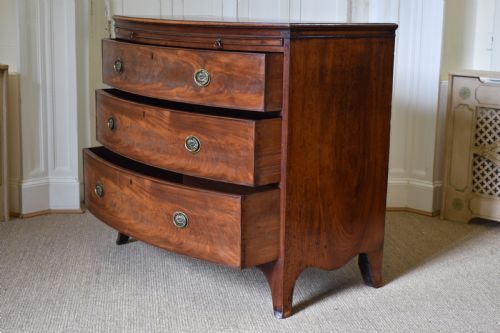
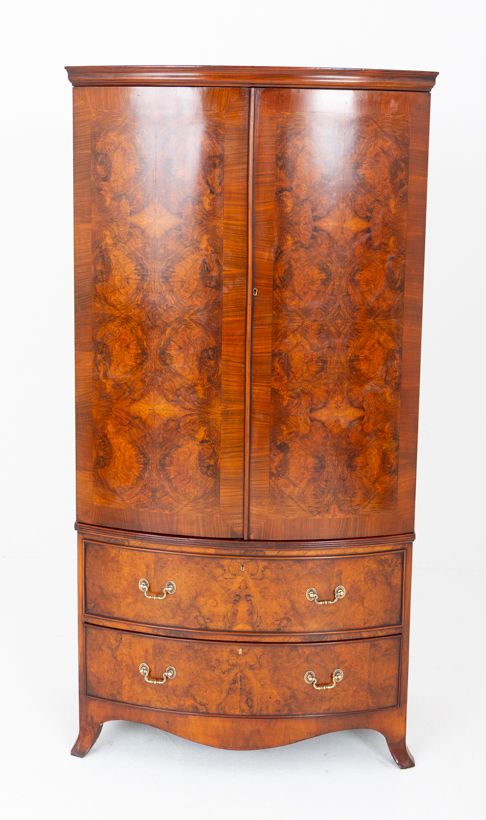
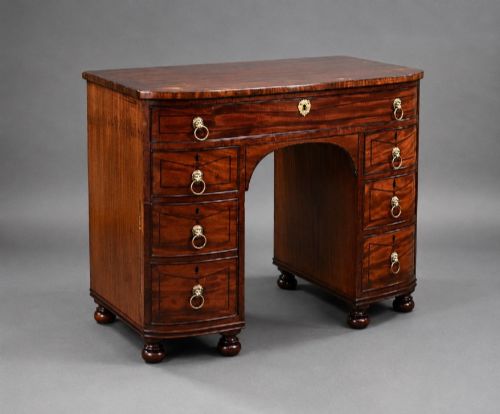
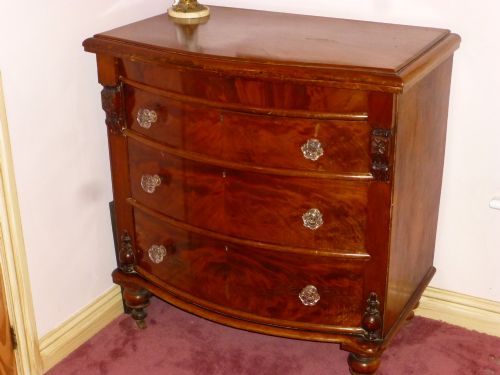
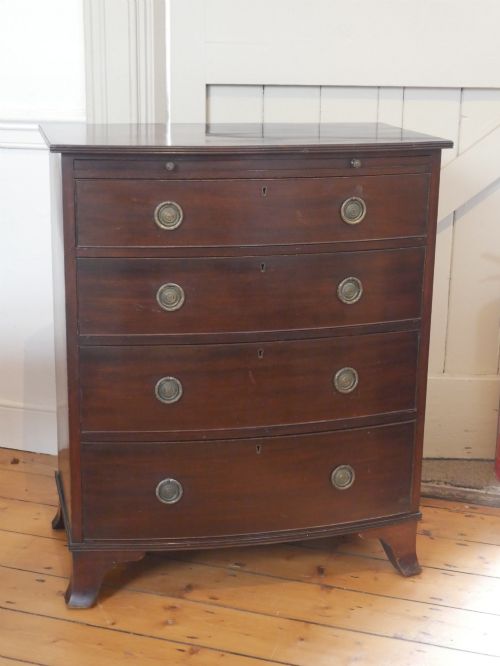
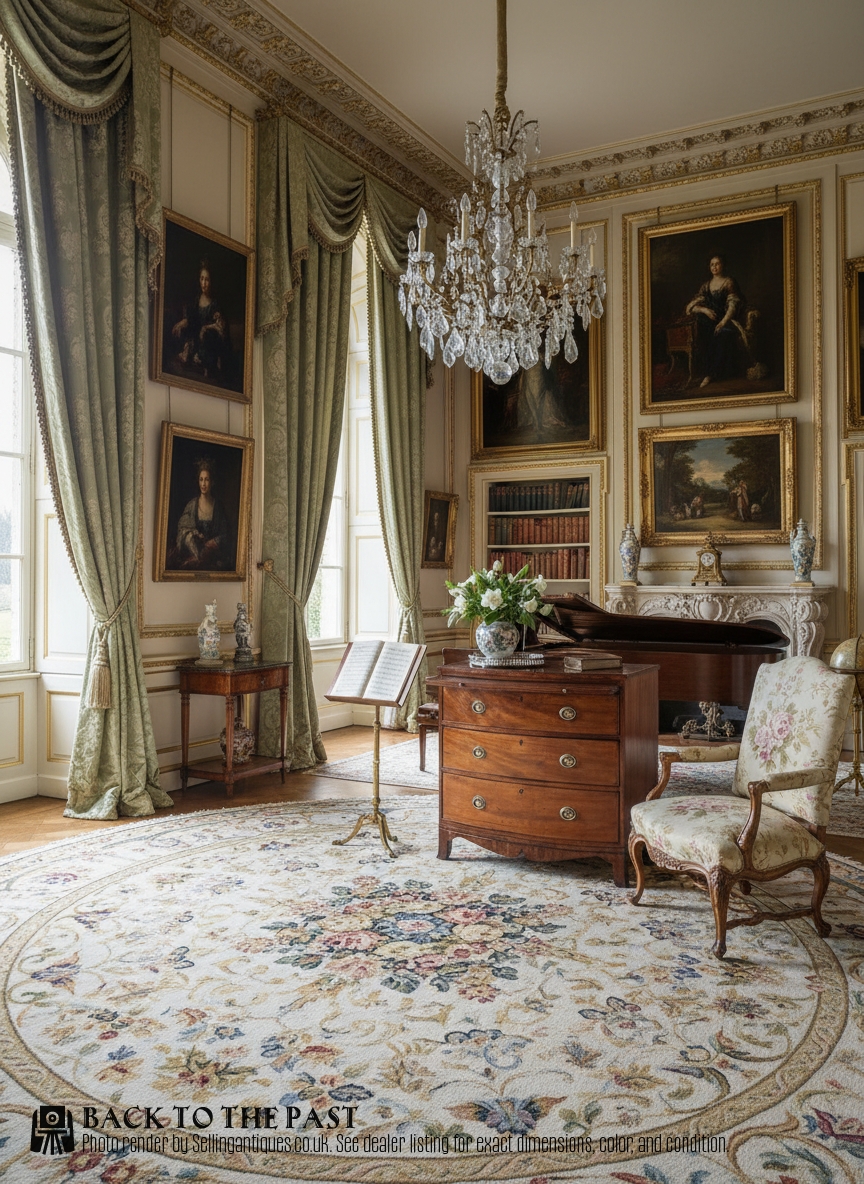
Regency bow front drawers comprise a distinct group of English storage furniture built during the early nineteenth century and the wider Regency era. These pieces present a prominent outward-curving front that softens the standard rectangular silhouette of a traditional chest.
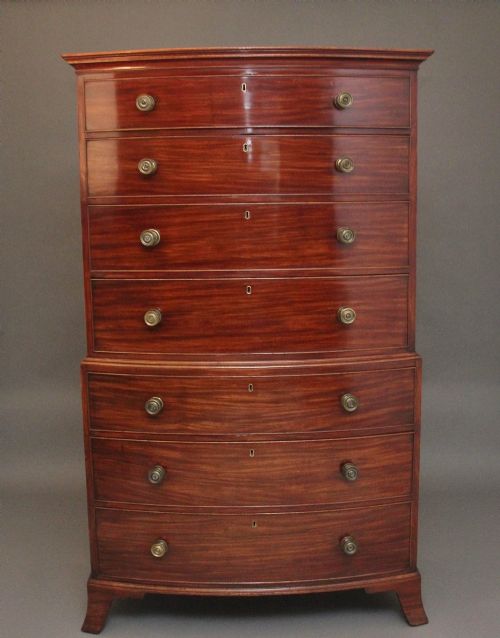
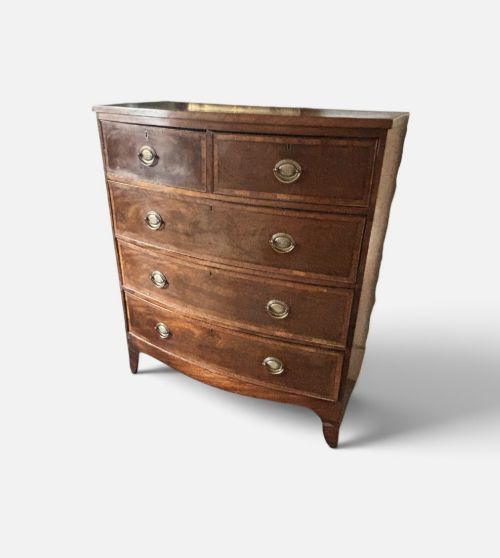
The version most commonly encountered on this page is the mahogany chest of drawers, often featuring multiple graduated long drawers. Examples range from standard proportions to compact small chests and taller variants.
Alongside timber builds, the archive shows occasional painted wood surfaces and specialised variations incorporating cross-banding or satinwood inlay. The prevailing origin is English cabinet making from the opening decades of the 1800s.
How They Were Made
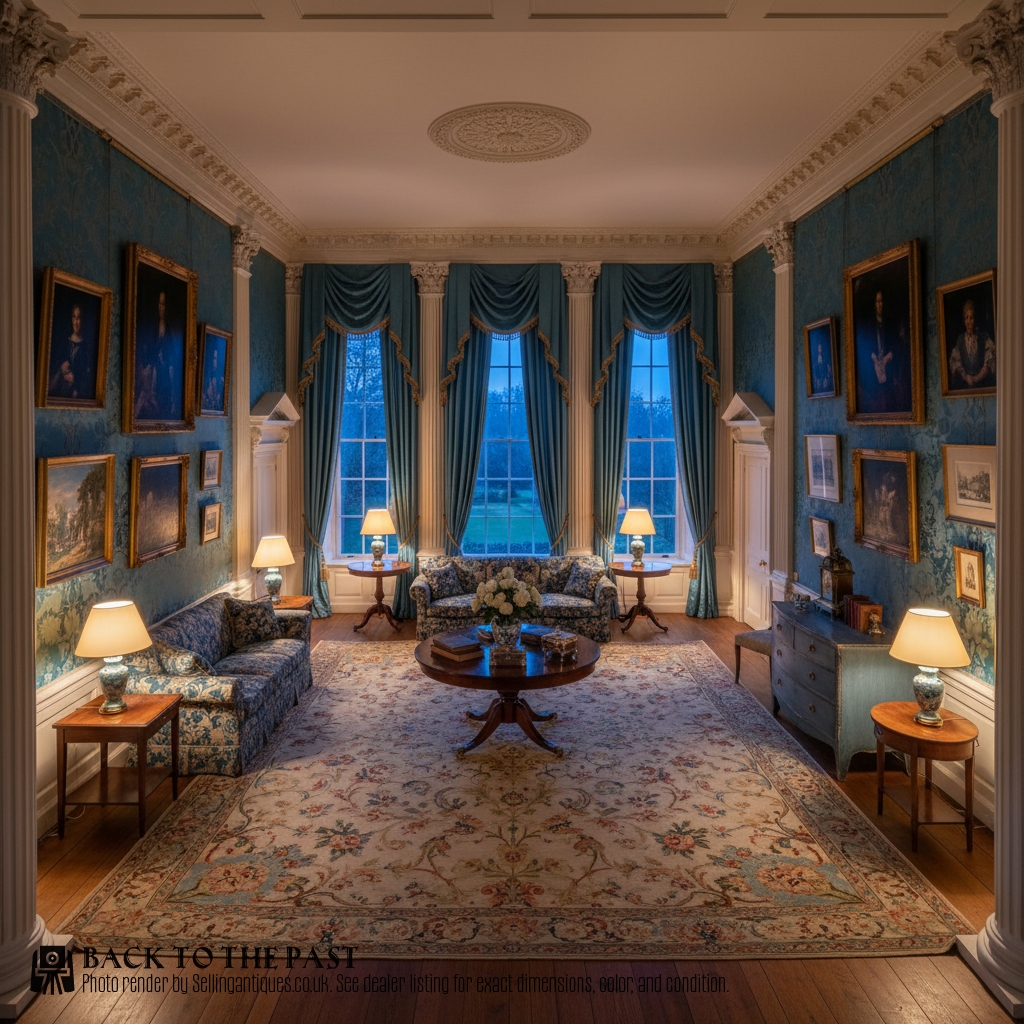
Makers constructed these pieces primarily from solid and veneered mahogany, frequently selecting figured timber for the main facade. Secondary woods formed the internal drawer linings and structural framing.
The characteristic curved front required precise carpentry to shape the solid or laminated wood correctly. Brass handles, including oval plate designs, completed the operational hardware on the drawer fronts.
Retail Price Guide 2026
Typical UK retail prices for regency bow front drawers, calculated from the Sellingantiques database of over a million retail prices indexed since 2003. This retail price guide relies exclusively on Sellingantiques data; no external sources or auction records are used, so the figures do not describe the wider market.
Listings feature nineteenth century items built from mahogany, painted wood, and brass, spanning the Georgian, Regency, and English Country styles.
What Varies in Quality
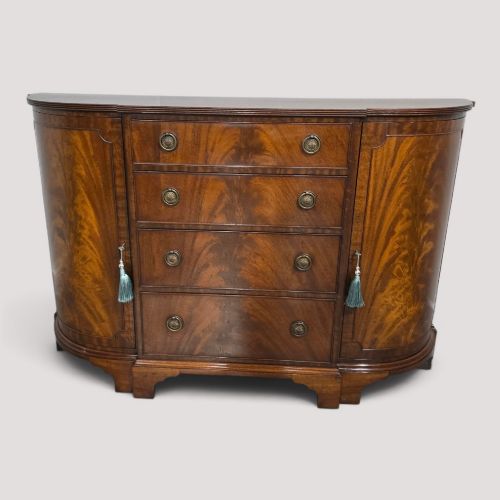
The selection of timber grain largely dictates visual merit, with highly figured mahogany and contrasting satinwood stringing setting apart finer examples. The handling of the curved facade and the crispness of the edge moulding reveal the original cabinet maker's skill.
Proportions also govern desirability, as smaller scale chests and well-balanced tall chests command particular attention. The integration of original brass hardware and the preservation of the polished wood surface contribute significantly to the standing of each piece.
The Regency Bow Front Drawers Glossary
- Bow front
- A convex curved cabinet front that swells outward from the corners. This shape defines the entire aesthetic of these chests.
- Cross-banded
- A border technique where thin strips of veneer are laid perpendicular to the grain of the surrounding panel. It adds a neat decorative frame to the drawer fronts.
- Satinwood
- A pale, lustrous yellow timber imported from tropical regions. It is often used for contrasting inlay work on Regency furniture.
- Graduated drawers
- A sequence of drawers that decrease in depth from bottom to top. This arrangement maintains visual balance on the chest facade.
- Sabre legs
- Outward-curving supports that sweep away from the body of the furniture. They appear on select low-profile regional examples.
Frequently Asked Questions
How do I date a bow front chest?
Examine the construction methods of the drawer linings and the timber selection on the facade. Early nineteenth century pieces typically show hand-cut dovetails and distinct secondary woods.
Hardware styles also provide clues, as oval brass plates belong to the Regency period while later Victorian iterations shifted toward wooden knobs or different lock mechanisms.
Where should I place these in a room?
These chests function effectively in bedrooms, hallways, or living spaces as primary storage units. Their curved profile prevents them from looking blocky against flat walls.
Ensure the placement allows adequate clearance for the drawers to open fully without obstruction from nearby furniture.
How do I care for the mahogany surface?
Maintain the finish by dusting regularly with a dry, soft cloth and avoiding direct sunlight or excessive heat sources. These environmental factors dry out older timber and crack the polish.
Apply a traditional wax polish occasionally to nourish the wood and preserve the natural lustre without building up heavy residue.
What is the difference between standard and small chests?
Small chests generally measure lower in height and narrower across the front than standard bedroom storage pieces. Cabinet makers built these compact versions for smaller dressing rooms or tight spaces.
Collectors often pursue these reduced proportions because they fit modern room layouts more easily while retaining full detailing.