



Blue Chest of Drawers
A blue chest of drawers brings quiet depth and historical character to a room through centuries of painted timber surfaces.
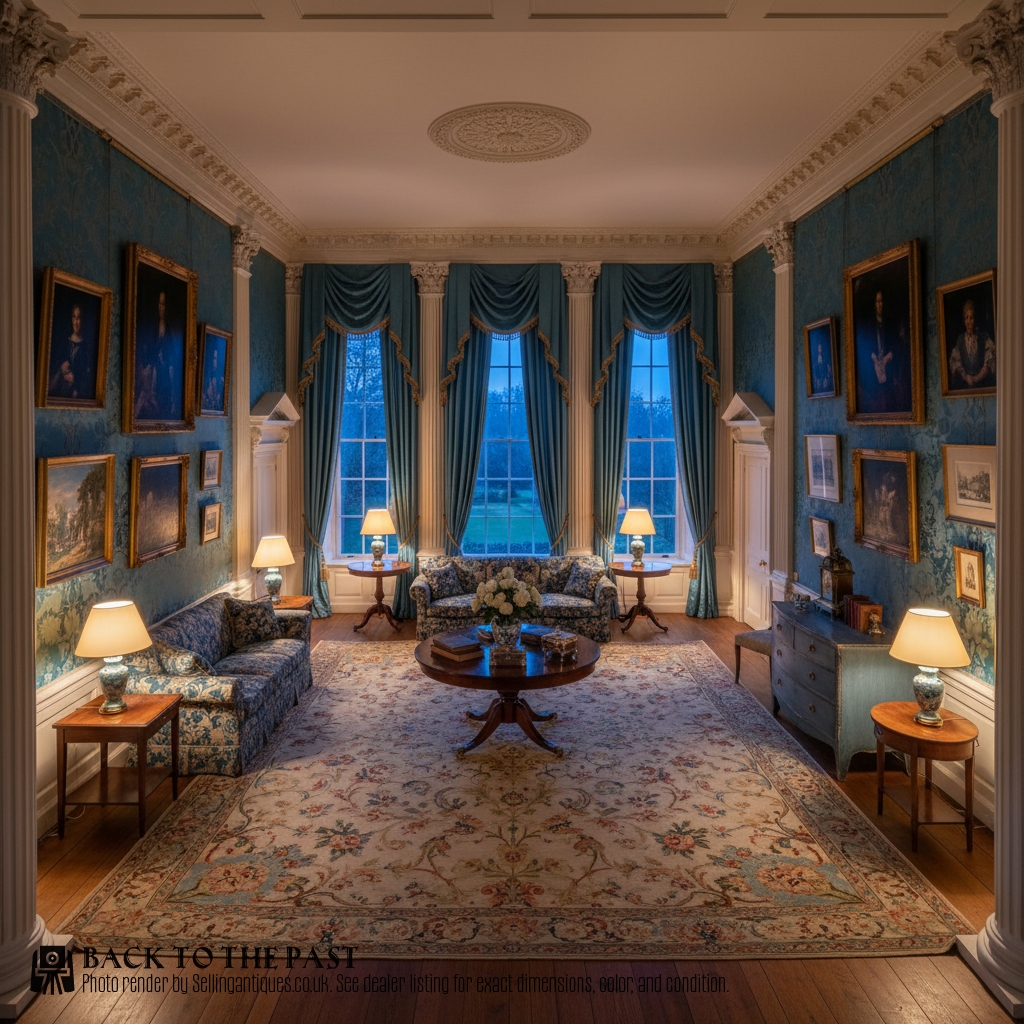
What They Are
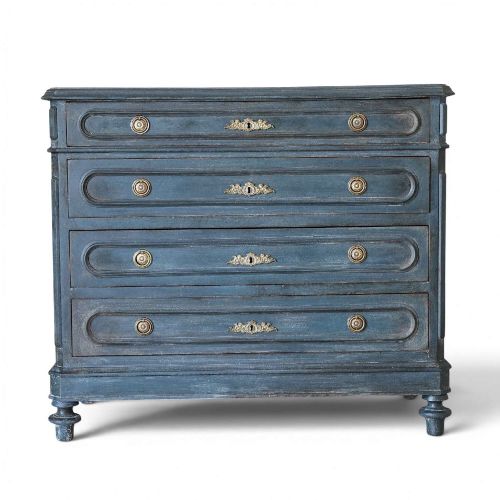
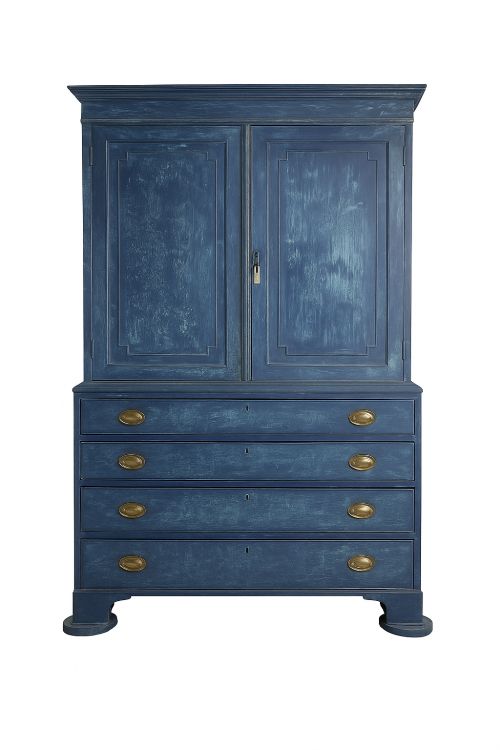
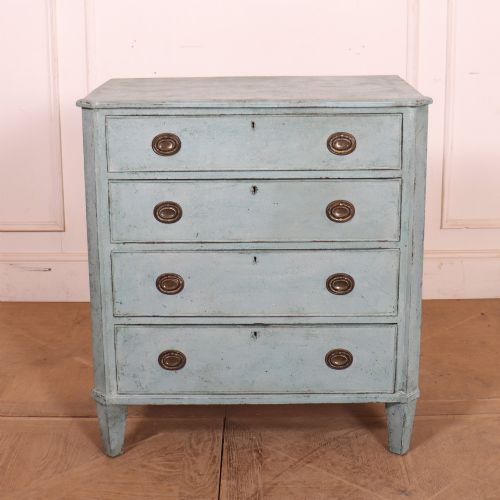
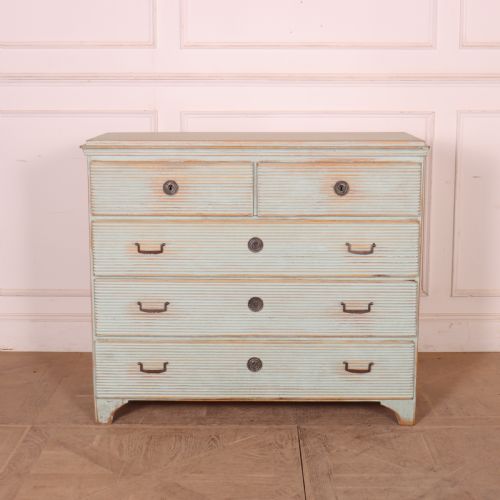
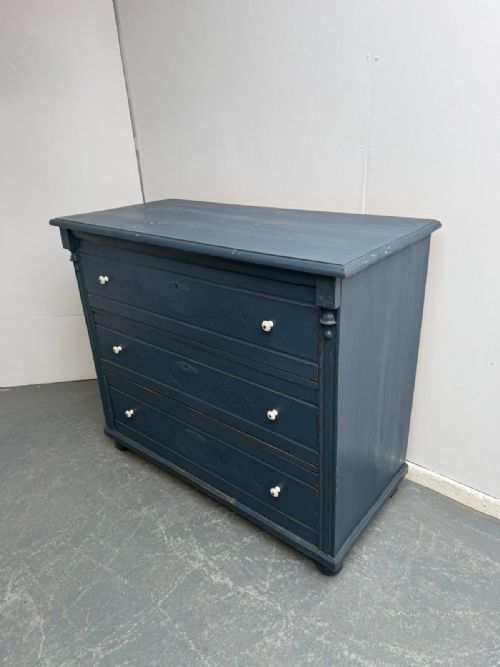
A blue chest of drawers combines functional storage with historic decorative painted finishes across various regional traditions. You encounter forms ranging from Georgian and Victorian pine carcases to continental commodes with serpentine fronts.
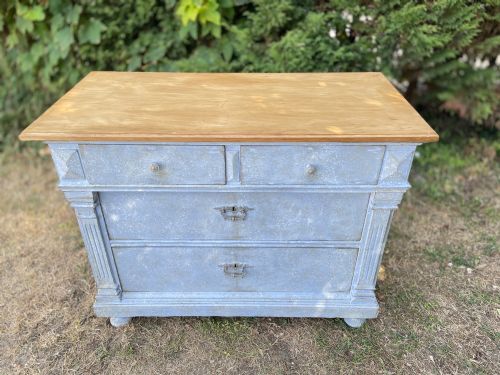
The English examples lean towards country utility in pine, often featuring later applications of mottled or icy blue paint over older wood. Meanwhile, continental pieces from France, Portugal, and the Netherlands often display formal revival styles or rococo curves.
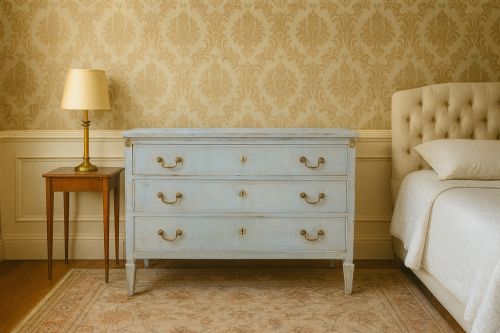
Buyers look for these pieces to anchor a neutral interior with a bold splash of historic colour. The selection balances sturdy utilitarian storage with decorative statement items from the eighteenth and nineteenth centuries.
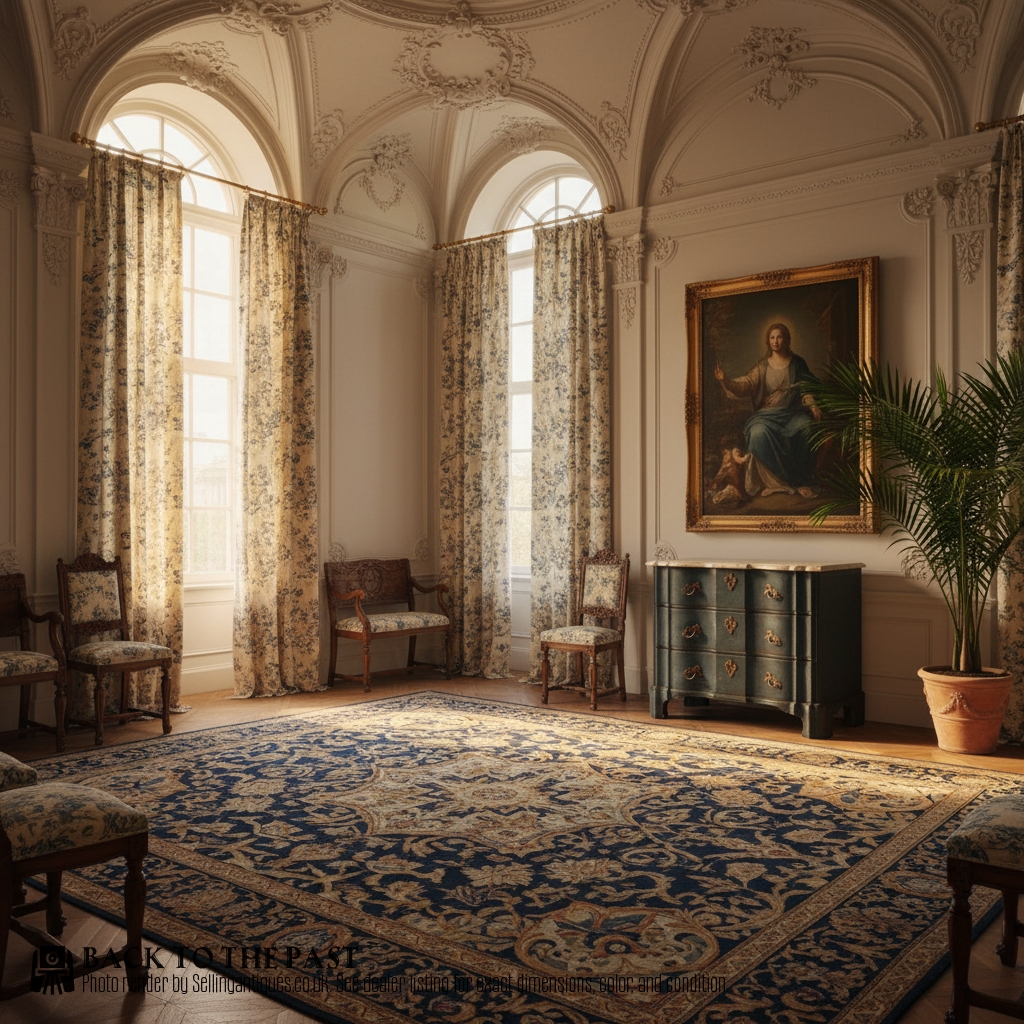
How They Were Made
Carpenters constructed the carcases predominantly from solid pine and various hardwoods, utilising traditional joinery methods suited to each period. Drawers were assembled with hand-cut joints to withstand daily domestic use.
Surfaces received layers of historic paint finishes, ranging from early oil-based pigments to later decorative brushwork. Hardware typically consisted of cast brass drop handles or metal pulls fastened securely to the drawer fronts.
Retail Price Guide 2026
Typical UK retail prices for blue chest of drawers, calculated from the Sellingantiques database of over a million retail prices indexed since 2003. This retail price guide relies exclusively on Sellingantiques data; no external sources or auction records are used, so the figures do not describe the wider market.
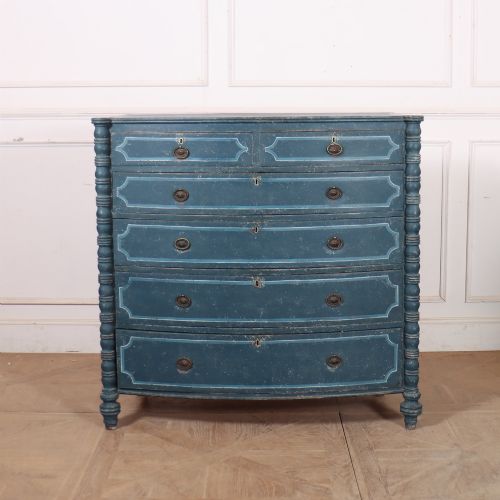
Several pieces wear coats of icy scandi blue and marine speckle, proving ancestors had a fine eye for cheerful colour.
What Varies in Quality
Quality rests in the original structural integrity of the timber carcase and the historical honesty of the painted surface. Pieces retaining their early or original pigment layers command greater interest than those with recent, heavy-handed overpainting.
Fine craftsmanship shows in the subtlety of the painted finish, whether a delicate speckle, a distressed mottled effect, or clean geometric lines. The integration of period details such as marble tops and shaped serpentine fronts also elevates the standing of a commode.
The Blue Chest of Drawers Glossary
- Commode
- A European term for a low chest of drawers or cabinet, often highly decorative. These pieces frequently feature shaped fronts and marble tops.
- Serpentine
- A furniture front curving outward at the centre and inward at the sides in a gentle 'S' shape. This profile requires significant woodworking skill to execute properly.
- Distressed finish
- A surface treatment designed to simulate the natural wear and ageing of historic paint over decades of use. It highlights the texture of the underlying timber.
- Georgian
- Pertaining to the period of the English kings George I through George IV, spanning the eighteenth and early nineteenth centuries. Furniture from this era is noted for balanced proportions and sturdy construction.
Frequently Asked Questions
Are these chests of drawers original?
The age of the timber carcases spans the eighteenth and nineteenth centuries, with construction methods typical of those periods. Many pieces feature historic painted finishes applied later in their working lives.
Some items retain early decorative schemes, while others showcase traditional distressing applied to older pine and hardwood bodies to emulate period patination.
How do I clean painted furniture?
Dust surfaces gently with a soft, dry cloth to prevent the accumulation of grit. Avoid harsh chemical cleaners and abrasive cloths that might disturb the historic paint layers.
Maintain stable indoor humidity levels to protect the underlying timber carcase from shrinking or expanding excessively over time.
What is a commode?
A commode is a continental European term for a decorative chest of drawers standing on relatively short legs. They often feature curved fronts and sophisticated surface treatments.
In French and Dutch traditions, these forms served formal rooms rather than utilitarian bedchambers.
How do I date a chest?
Examine the timber species, drawer construction techniques, and the style of the hardware to determine the period of manufacture. Eighteenth-century pieces often display hand-sawn boards and pegged joinery.
Nineteenth-century examples, particularly Victorian pine chests, typically utilise more standardised machine-cut elements alongside traditional hand-finishing.