



Classic Mahogany Commode
A classic mahogany commode brings timeless timber and practical storage into a room, offering deep drawers and rich grain.
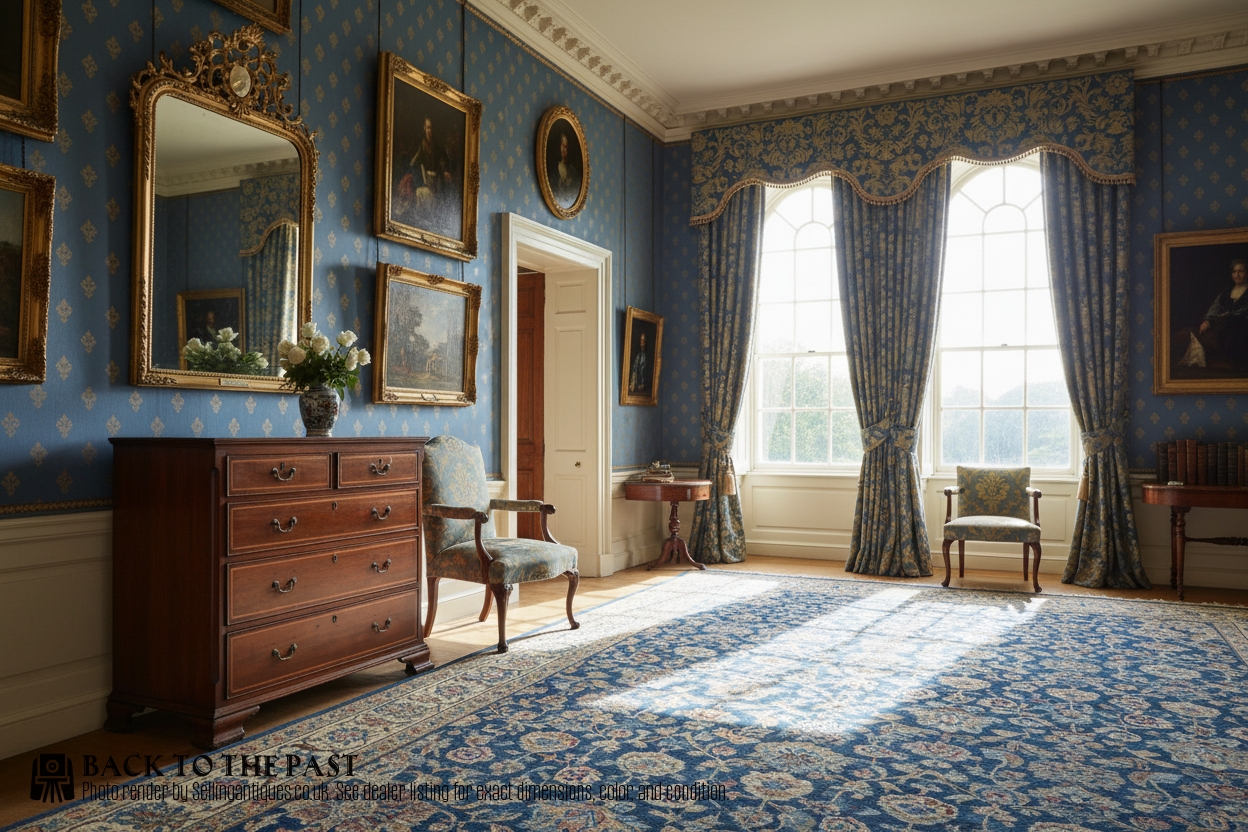
Classic Mahogany Commode
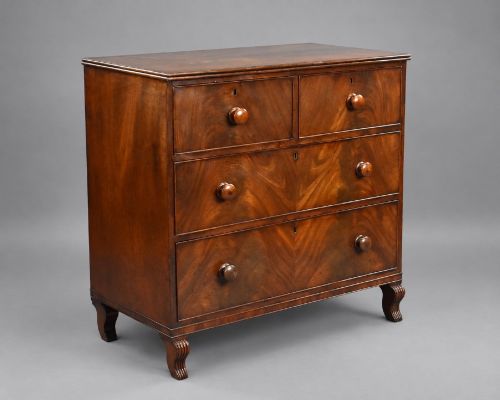
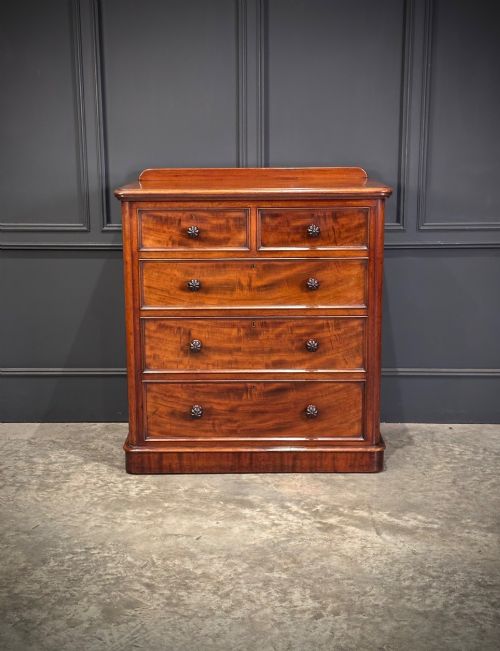
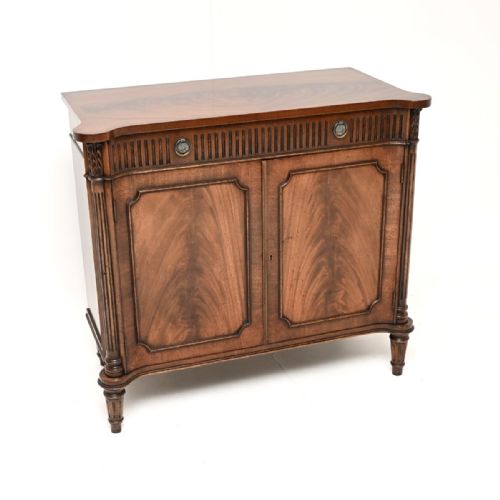
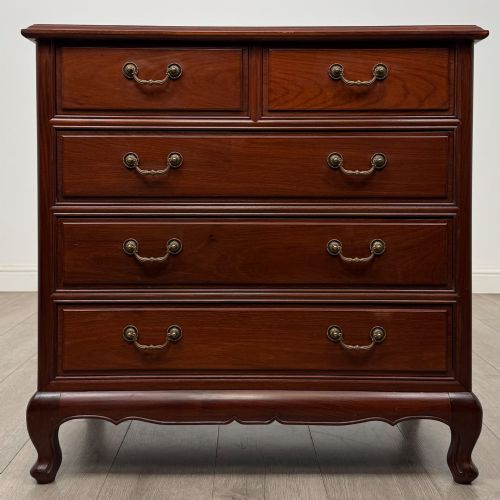
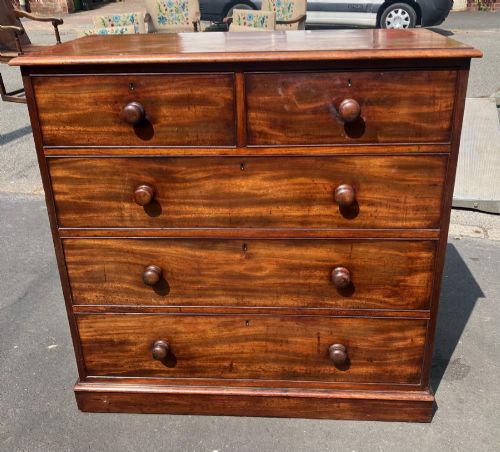
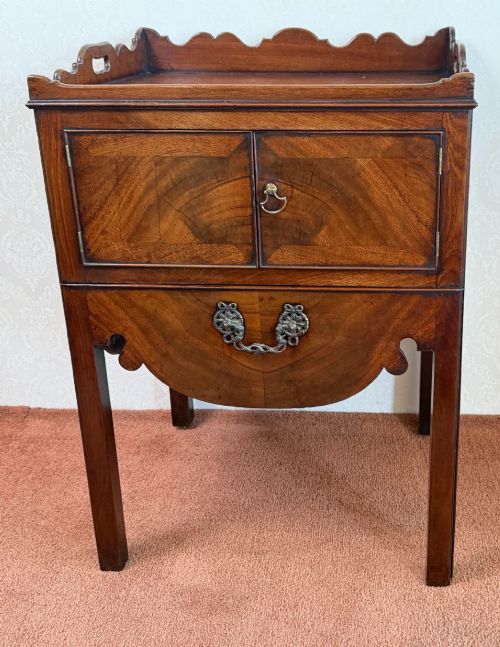
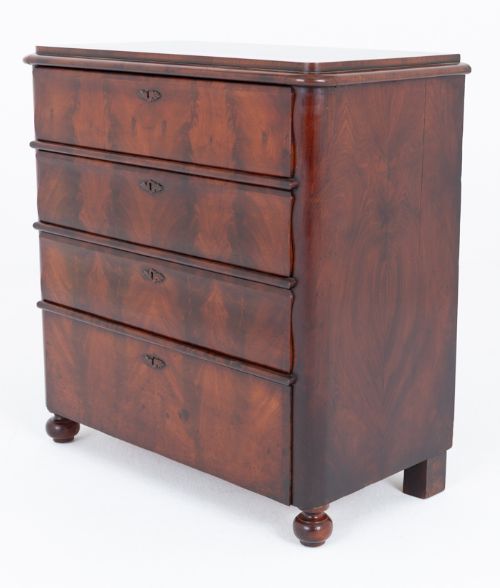
A classic mahogany commode functions primarily as a chest of drawers or bedside cabinet, designed for bedroom or living spaces. These pieces emerge from Georgian, Regency, Victorian, and Edwardian periods, showcasing both straight and bow-fronted forms.
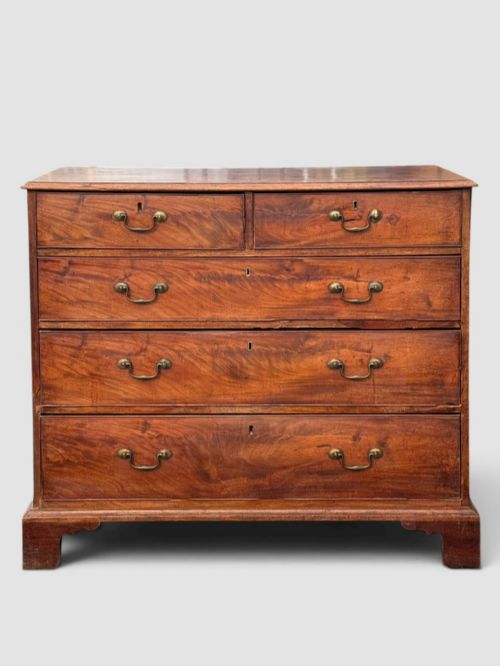
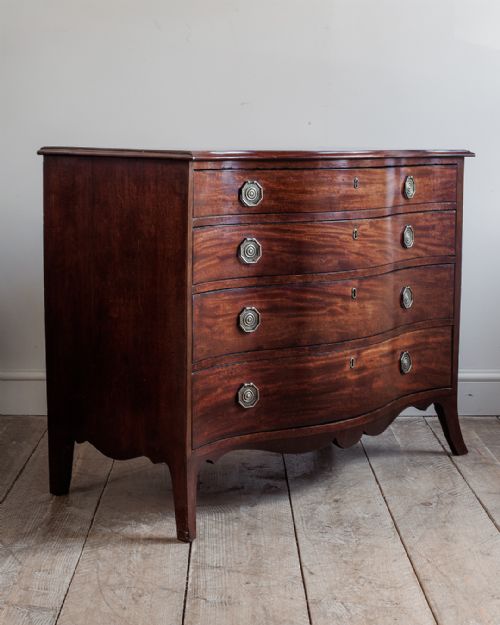
Buyers encounter numerous variations on this page, ranging from mid-18th century tray-top bedside tables to serpentine chests and grand Regency designs. Many examples originate from the 18th and 19th centuries, utilising rich timber veneers.
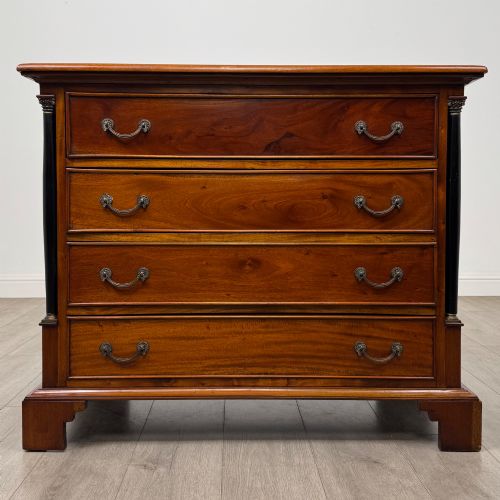
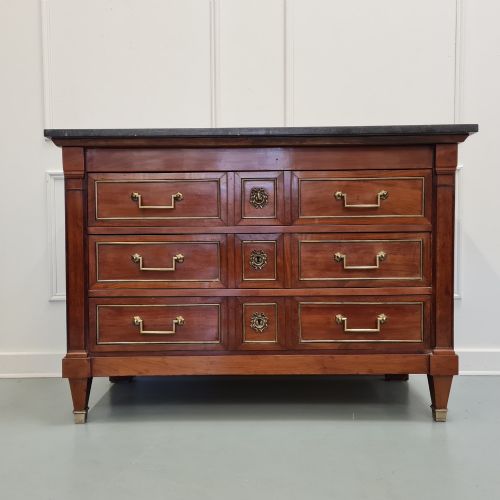
Regional and stylistic influences shape the selection, including George III pieces, Biedermeier cabinets, and French Empire commodes topped with marble. Each version provides robust storage combined with distinct period aesthetics.
Assessing Quality and Execution
Quality separates pieces through the selection of timber veneers, such as richly figured flame mahogany, against simpler straight-grained boards. The precision of wood inlay and boxwood stringing also dictates the refinement of the piece.
Hardware selection marks a clear distinction, with substantial original brass handles elevating the status of a chest compared to later replacements. Furthermore, the fluidity of serpentine or bow-front construction demonstrates superior joinery skill.
Classic Mahogany Commode Retail Price Guide 2026
Typical asking prices for classic mahogany commode among the pieces listed under this phrase on Sellingantiques today, from the lower quarter to the upper quarter. They describe what is for sale here now, not the wider market.
Listings span multiple eras, encompassing Georgian, Regency, Victorian, and Edwardian periods alongside continental Biedermeier and French Empire designs.
C. Hindley
The Classic Mahogany Commode Glossary
- Serpentine
- A front shape curving inward centrally and outward at the sides. This contour requires advanced woodworking skill to execute smoothly.
- Bow-front
- A convex curved front projecting outward from the frame. This form gained popularity during the Georgian and Regency periods.
- Flame mahogany
- A veneer cut from timber fork joints displaying a distinct flickering flame pattern. Cabinet makers used this to create dramatic visual effects on drawer fronts.
- Boxwood stringing
- Thin inlay lines of pale boxwood set into darker mahogany surfaces. It provides sharp linear contrast along drawer borders.
- Tray top
- A raised rim edging the top surface of small bedside cabinets. This feature prevents items from rolling off the edge.
Classic Mahogany Commode: Frequently Asked Questions
What is a classic mahogany commode?
A classic mahogany commode is a timber storage unit, typically formed as a chest of drawers or bedside cabinet. These pieces date primarily from the Georgian, Regency, and Victorian eras.
They utilise dense mahogany timber, frequently enhanced with veneer, brass handles, and occasionally marble tops. Their primary function remains practical storage combined with decorative presence.
How do I date a mahogany commode?
Dating relies on observing structural forms, handle types, and secondary timbers like pine. Georgian pieces often feature hand-cut dovetails and bracket feet, while Regency examples showcase bolder curved fronts.
Later Victorian and Edwardian items may display heavier proportions and machine-sawn components. Comparing the carcass construction to established period styles clarifies the timeline.
Where should I place a commode?
These cabinets suit bedrooms as bedside tables or chest storage, and function equally well in hallways or living rooms. Their flat tops provide space for lamps and display objects.
Positioning them away from direct heat sources protects the mahogany veneer and polish from drying out. Adequate clearance ensures drawers open smoothly without obstruction.
How do I care for mahogany furniture?
Maintain the wood by dusting with a soft, dry cloth and avoiding silicone-based polishes. Occasional application of beeswax preserves the natural lustre of the timber.
Keep the piece out of direct sunlight to prevent the mahogany grain from fading unevenly. Stable indoor humidity prevents the timber and veneer from warping.