
Mahogany Two Over Three
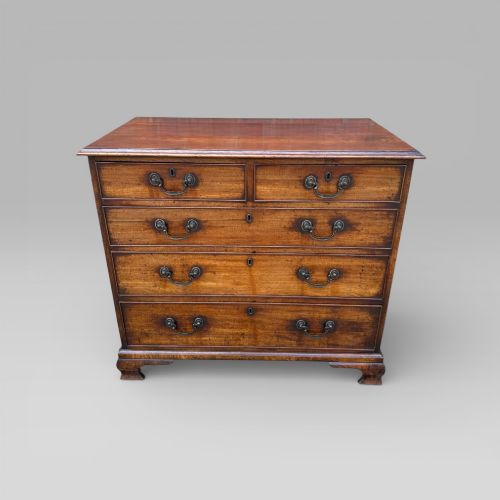
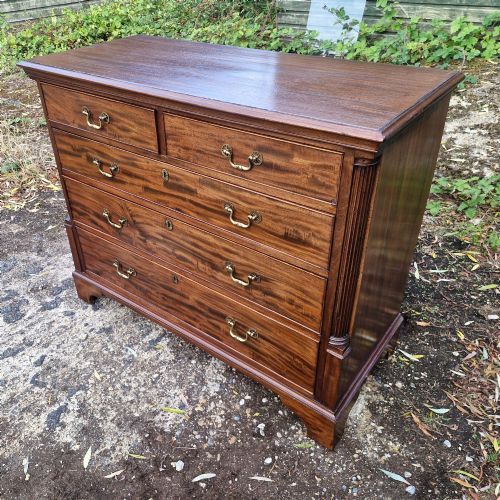
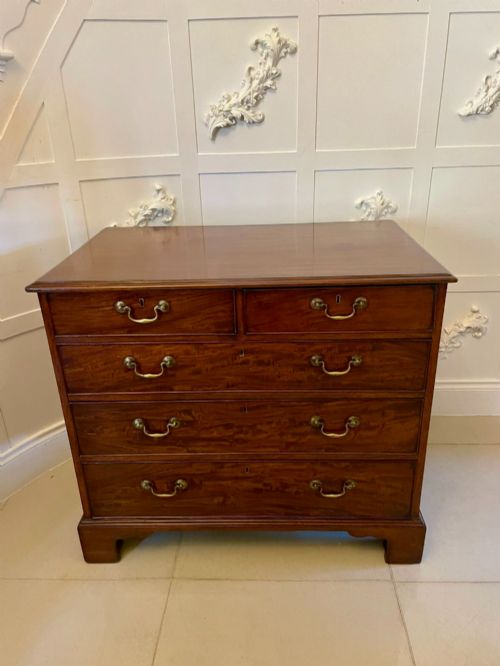
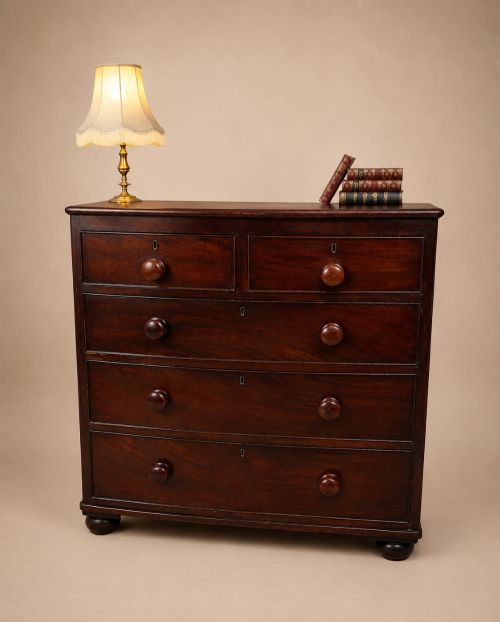
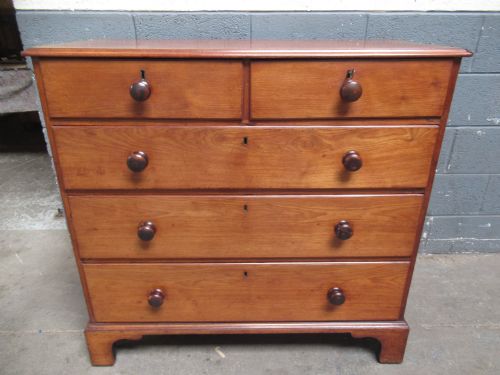
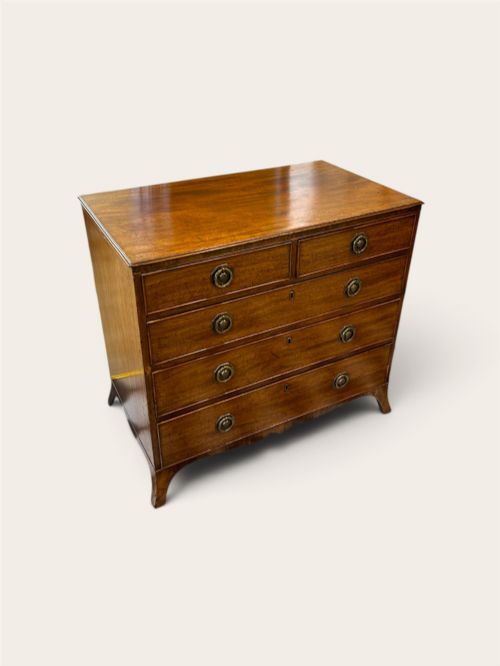
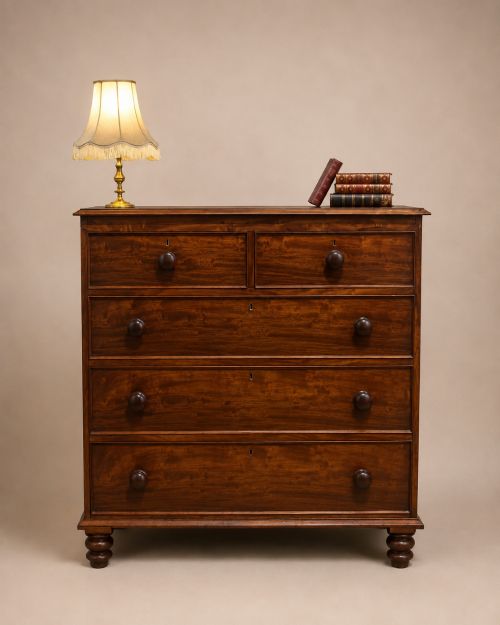
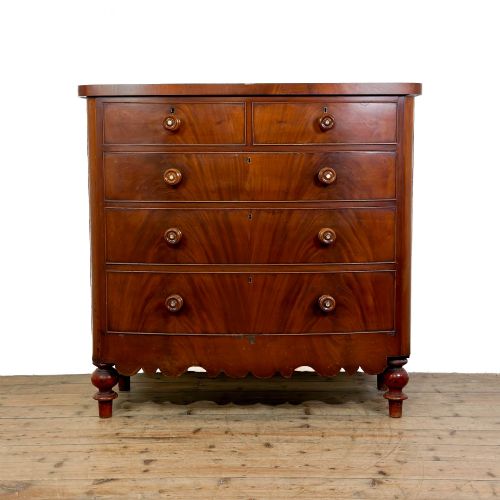
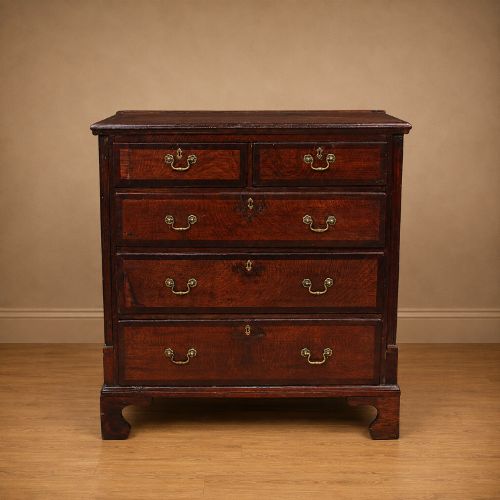
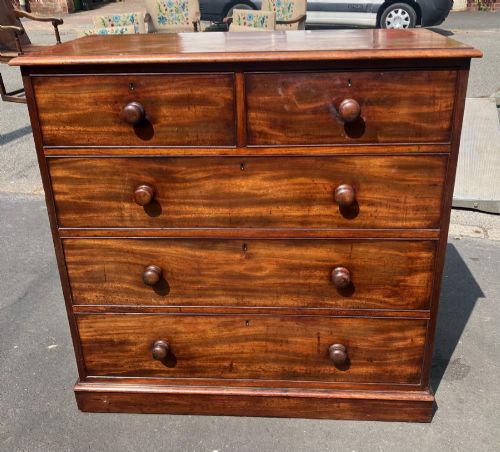
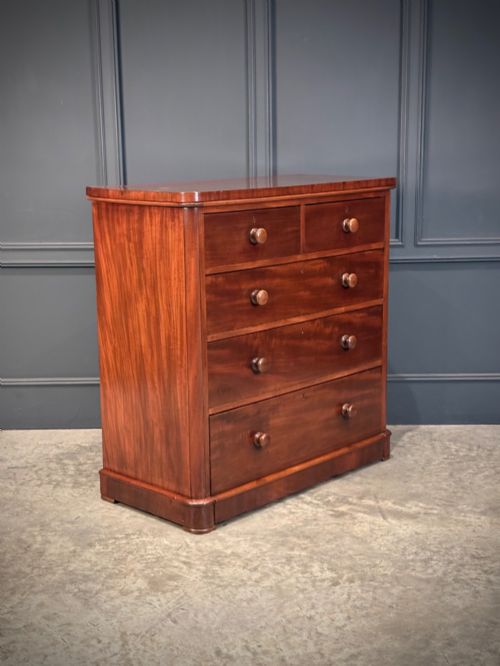
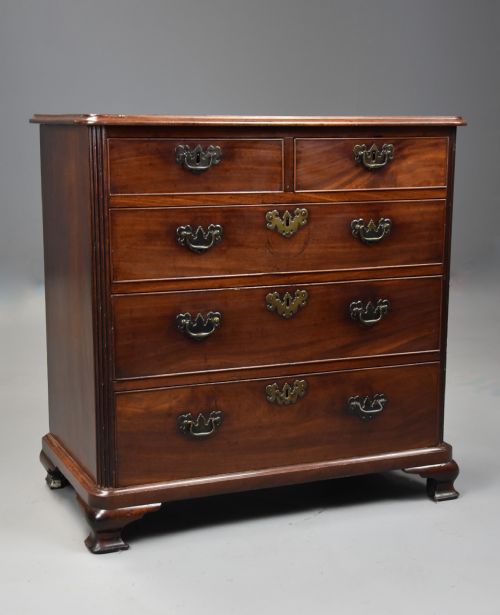
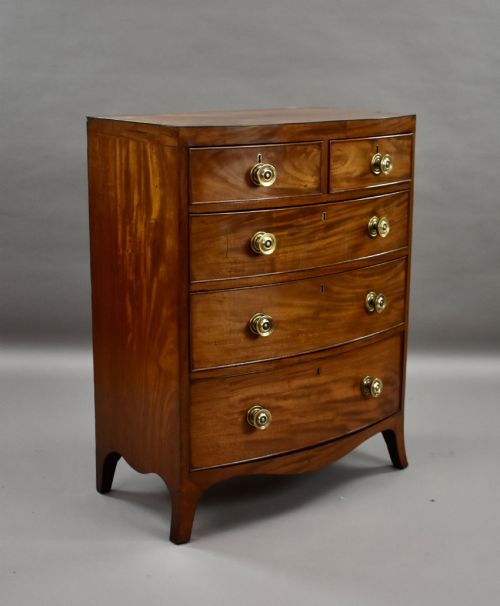
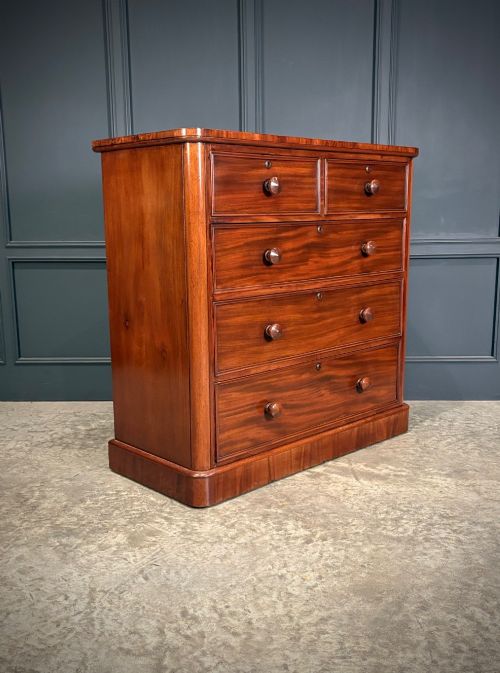
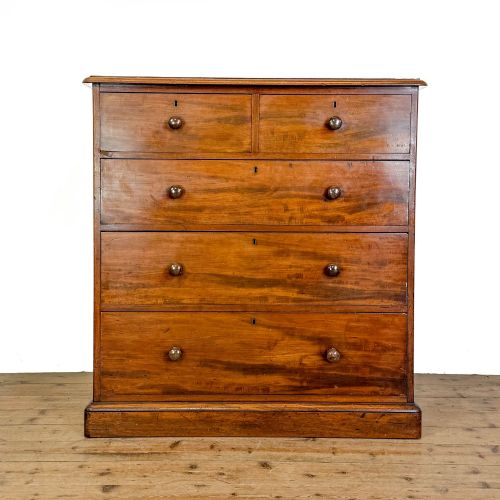
A mahogany two over three drawer chest is a traditional storage piece featuring two smaller drawers above three larger ones.
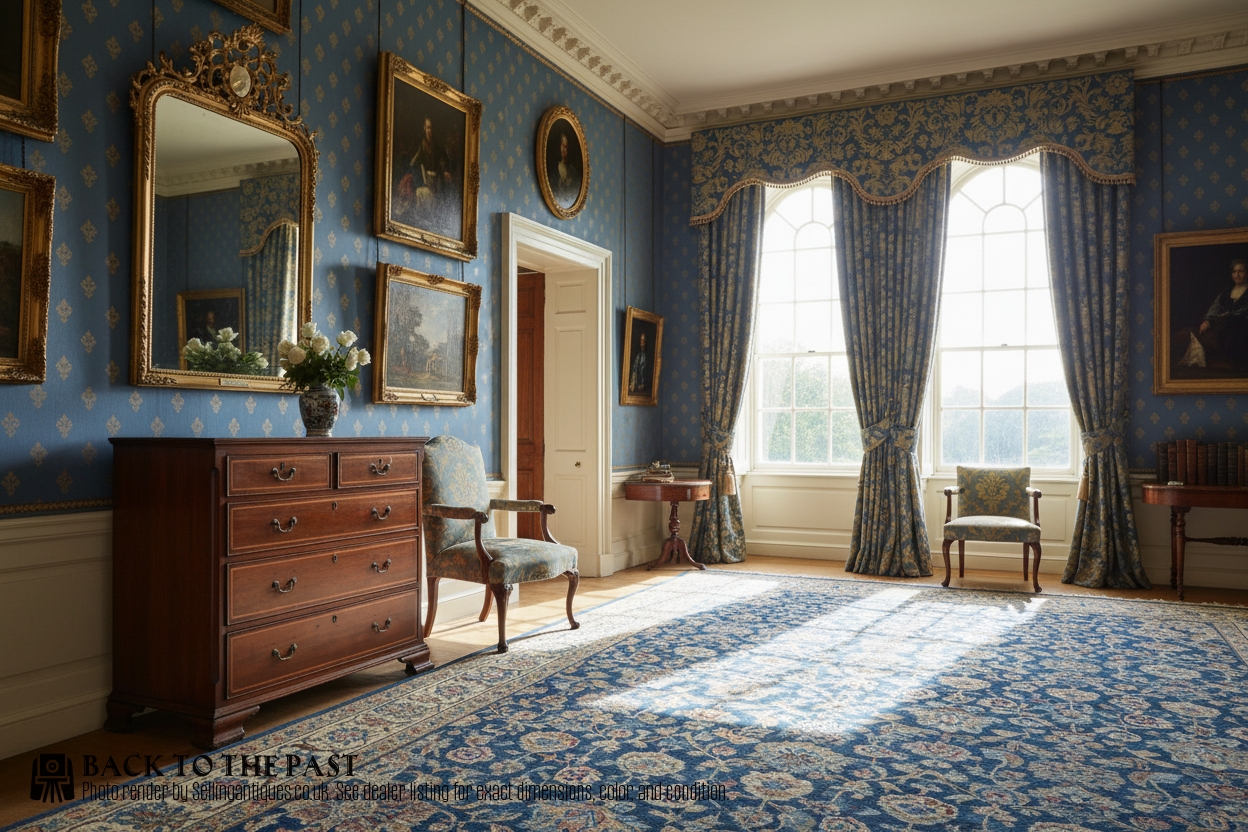
Mahogany Two Over Three
A mahogany two over three drawer chest organises storage through two smaller top drawers placed above three graduated full-width drawers below. These pieces appear frequently across Georgian, Victorian, Regency, and nineteenth-century periods.
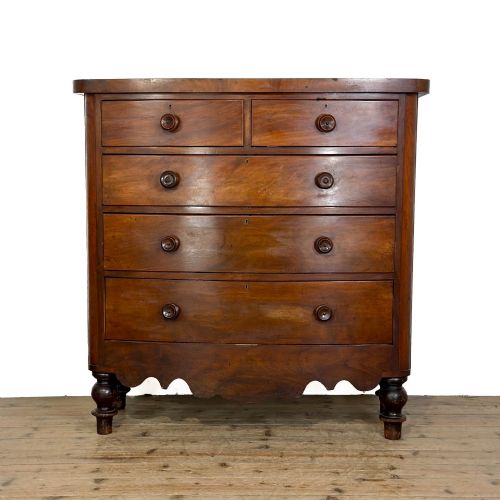
The most common formats on this page span straightforward rectangular carcases and bow-fronted designs. Makers also produced smaller proportions, narrow versions, and hall chests alongside serpentine shapes.
Makers constructed these storage pieces primarily during the eighteenth and nineteenth centuries. The structural forms remain consistent across periods while decorative details shift between eras.
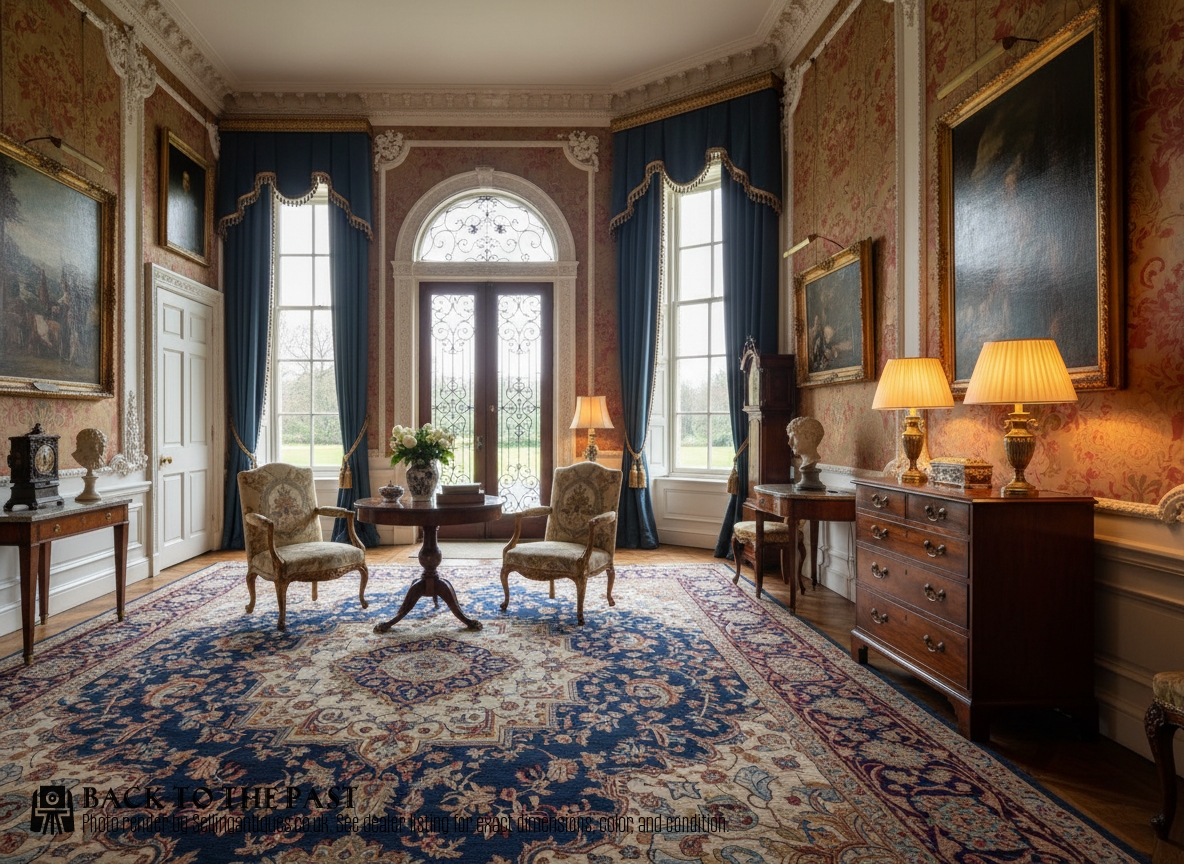
Materials and construction methods
Workshops built these carcases using solid timber alongside flame mahogany veneer and secondary woods such as oak and pine. Craftsmen selected dense grain patterns for primary visible surfaces.
Cabinet makers incorporated decorative elements including brass hardware, satinwood inlay, and floral inlay details. Crossbanding in oak and mahogany added contrast around drawer edges and top surfaces.
Mahogany Two Over Three Retail Price Guide 2026
Typical asking prices for mahogany two over three among the pieces listed under this phrase on Sellingantiques today, from the lower quarter to the upper quarter. They describe what is for sale here now, not the wider market.
Some chests retain working keys from the early nineteenth century, proving that past owners guarded their socks with genuine diligence.
Factors influencing overall quality
Quality rests upon the selection of timber figures and the precision of veneer work. Flame mahogany and delicate inlay require expert hand-cut fitting, whereas plain surfaces rely entirely on the depth of the timber's natural patina.
Proportion and scale distinguish finer examples from standard production. Small proportions, narrow carcases, and caddy tops demand specialised joinery compared to standard full-size chests.
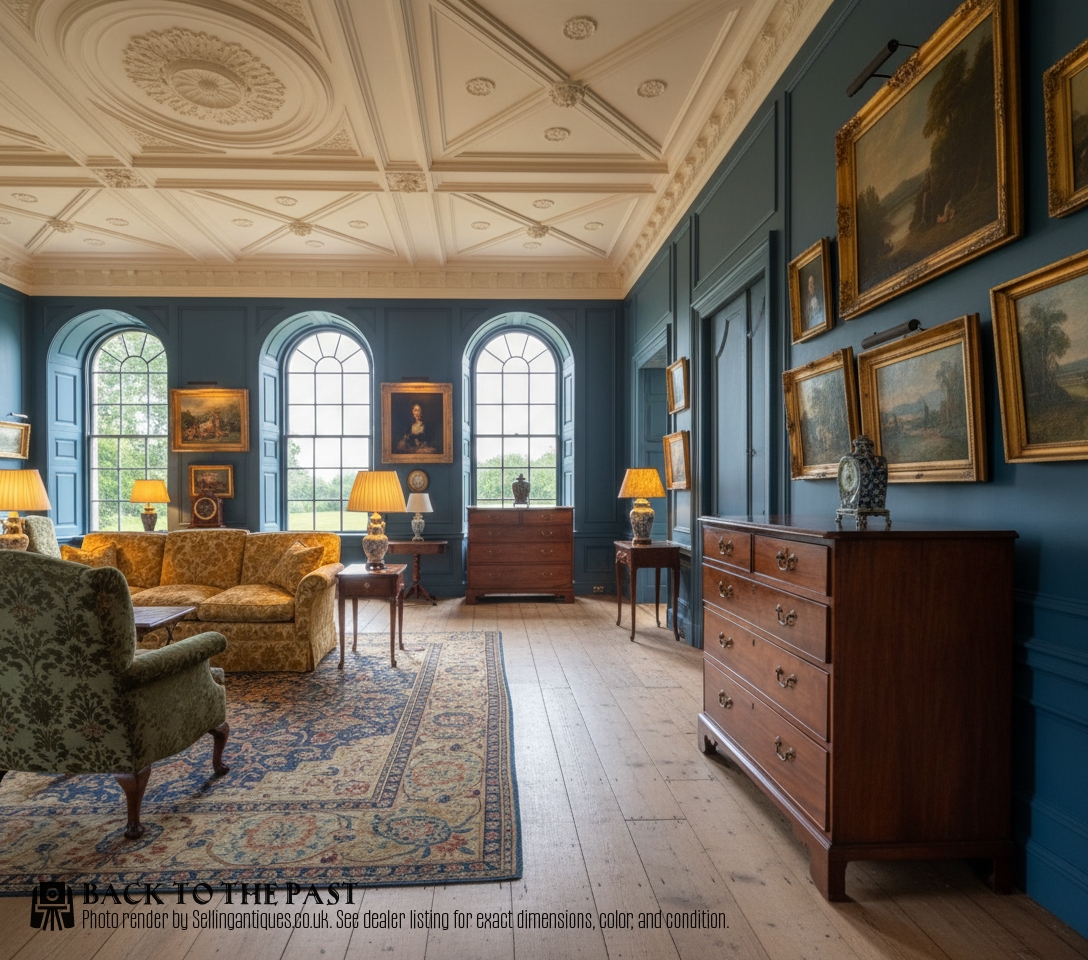
J Moorcroft
The Mahogany Two Over Three Glossary
- Bow front
- A convex curved front facade that projects outward in the centre. This curved shape appears frequently on nineteenth-century examples.
- Crossbanding
- A strip of veneer applied perpendicularly to the surrounding grain along the edges of a drawer or top. It creates a contrasting border effect.
- Flame mahogany
- A veneer cut from the fork of a mahogany tree where branches meet the trunk. This produces a dramatic, flame-like pattern across the wood.
- Caddy top
- A raised, moulded tabletop style with a stepped profile resembling the lid of a tea caddy. It is often found on late Georgian and Regency pieces.
- Patina
- The surface sheen and mellow colour developed by aged wood through decades of handling and polishing. Fine examples exhibit a deep, warm glow.
Mahogany Two Over Three: Frequently Asked Questions
What is a two over three chest?
A two over three chest is a standard drawer configuration featuring two smaller drawers placed side by side at the top, positioned above three wider drawers.
This layout provided efficient storage for smaller garments above bulkier items, remaining popular throughout the Georgian and Victorian eras.
How do I date a mahogany chest?
Dating relies on examining the construction methods, timber choices, and overall style characteristics of the piece. Georgian pieces often feature hand-cut dovetails and oak secondary woods.
Later Victorian examples tend to use machine-sawn components, pine linings, and heavier brass hardware or flame mahogany veneers.
What wood is used besides mahogany?
While mahogany forms the primary visible exterior, makers frequently utilised secondary timbers for internal drawer linings and structural framing.
Oak and pine appear commonly within the carcase interiors, while satinwood and lighter woods provide contrast for decorative inlay work.
How should I clean mahogany furniture?
Maintain the wood surface by dusting regularly with a soft, dry cloth to prevent the accumulation of abrasive particles. Avoid using modern silicone sprays or harsh chemical solvents.
Apply traditional beeswax periodically to nourish the timber and preserve the natural patina developed over the centuries.