





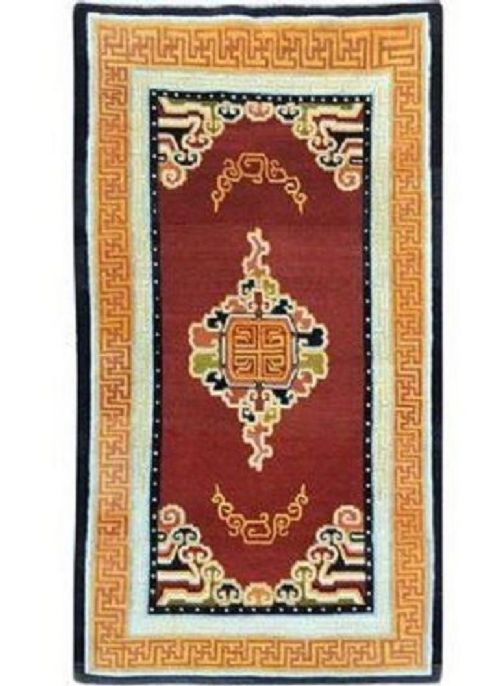
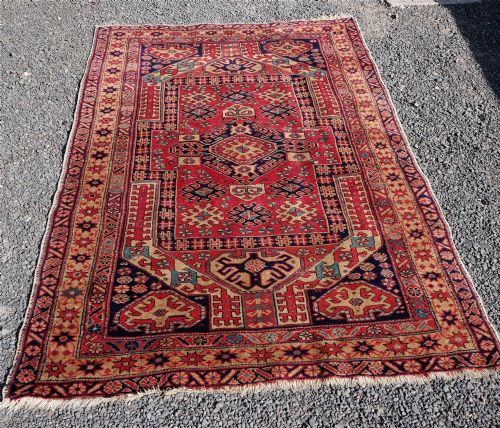
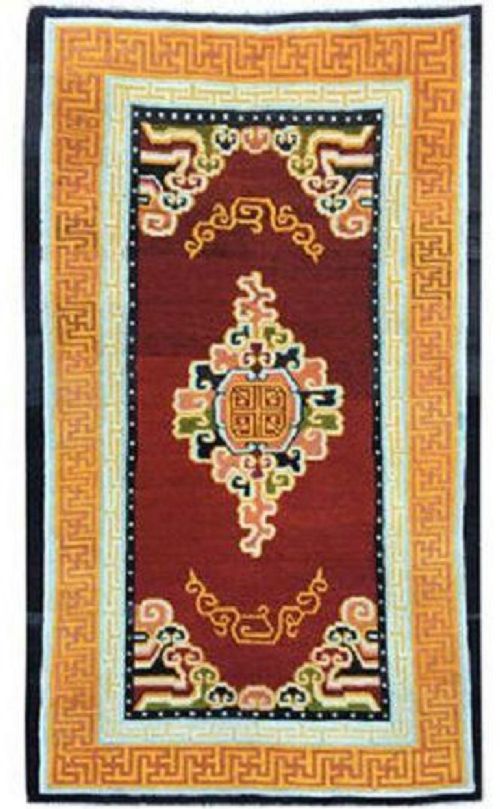
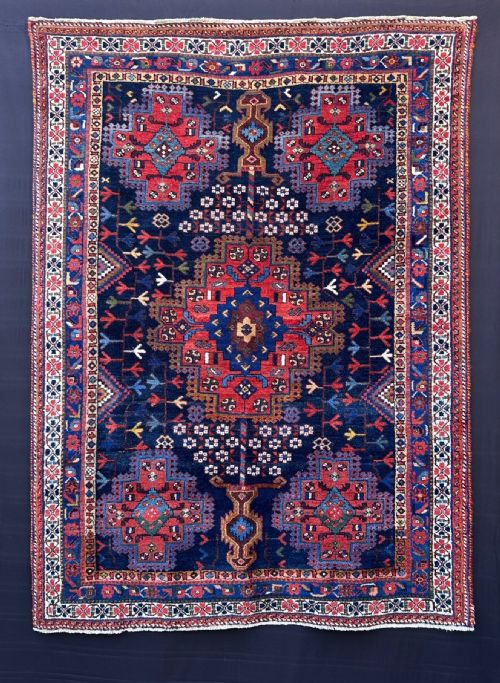
Red Woven Area Rug
A red woven area rug brings depth and structure to a room through centuries of traditional design.
Red Woven Area Rug
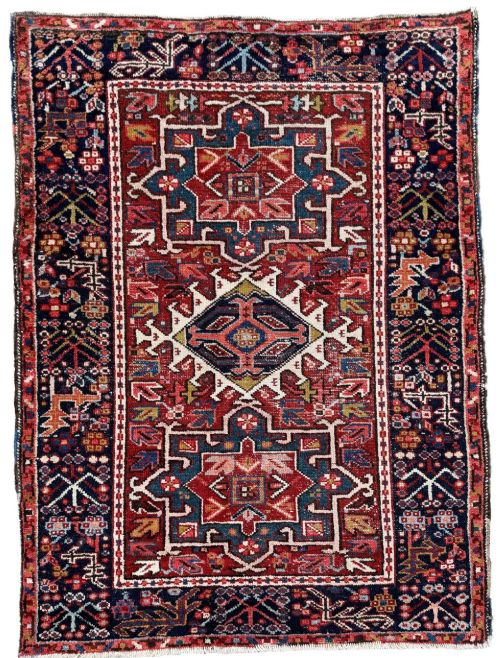
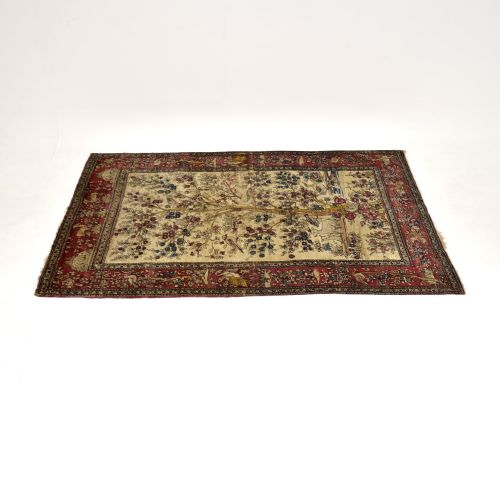
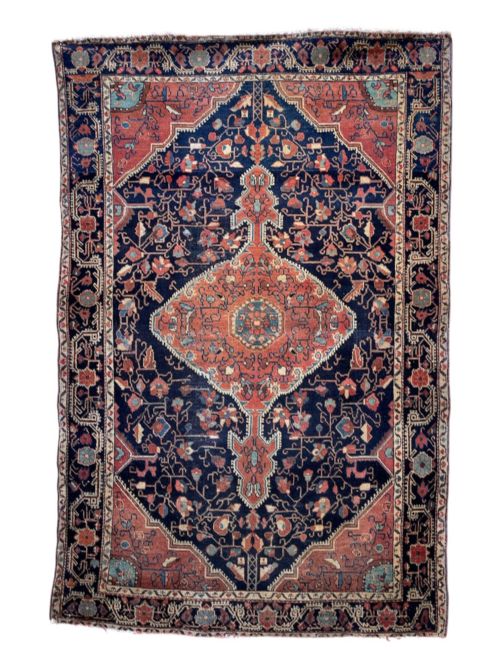
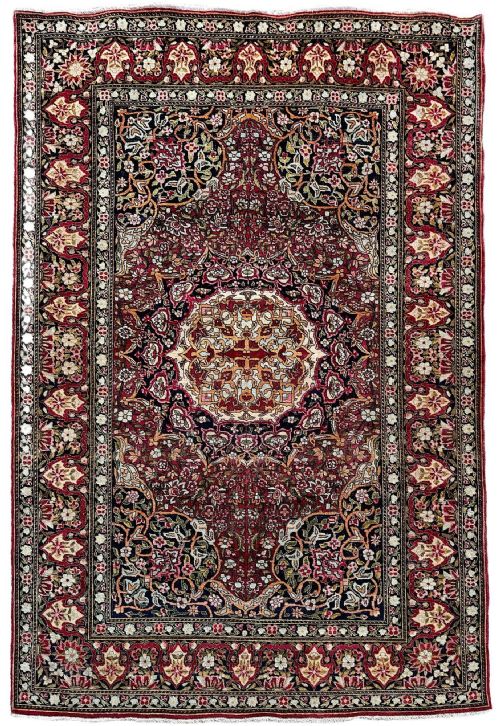
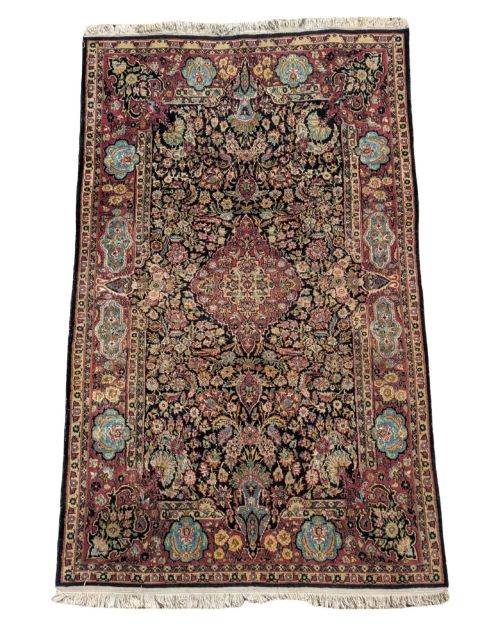
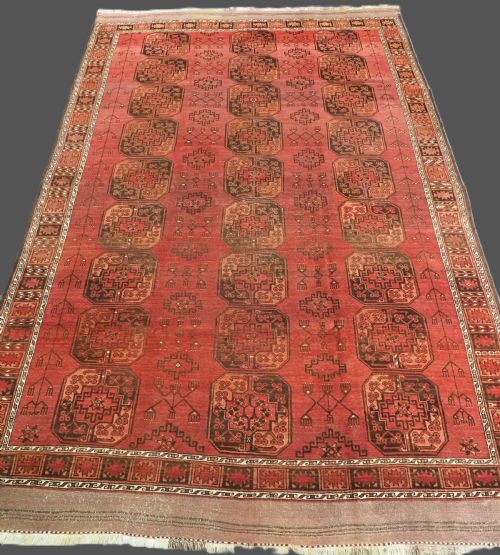
A red woven area rug encompasses antique carpets and floor coverings originating primarily from Persian, Caucasian, Anatolian, and Turkmen weaving traditions. These pieces date from the mid-nineteenth century through the early twentieth century, spanning periods such as 1850, 1890, 1900, 1910, 1920, and 1930.
The versions most commonly met on this page include tribal formats such as Kazak, Afshar, Khamseh, and Baluch rugs, alongside larger village carpets like Heriz, Bakhtiar, and Saroukh. They range from small prayer rugs and runner formats to room-sized carpets.
Makers utilised distinctive regional geometries, medallion layouts, and village motifs to create enduring floor textiles designed for both domestic use and formal reception spaces.
Materials and construction
These floor coverings rely on natural materials, predominantly wool, cotton foundation warps and wefts, and occasional silk highlights to define intricate patterns. Weavers tied pile knots by hand onto vertical or horizontal looms, securing the structures with sturdy selvedges.
Natural dye sources provided the foundational red tones, ranging from rust backgrounds to deep madder hues, which interact with indigo and ivory details across tribal and village workshops.
The listings on this site span eight distinct decades of production, from the mid-nineteenth century up to the 1930s.
Determining quality in woven rugs
Quality rests in the precision of the knotting, the handling of the wool, and the clarity of the regional design execution. Finer examples display tightly packed knots and crisp geometric or floral drawing that maintains symmetry across the field.
The integrity of the foundation and the vibrancy of the remaining pile dictate the overall calibre of an antique carpet. Superior pieces show a harmonious balance between saturated red ground colours and contrasting secondary motifs.
The Red Woven Area Rug Glossary
- Warp
- The vertical threads stretched on the loom that form the skeleton of the rug and often emerge as fringe at the ends.
- Weft
- The horizontal threads passed through the warps after each row of knots to bind the structure together securely.
- Pile
- The dense, soft surface of cut yarn that forms the visible and tactile layer of the woven rug.
- Medallion
- A large central ornamental motif placed in the middle of the carpet field, common in Persian and village designs.
- Prayer rug
- A small format rug featuring a mihrab or niche design, traditionally used for individual daily prayers.
Red Woven Area Rug: Frequently Asked Questions
How do I clean an antique woven rug?
Professional dusting and specialist immersion washing preserve the natural wool fibres and dyes without causing structural damage.
Regular gentle vacuuming without a beater bar prevents dust accumulation in the pile.
Where were these tribal rugs made?
Production centres span traditional weaving regions including Persia, the Caucasus, Anatolia, and Central Asia.
Nomadic tribes and settled village communities each contributed distinct regional motifs and colour palettes.
Can I place a wool rug in a hallway?
Durable wool construction and sturdy cotton foundations allow these floor coverings to withstand moderate foot traffic in corridors and living spaces.
Using a quality rug underlay prevents slipping and cushions the foundation against premature wear.
What indicates a village carpet rather than a tribal piece?
Village carpets typically exhibit larger dimensions, cotton foundations, and structured room-sized layouts produced by settled communities.
Tribal pieces often display more spontaneous geometric patterns, smaller formats, and all-wool construction characteristic of nomadic work.