



Red Wool Torba
A red wool torba is a tribal bag face woven in Central Asia, prized by collectors for intricate guls and rich madder dyes.
Red Wool Torba
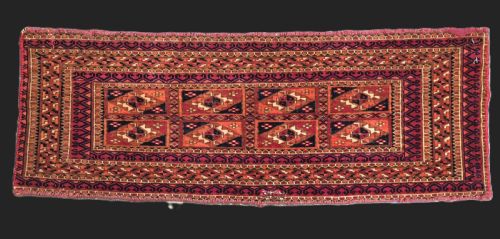
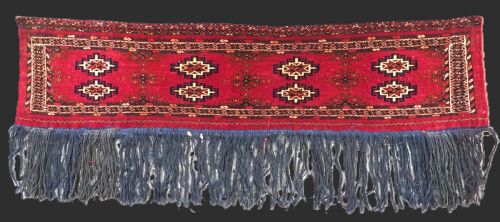
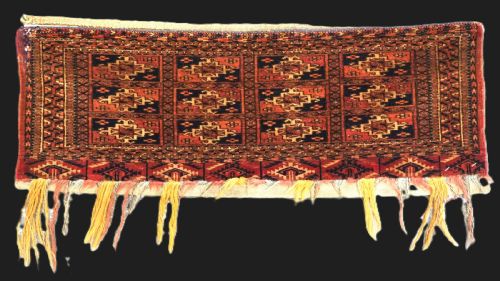
A red wool torba represents a nomadic storage bag or tent hanging made by Turkmen and related Central Asian tribes during the nineteenth and early twentieth centuries. These pieces typically take the form of bag faces or complete pouches used for domestic storage within yurt dwellings.
The selection here encompasses tribal designations such as Tekke, Yomut, Saryk, and Ersari, alongside specific regional types from Uzbekistan. Examples range from complete pouches retaining plain weave backs and tassels down to fragmentary faces and smaller dowry pieces.
What varies in quality
The refinement of the weave dictates much of the visual impact, with tightly packed knots producing sharply defined tribal guls and botanical motifs. Pieces featuring exceptionally fine execution display precise geometry within complex repeating medallion structures.
Colour saturation and the preservation of natural dye variations separate standard examples from superior items. Clarity in the drawing of secondary ornaments and the survival of original plain weave backs or side finishes add significant integrity.
Red Wool Torba Retail Price Guide 2026
Typical asking prices for red wool torba among the pieces listed under this phrase on Sellingantiques today, from the lower quarter to the upper quarter. They describe what is for sale here now, not the wider market.
Listings span the nineteenth and early twentieth centuries, recording work from Yomut, Tekke, Saryk, and Ersari tribal groups.
The Red Wool Torba Glossary
- Torba
- A traditional Turkmen wall-hanging bag used for domestic storage inside a yurt. These wide pouches were often created as part of nomadic dowry ensembles.
- Gul
- A primary medallion or repeating tribal crest found across Central Asian rugs and torbas. Each design often relates to specific tribal lineages such as the Tekke or Yomut.
- Mafrash
- A rectangular storage bag or trapeze-shaped container used for bedding and household goods. They share construction techniques with smaller torbas.
- Kezdebe
- A specific ceremonial design pattern associated with wedding processions and camel trappings. It appears frequently on Saryk and Tekke bag faces.
- Beshir
- A sub-group of Ersari tribal weaving known for large formats and distinctive motifs influenced by regional trade routes. These often incorporate unorthodox botanical or ikat-inspired patterns.
Red Wool Torba: Frequently Asked Questions
What was a red wool torba used for?
Nomadic families utilised these bags inside tents to store personal possessions, clothing, and domestic utensils. They hung against the lattice walls as functional furnishings.
Over time, many torbas functioned primarily as decorative dowry items showcasing the weaving skill of the maker.
How do I identify different tribal torbas?
Tribal attribution relies on the specific gul motifs, border arrangements, and structural wool characteristics. Tekke, Yomut, Saryk, and Ersari weavers each employed distinct geometric layouts.
Colour palettes and secondary ornamentation also help distinguish between the various Trans-Caspian groups.
Are these pieces complete bags?
Many examples survive as bag faces separated from their original plain weave backs due to centuries of wear. Complete pieces retaining their original backing and tassels remain less common.
Both complete pouches and individual bag faces are collected and displayed as textile art.
How should I care for a textile wall hanging?
Displaying a torba on a wall requires a padded velcro sleeve or specialist mount that distributes the weight evenly. Direct sunlight should be avoided to protect the natural wool dyes from fading.
Gentle surface vacuuming through a mesh screen helps remove dust without disturbing the pile.