

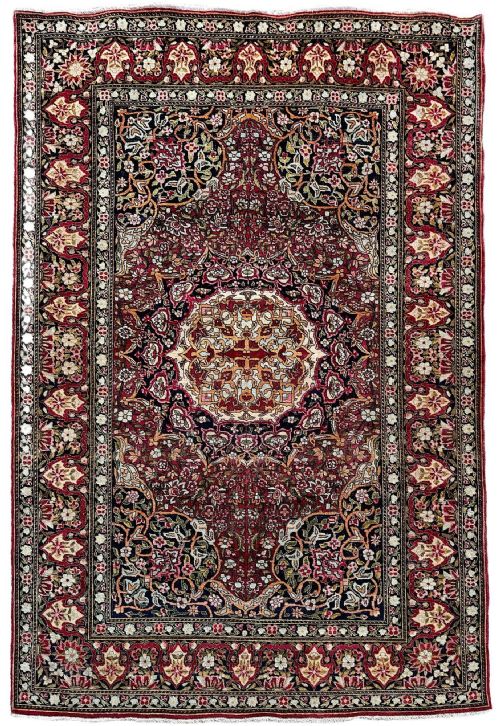
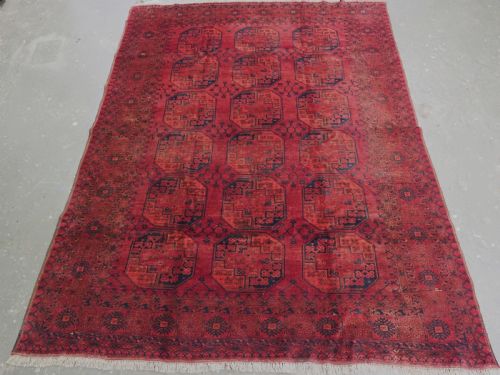
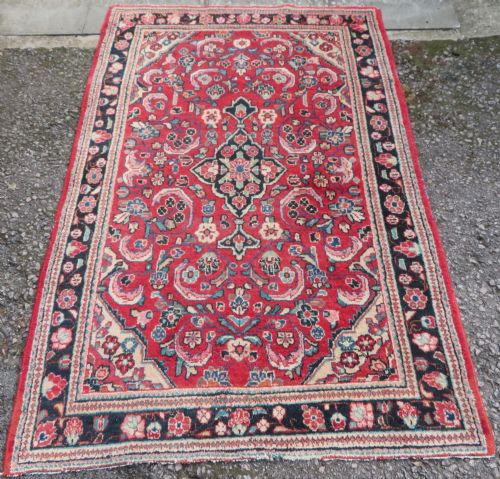
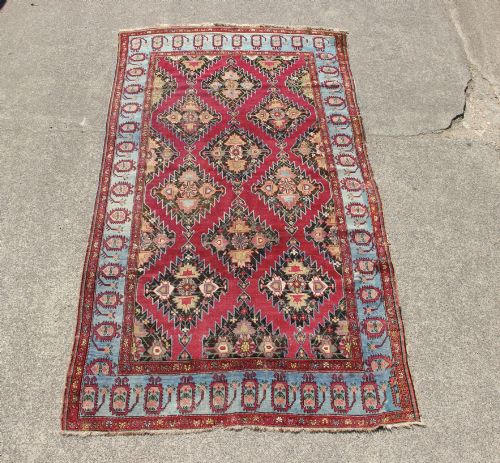

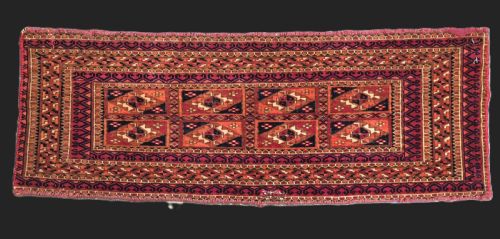
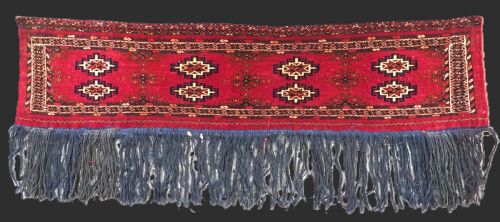
Crimson Woven Rug
A crimson woven rug brings enduring character to a room through traditional patterns and rich wool construction.
Crimson Woven Rug
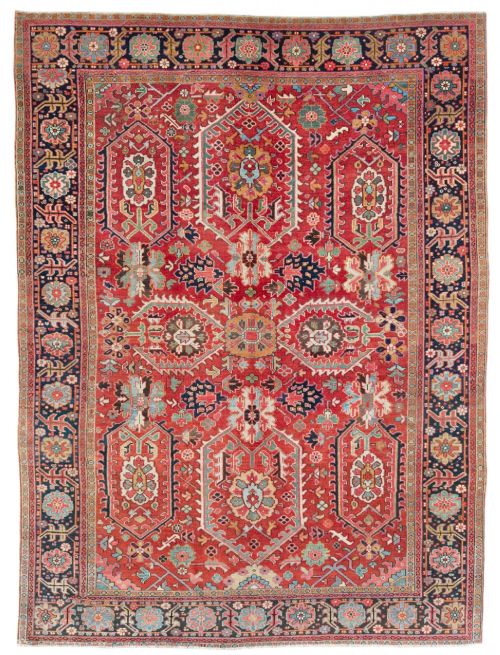
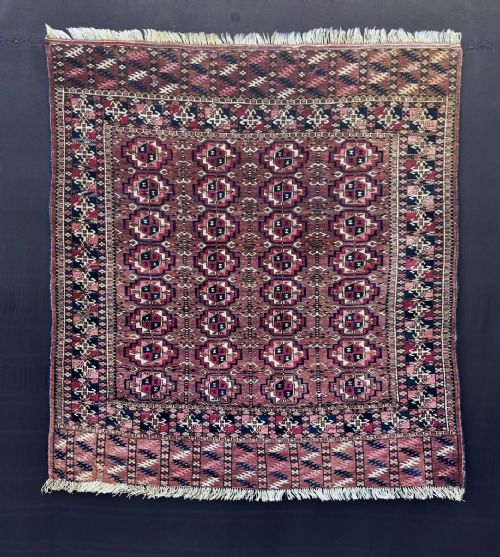
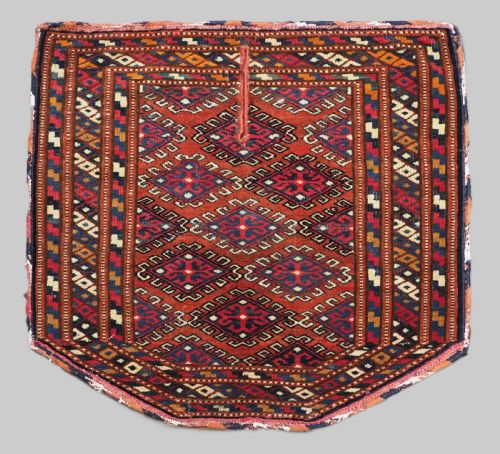
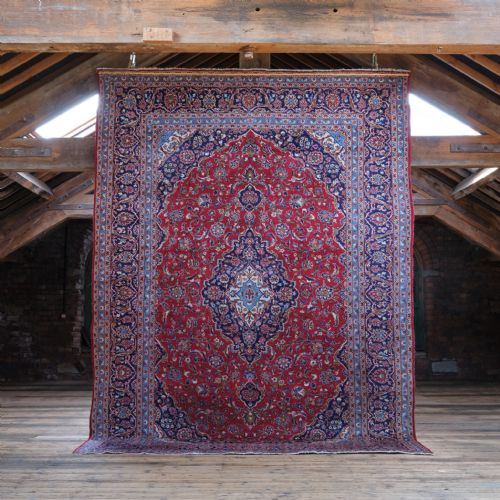
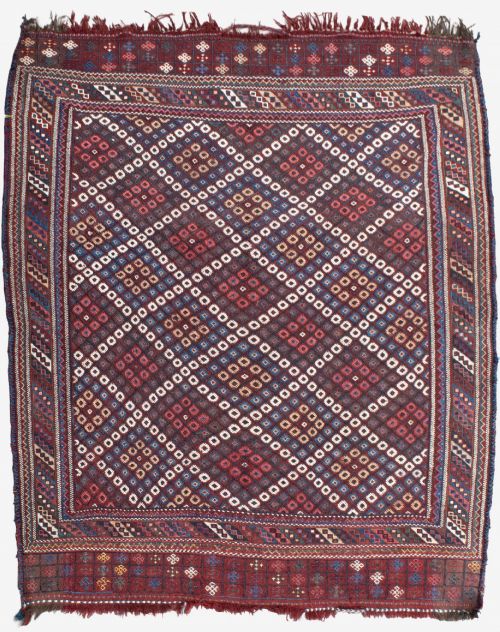
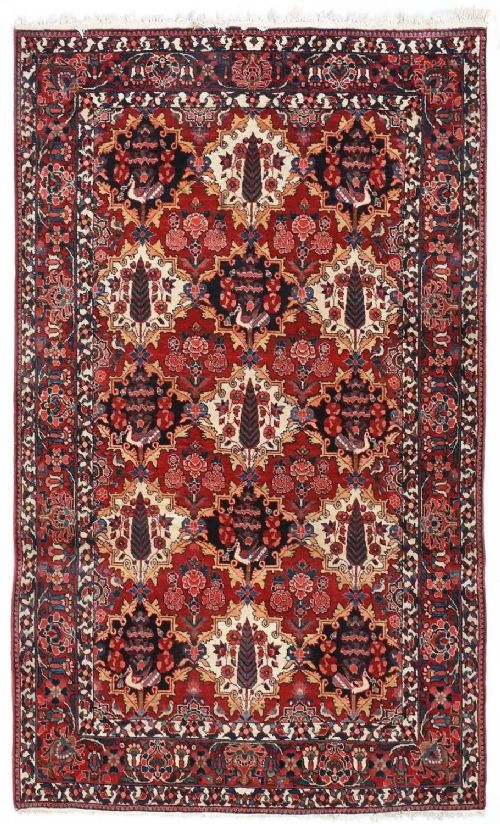
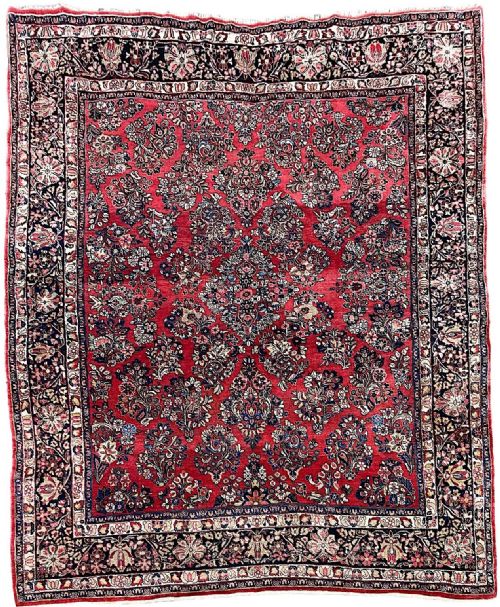
A crimson woven rug encompasses hand-knotted carpets, village rugs, and nomadic storage bags originating from Persia, the Caucasus, and Central Asia. These textiles were produced across the nineteenth and early twentieth centuries by various tribal and regional makers.
Buyers will most frequently encounter nineteenth and early twentieth-century wool rugs displaying deep red and crimson colourways. These items reflect the traditional domestic and nomadic crafts of their respective regions.
How they were made
Construction relies heavily on hand-spun wool and cotton, worked into knotted pile fabrics or flatwoven structures. Artisans utilised natural dyes to achieve deep red and crimson tones that define the appearance of these textiles.
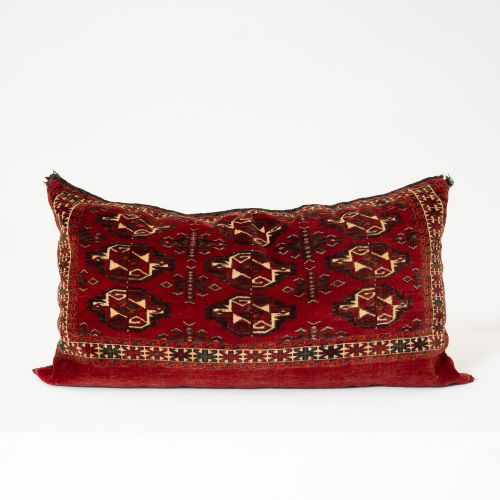
Weaving techniques vary from the fine weaves of Tekke Turkmen chuvals to the robust knotting found in larger Persian village carpets. Many pieces include structural elements such as plain weave backs, hanging loops, or finished cotton foundations.
The inventory records distinct regional forms including saddle covers, dowry weaving, cushion faces, and palace size carpets.
What varies in quality
Quality in these textiles depends upon the density of the weave and the precision of the knotting. Finer examples display intricate pattern details, such as complex gul motifs or sharply defined geometric layouts, executed with superior hand-spun materials.
The integrity of the original construction also dictates worth, particularly the presence of complete backs, original borders, and undisturbed hanging loops on tribal storage bags. Superior pieces maintain vibrant natural dye saturation and structural soundness across the foundation.
The Crimson Woven Rug Glossary
- Gul
- A medallion or repeating octagonal motif commonly found in Turkmen tribal weavings. This design element forms the primary decorative structure for many torbas and chuvals.
- Chuval
- A large nomadic storage bag used in Central Asian households for bedding and household goods. These pieces often feature multiple guls and decorative border arrangements.
- Torba
- A smaller wall-hanging or storage bag produced by Turkmen tribes. They frequently display fine knotting and specialised tribal designs.
- Sofreh
- A woven spread or cloth used for dining or food preparation in Persian and tribal traditions. These textiles typically feature minimalist or specialised flatwoven layouts.
- Knot
- The individual loops of wool or silk tied to the warp threads that form the pile of a carpet. Higher knot counts usually indicate greater technical skill.
Crimson Woven Rug: Frequently Asked Questions
How do I clean an antique rug?
Professional specialist cleaning is essential for antique wool and natural dye textiles to prevent colour bleeding and fibre damage. Regular gentle vacuuming without a beater bar removes surface dust safely.
Avoid home chemical treatments or soaking, as these methods can permanently weaken hand-spun wool foundations and alter historical dyes.
Can I place these rugs in high traffic areas?
Many sturdy village and tribal carpets withstand normal household foot traffic thanks to dense wool pile construction. Lacking a sturdy foundation, delicate small bags or fine fragment pieces suit low-traffic display.
Using a quality underlay prevents slipping and cushions the fibres against premature wear on hard flooring.
How do I identify a Turkmen tribal rug?
Turkmen tribal rugs are typically recognised by their deep crimson palettes and repeating octagonal gul motifs. They often originate from specific groups such as the Tekke, Yomut, or Ersari tribes.
These pieces frequently take the form of functional items like storage bags, chuvals, and torbas rather than large floor carpets.
What is the difference between a rug and a carpet?
Carpets generally refer to larger floor-covering textiles designed to anchor a major room space. Rugs encompass a broader scale including smaller area formats, runners, and nomadic portable items.
In historical textile contexts, the terms often overlap depending on the specific regional production scale.