


Antique Beshir Rug
An antique beshir rug brings the bold geometries and rich natural dyes of Central Asian weaving directly into your home.
Antique Beshir Rug
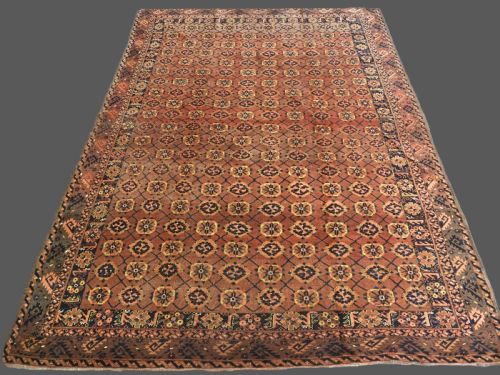
An antique beshir rug represents the distinctive tribal textile traditions of the Ersari tribe originating from the Beshir region of Turkmenistan and the Middle Amu Darya basin. These pieces span from the mid-nineteenth century through the early twentieth century, encompassing larger main carpets, village carpets, and smaller format tribal weavings.
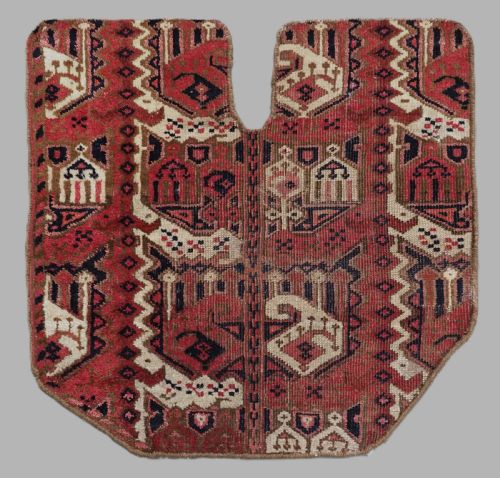
The most frequent examples encountered on this page take the form of torbas, storage bags, chuval faces, and saddle covers displaying characteristic Turkmen and Central Asian tribal styles. Collectors also discover dowry rugs and area rugs featuring specialised patterns such as ikat designs and rams horn motifs.
Originating from nomadic and village contexts, these textiles combine practical utility with sophisticated artistic expression. The geographical attribution places them firmly within the broader spectrum of Turkmen tribal work while retaining distinct regional traits.
How they were made
The construction of an antique beshir rug relies entirely on hand-spun wool, providing the durable and resilient foundation characteristic of nineteenth-century Central Asian textile production. Weavers utilised natural dyes to achieve the deep palettes seen across these carpets and smaller storage bags.
The physical creation involves traditional knotting and weaving techniques passed down through generations of Ersari nomads and villagers. This method ensures both structural integrity and the retention of crisp tribal motifs across the rug face.
Some weavers borrowed dye methods from silk-producing neighbours, resulting in wool rugs that unexpectedly mimic the blurry magic of ikat.
What varies in quality
The distinction between tiers of an antique beshir rug rests in the handling of natural dyes and the precision of the wool spinning. Superior examples exhibit vibrant, saturated colour work that has aged gracefully over the decades, while lesser pieces may display duller tones.
Another measure of quality involves the complexity and execution of specific patterns, such as complex ikat designs or distinct rams horn motifs. Tightly woven structures with fine hand-spun wool command greater appreciation among collectors of tribal textiles.
The Antique Beshir Rug Glossary
- Torba
- A small Turkmen storage bag traditionally used inside a yurt for household belongings. These pieces often feature horizontal formats and detailed tribal motifs.
- Chuval
- A large storage bag made by Turkmen tribes, frequently collected today as a smaller rug or wall hanging. They display characteristic gul patterns and tribal iconography.
- Ikat design
- A dyeing technique where yarns are tie-dyed before weaving, borrowed by Beshir weavers to create blurred, flame-like vertical patterns. This style adds striking visual movement to the rug.
- Main carpet
- A large-format floor covering produced for tribal use or trade, distinct from smaller utility bags and saddle covers. These represent the grandest scale of nineteenth-century production.
- Natural dyes
- Colourants derived from plants, insects, and minerals rather than synthetic compounds. They produce the harmonious, complex fading seen on older Turkmen textiles.
Antique Beshir Rug: Frequently Asked Questions
How were these rugs used originally?
Nomadic and village communities utilised these textiles for practical storage, saddle equipment, and domestic flooring within traditional dwellings.
Larger carpets served as main floor coverings for gatherings, while smaller bags stored blankets, clothing, and household goods.
Where did the Beshir style originate?
These pieces stem from the Beshir region situated within the Middle Amu Darya basin of Turkmenistan and surrounding Central Asian areas.
Ersari tribal weavers developed this distinct local aesthetic, which incorporates influences from neighbouring Persian and Uzbek textile traditions.
How do I care for an antique rug?
Protect the wool and natural dyes by keeping the textile out of direct, harsh sunlight and using a breathable underlay beneath it.
Gentle vacuuming without a beater bar removes trapped dust, while professional textile cleaners should handle any deeper maintenance.
How can I tell different formats apart?
Formats vary from long main carpets down to compact storage bag faces like torbas and chuvals, each serving a specific domestic function.
Examining the overall dimensions and the placement of the main design field immediately clarifies whether a piece functioned as floor cover or container.