

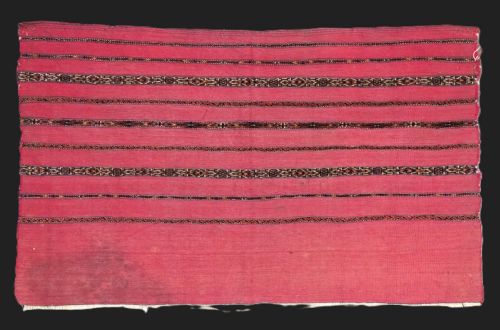


Antique Turkmen Bag Face
An antique turkmen bag face brings nomadic Central Asian weaving straight to your walls with striking tribal guls.
What an antique turkmen bag face is
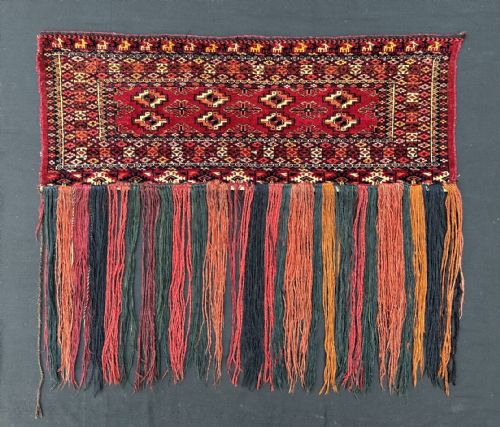
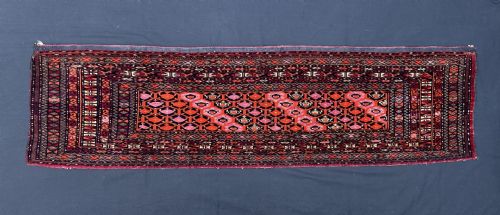
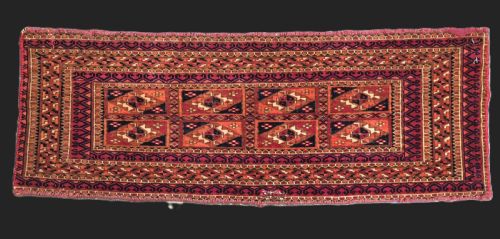
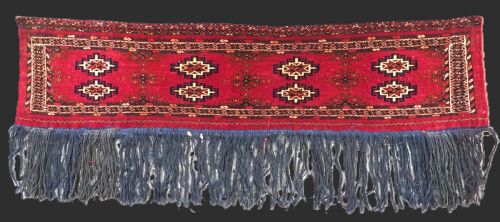
The pieces you meet on this page span several distinct tribal traditions, including Tekke, Ersari, Yomut, and Sariq groups. They appear in formats such as torba faces, spindle bags, and large storage bagfaces dating from the mid nineteenth century up to around nineteen hundred.
Materials and construction
These textiles are constructed using wool and natural dyes, reflecting the traditional materials available to nomadic weavers. The weavers manipulated these local resources to produce dense pile surfaces alongside plain weave backing structures.
The execution relies on hand-knotted pile techniques for the main decorative faces, paired with flatweave structures where durability was required for storage functions.
Retail Price Guide 2026
Typical UK retail prices for turkmen bag face, calculated from the Sellingantiques database of over a million retail prices indexed since 2003. This retail price guide relies exclusively on Sellingantiques data; no external sources or auction records are used, so the figures do not describe the wider market.
Some Yomut spindle bags kept their plain weave backs intact just in case someone still needed to spin yarn on the move.
Distinctions in quality
Quality in these nomadic weavings is determined by the fineness of the weave and the precision of the tribal guls. Pieces with exceptionally tight knotting and clear structural integrity sit apart from looser, coarser examples.
The clarity and saturation of natural dyes also dictate distinction, where complex motifs like aina gul or curled leaf designs show superior artistic execution.
The Antique Turkmen Bag Face Glossary
- Gul
- A primary medallion or repeating floral-like motif used in tribal carpet design. These forms often identify the specific nomadic group that wove the textile.
- Torba
- A small horizontal storage bag utilised by nomadic tribes for household possessions. They frequently display elaborate face designs while the backs remain plain.
- Chuval
- A large bedding bag-face produced for domestic storage inside traditional tents. These wider formats showcase prominent tribal design fields.
- Mafrash
- A rectangular storage container or bag face used in nomadic households. They form part of the broader category of Turkmen utilitarian textiles.
- Pile
- The raised surface of knotted wool that forms the patterned face of the textile. This technique provides both texture and durability to the tribal design.
Frequently Asked Questions
How were these bags used?
Nomadic families utilised these woven pieces as storage sacks inside tents to hold bedding, clothing, and household items. The decorative faces remained visible while the utilitarian backs handled daily wear.
Over time, many of these functional containers were separated from their original backs, leaving the decorative face to be preserved as a hanging.
How do I hang a bag face?
These textiles adapt well to wall display when mounted carefully by a professional framing specialist or textile conservator. A supportive backing distributes the weight evenly across the wool.
Avoid using direct pins or nails through the fabric itself to prevent structural damage to the old wool and foundation.
How are the tribal groups told apart?
Tribal attribution relies on the specific structural guls, border arrangements, and colour palettes characteristic of each weaving group. Tekke, Ersari, Yomut, and Sariq weavers employed distinct design vocabularies.
Comparing the repeating medallions against known tribal examples reveals the origin of the textile.
What does torba mean?
A torba is a specific Central Asian nomadic storage bag format that is wider than it is tall. They were hung inside dwellings for small possessions.
Today, surviving torba faces are collected and displayed as independent textile artworks.