






Red White Japanese Plates
These red white japanese plates bring bold colour and intricate hand-painted detail to any table, offering centuries of ceramic artistry.
Red White Japanese Plates
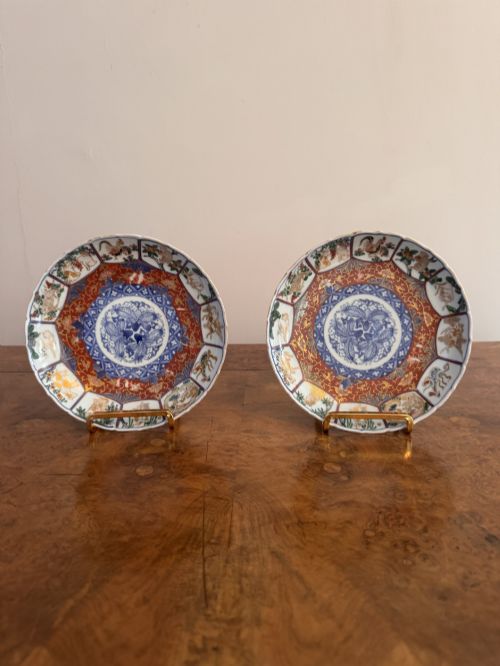
When you search for red white japanese plates, you encounter striking ceramics defined by distinct iron red pigments, cobalt blue, and gilt highlights. These items include decorative plates, large chargers, and unusual shaped dishes.
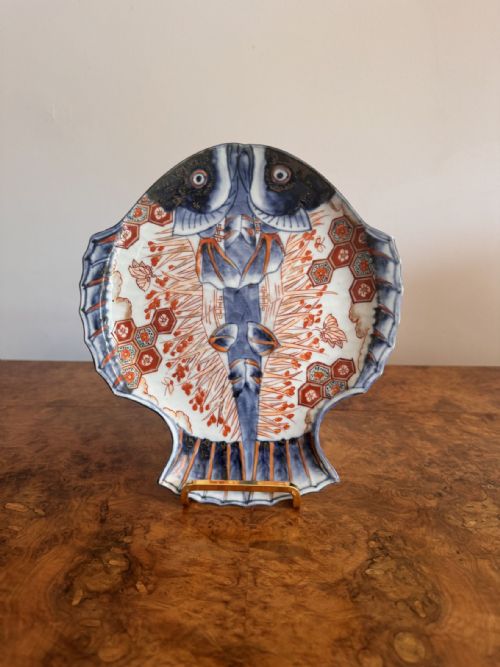
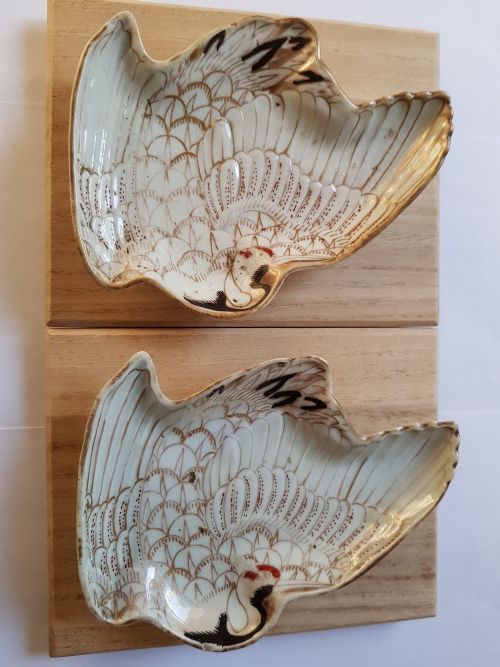
The pieces on this page span several key eras, from the Meiji period and Edo period Japanese wares to Georgian soft-paste porcelain. You will find standard round forms alongside distinctive fish shapes and crane-shaped dishes moulded in shallow relief.
Japanese Imari stands out as the primary style you will meet here. These objects range from nineteenth-century small plates to earlier seventeenth and eighteenth-century creations.
How they were made
The makers formed these ceramics using porcelain and soft-paste porcelain as a base. They shaped some vessels by hand into animal forms, such as fish and cranes, while others were thrown or moulded in shallow relief.
Decoration relied heavily on iron red enamel, often accompanied by black pigment, gold leaf, and traditional glaze. Artisans hand-painted every surface with precision, layering colours and metallic accents to achieve a rich finish.
Red White Japanese Plates Retail Price Guide 2026
Typical asking prices for red white japanese plates among the pieces listed under this phrase on Sellingantiques today, from the lower quarter to the upper quarter. They describe what is for sale here now, not the wider market.
Potters occasionally abandoned traditional circles entirely, shaping plates into swimming fish and majestic cranes.
What varies in quality
Quality rests upon the precision of the hand-painted brushwork and the vibrancy of the iron red enamel and gold leaf. Superior examples display crisp details and clean glazing across the porcelain surface.
The form itself dictates distinction, as unusual shapes like fish or moulded crane dishes require greater skill from the potter. Earlier periods and sophisticated Japanese Imari decoration command greater attention from collectors.
The Red White Japanese Plates Glossary
- Imari
- A style of Japanese export porcelain originating from the town of Arita, traditionally decorated in underglaze blue, iron red enamel, and gold. This aesthetic became highly popular across Europe during the Edo period.
- Meiji Period
- The era of Japanese history spanning from 1868 to 1912, characterised by opening trade with the West and exceptional craftsmanship in decorative arts. Pieces from this time often exhibit confident hand-painting.
- Iron Red Enamel
- A brick-red metallic oxide pigment applied over the glaze and fired at a lower temperature. It provides the signature warm red tone seen on these plates.
- Soft-paste Porcelain
- A ceramic material composed of clay and glass frit, fired at lower temperatures than hard-paste. English factories like Bow utilised this recipe to imitate Asian imports.
- Charger
- A large decorative plate intended for display on a sideboard or wall rather than for dining. These sizeable pieces showcase expansive painted scenes.
Red White Japanese Plates: Frequently Asked Questions
How do I identify Japanese Imari?
Japanese Imari is recognised by its distinctive palette combining iron red enamel, underglaze blue, and gold leaf. The designs frequently feature complex floral and panel motifs.
These pieces were produced in Arita and exported in vast quantities. The style bridges traditional Japanese aesthetics with the decorative tastes demanded by Western markets.
How were these plates used historically?
Larger chargers and decorative plates were displayed on sideboards or hung on walls to demonstrate the owner's wealth and refined taste. Smaller dishes served functional roles in dining or tea ceremonies.
Export wares made their way into European stately homes during the seventeenth and eighteenth centuries. They sat alongside European imitations produced by factories trying to replicate Asian techniques.
How do I care for antique porcelain?
Antique porcelain requires gentle handling to protect fragile glazes and delicate gold leaf decoration. Dust them softly with a dry cloth and avoid harsh chemical cleaners.
Keep these ceramics away from direct sunlight and areas prone to sudden temperature changes. Displaying them on secure plate stands prevents accidental slips.