
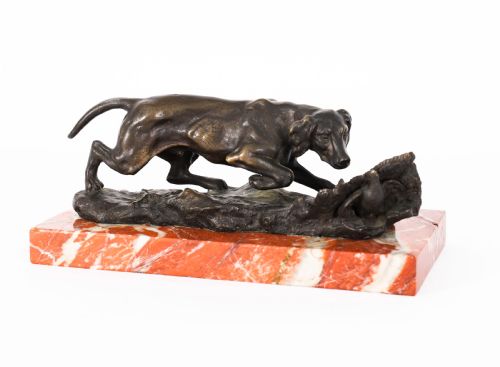
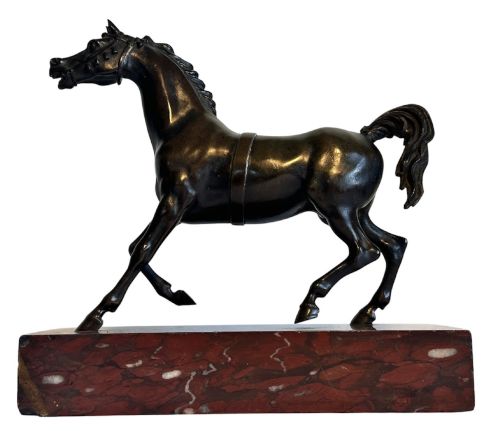
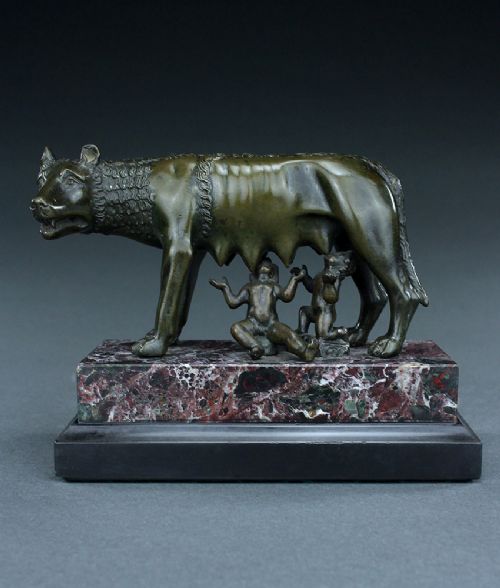





Red Marble Base Statue
These red marble base statue pieces combine cast metal figures with striking stone plinths, offering decorative presence and classical weight.
Red Marble Base Statue
A red marble base statue brings together sculpted metal figures and distinct stone plinths, combining nineteenth-century subjects with mineral foundations. These works span subjects from animalier studies of hounds and stallions to mythological figures and grand tour souvenirs.
The versions most commonly met here originate from nineteenth-century European workshops, encompassing French animalier bronzes and Italian grand tour studies. Forms range from freestanding statuettes and bookends to figural lamps mounted on shaped mineral bases.
Makers utilised characteristic stones such as Rosso Levanto marble alongside variegated red marble to anchor bronze, brass, and spelter sculptures. This combination creates a deliberate contrast between dark patinated metals and richly veined red stone plinths.
Materials and construction methods
Foundries cast metal figures in bronze, brass, or gilt bronze, often applying dark patination to simulate age or highlight muscular detail. These figures were subsequently secured to turned or block-cut marble bases using threaded pins or concealed fixings.
Marble bases were shaped and polished by hand to support subjects ranging from classical antiquities to nineteenth-century animalier studies. The stone provides both structural weight and a decorative frame that elevates the cast metalwork above a simple tabletop.
Listings feature nineteenth-century bronze and spelter sculptures mounted on marble, Rosso Levanto marble, and brass bases.
Factors of quality and execution
The selection and preparation of the marble plinth contribute significantly to the overall merit of the piece. Dense, finely figured stone with crisp edges and minimal restoration holds greater visual coherence than flawed or heavily repaired mineral bases.
Carl Kauba·Prosper Lecourtier·Messina Roma·Christophe Fratin
The Red Marble Base Statue Glossary
- Animalier
- A nineteenth-century artistic movement focused on the realistic depiction of animals, particularly dogs, horses, and wild beasts. Figures in this style are frequently mounted on heavy stone bases.
- Grand Tour
- A traditional trip through Europe undertaken by upper-class scholars and collectors to view classical antiquities. Souvenirs from these journeys included small-scale bronze replicas of famous ancient sculptures.
- Rosso Levanto
- A striking deep red marble featuring prominent white and dark veins, quarried in Italy. This stone is frequently encountered on nineteenth-century sculpture bases and architectural ornaments.
- Patination
- The surface coloration and finish applied to metal sculptures through chemical treatment or natural ageing. A well-preserved patina adds depth and protects the underlying bronze or brass.
- Spelter
- A zinc alloy commonly used as a cost-effective substitute for bronze in nineteenth-century decorative figures and lamps. It is typically painted or electroplated to resemble more expensive metals.
Red Marble Base Statue: Frequently Asked Questions
How do I clean a red marble base?
Dust the stone regularly with a soft, dry cloth to prevent accumulation in the veining and crevices. Avoid harsh chemical cleaners or excess water, which can penetrate porous marble and damage adjacent metal patination.
For stubborn marks, consult a specialist in stone conservation rather than attempting abrasive scrubbing. Maintaining a gentle cleaning routine preserves both the polish of the red marble and the integrity of the mounted sculpture.
What is a grand tour bronze?
Grand tour bronzes are small-scale reproductions of classical statues created in Italy during the eighteenth and nineteenth centuries. Wealthy travellers purchased these objects as tangible records of their cultural education abroad.
Mounted on marble bases, these souvenir bronzes allowed collectors to display canonical ancient sculptures within private domestic interiors. Their scale and execution vary according to the specific workshop and the demands of the tourist market.
How can I identify animalier bronzes?
Animalier bronzes focus intently on the anatomical accuracy and natural behaviour of animals, from hunting dogs to recumbent greyhounds. Christophe Fratin and Prosper Lecourtier were prominent figures who mastered this observational style during the nineteenth century.
These sculptures often sit on naturalistic metal bases attached to shaped stone plinths. The quality of the fur texture and musculature usually indicates the skill of the foundry and modeller.
Are these pieces originals or later casts?
Nineteenth-century pieces exhibit specific casting techniques, tool marks, and patination consistent with period foundry practices. Examining the underside of the base and the method used to secure the figure helps determine the age of the construction.
Original patinas show natural wear and subtle variations developed over decades of handling and exposure. Comparing the cast quality to documented examples by known makers provides further context for dating.