


Equestrian Table Sculpture
These equestrian table sculpture pieces capture horses and riders in miniature bronze, leather, and marble for your tabletop.
Defining the equestrian table sculpture
An equestrian table sculpture brings horses, jockeys, and hunting scenes into domestic interiors as decorative figures and statuettes. These works sit on tabletops, desks, and shelves, capturing motion and form in miniature scale.
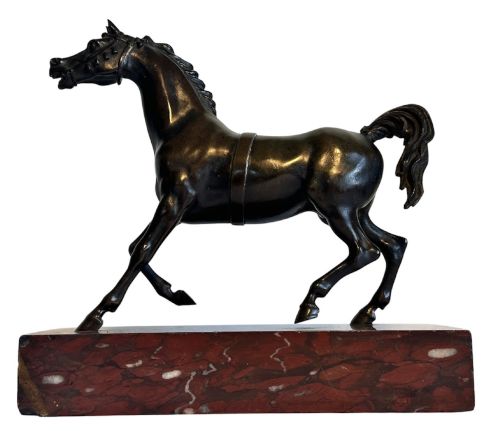
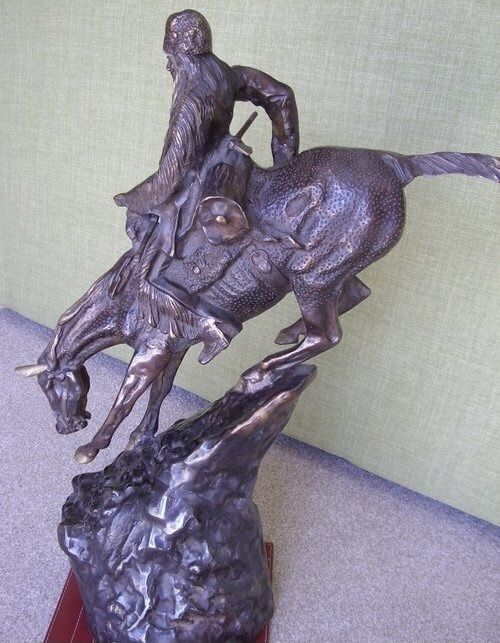
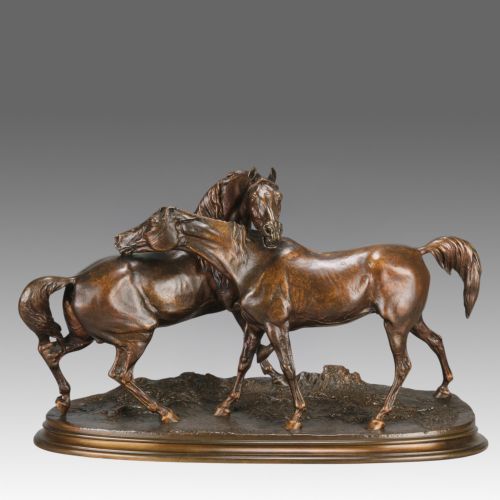
You meet a variety of forms on this page, ranging from 19th Century bronze stallions and Edwardian cast models to mid-century leather-bound pieces. Animalier subjects sit alongside Western Americana, Art Deco, and Victorian hunting scenes.
Materials span patinated bronze, gilded bronze, cold-painted bronze, metal, marble, and wood. Many figures mount directly onto solid marble bases for stability and presence.
Materials and construction methods
Foundry workers cast metal and bronze into detailed figures, applying patinated or gilded finishes to highlight musculature, tack, and riders. Cold-painted bronze brings colour to specific Austrian works.
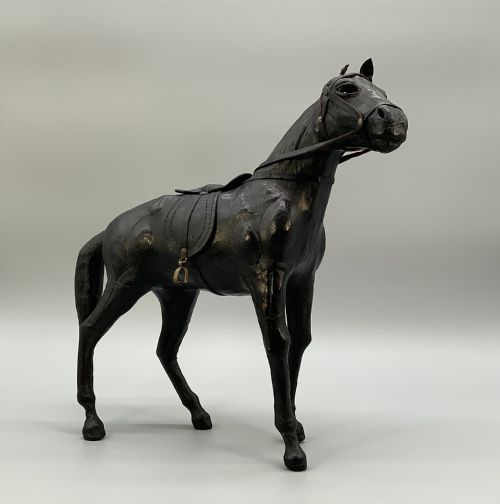
Selected pieces combine metal figures with heavy marble bases, while others utilise wood and leather-bound construction in the style of Liberty and Co.
Retail Price Guide 2026
Typical UK retail prices for equestrian table sculpture, calculated from the Sellingantiques database of over a million retail prices indexed since 2003. This retail price guide relies exclusively on Sellingantiques data; no external sources or auction records are used, so the figures do not describe the wider market.
Some horses wear fine leather jackets while others sport cold-painted coats.
Judging quality and execution
Quality rests in the crispness of the casting and the depth of the patina or gilding across the horse and rider. Finer works show careful attention to anatomical detail, from the tension in a stallion to the posture of a jockey.
The choice of base materials influences the overall presence of the object, with substantial marble plinths providing weight and balance to the bronze sculpture above.
Frederic Remington·Liberty and Co·Bruno Zach·P J Mene·Franz Bergman
The Equestrian Table Sculpture Glossary
- Animalier
- A nineteenth-century artistic movement focused on the realistic depiction of animals, particularly horses and hounds in action.
- Cold-painted bronze
- A technique where paint is applied to a cold bronze casting rather than fired in a kiln, often associated with Austrian workshops.
- Patinated bronze
- Metal treated with chemical solutions to produce a specific surface colour, ranging from deep brown to aged green.
- Gilded bronze
- Metal coated with a thin layer of gold to give a bright, reflective surface finish.
Frequently Asked Questions
What periods do these sculptures cover?
The pieces span the nineteenth century, Edwardian era, Art Deco period, and mid-century modern designs.
Craftsmen produced these works across various decades, reflecting changing artistic movements from Victorian realism to modernist interpretations.
What materials are used in these figures?
Makers utilised bronze, metal, marble, leather, and wood to create these decorative objects.
Many bronzes feature patinated, gilded, or cold-painted finishes mounted upon solid marble bases.
How do I display an equestrian table sculpture?
These sculptures fit well on desks, mantelpieces, and display tables where their detail can be appreciated up close.
Ensure the surface is level and stable, particularly for heavier pieces mounted on marble bases.
What styles are represented here?
Available styles include Animalier, Victorian, Western Americana, Art Deco, and Edwardian.
Each style brings a distinct aesthetic, from hunting scenes and jockeys to stylized mid-century leather-bound forms.