


Bronze Horse Figure
A bronze horse figure brings the power, movement and discipline of the animal directly into a room, shaped by hands across centuries.
Bronze Horse Figure
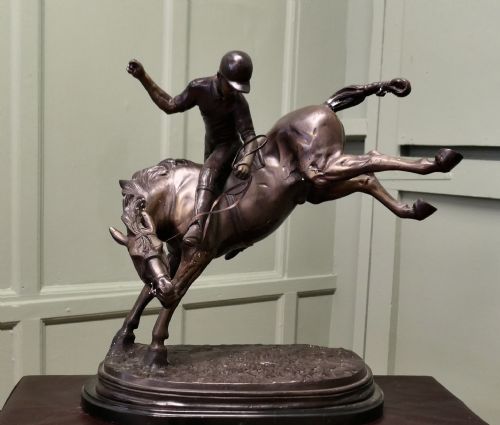
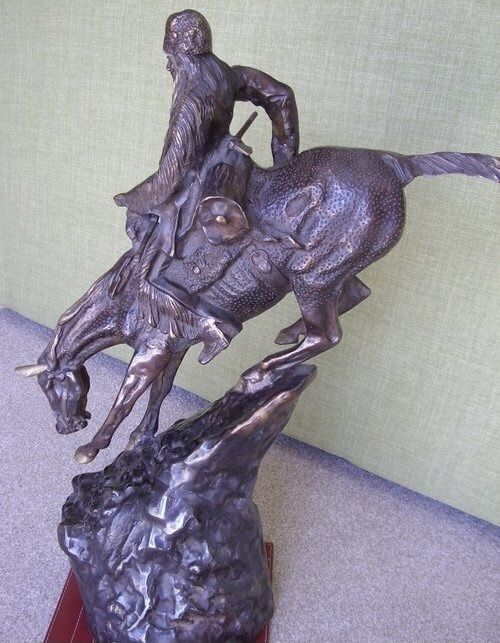
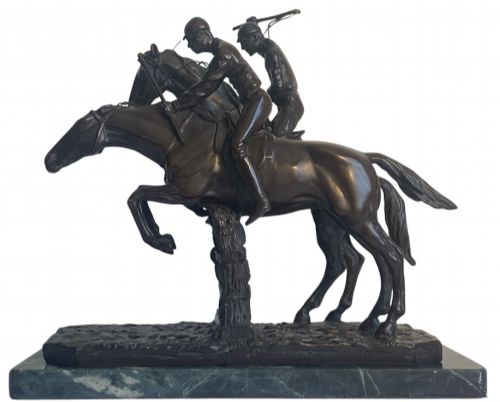
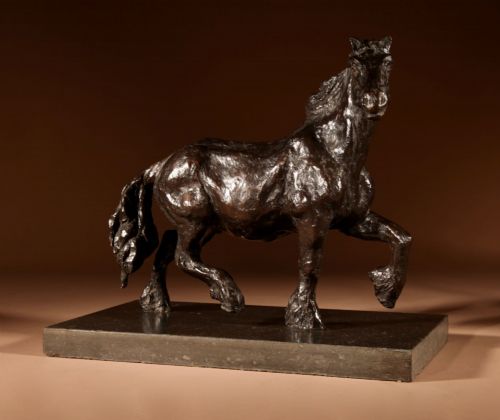
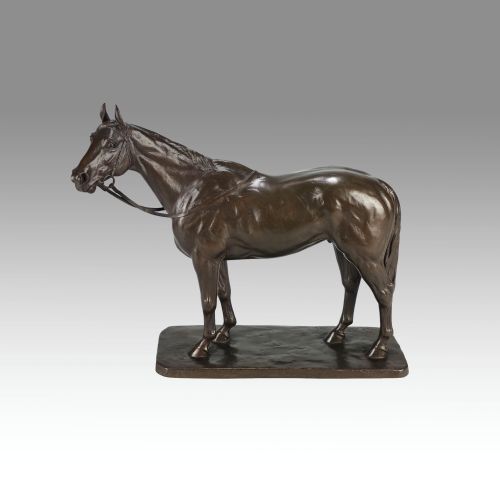
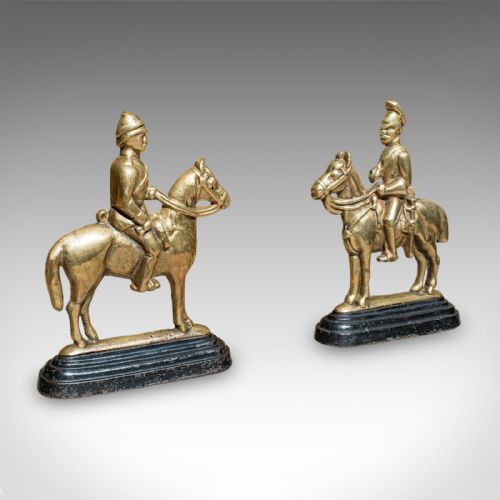
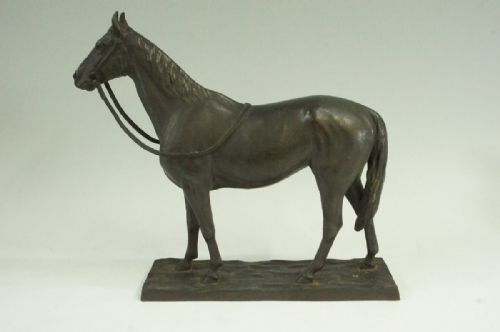
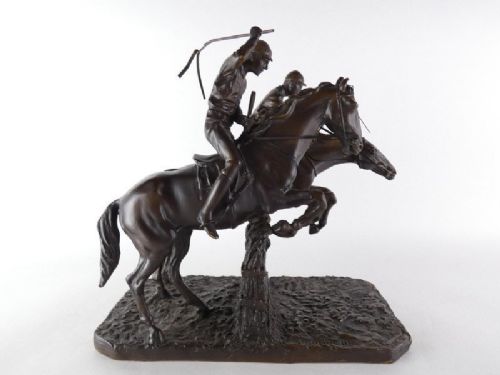
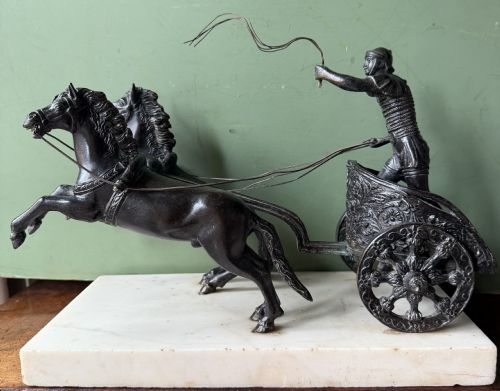
A bronze horse figure captures the animal in motion, repose, harness or combat, spanning centuries of casting traditions. When you search for a bronze horse figure, you encounter subjects ranging from solitary stallions and drafting animals to racing thoroughbreds, hunting scenes and monumental groups derived from classical sculpture.
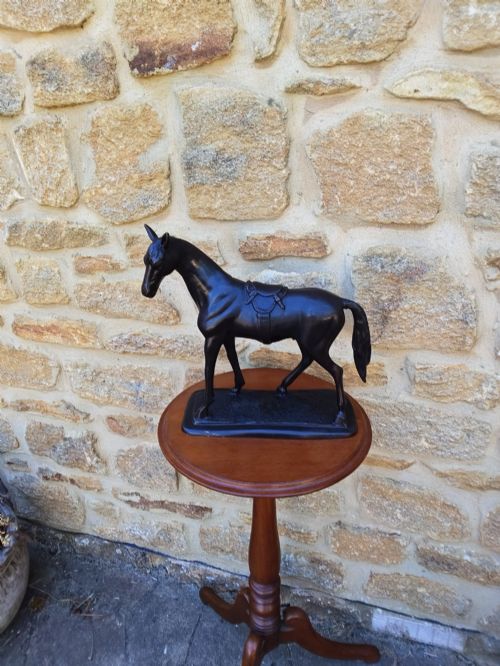
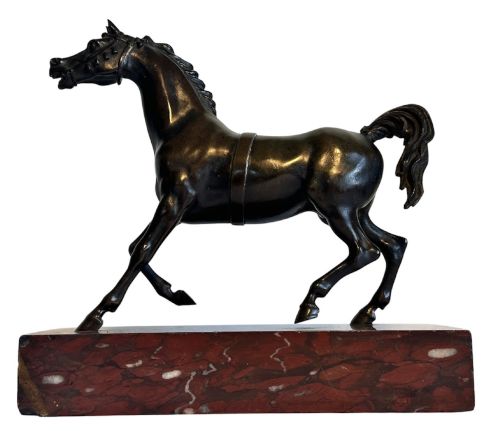
The objects take many forms, appearing as standalone desk ornaments, bookends, inkstands, vide poches, and substantial mantel sculptures. Many stand upon integral or separate bases made of marble, onyx, stone or wood, while others rest directly on their own cast hooves.
Origins stretch across European and Asian workshops, with French Animalier studies, Austrian cold-painted cabinet bronzes, English sporting works, and Japanese foundry pieces dominating the available range. Victorian and early twentieth-century examples appear most frequently, reflecting a prolific era of equine casting.
How they were made
Most pieces utilise the lost-wax casting method or sand casting to achieve crisp musculature, flowing manes and intricate harness details. Molten bronze is poured into moulds, then finished through chasing, filing and patination to alter the surface tone.
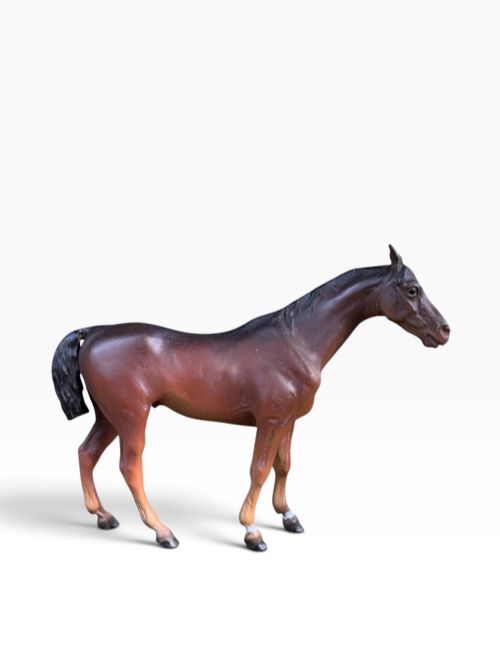
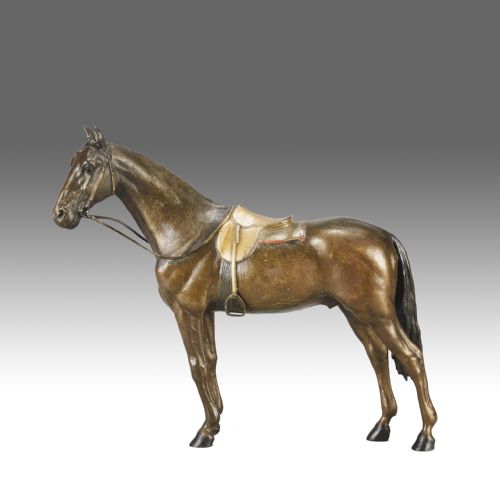
Selected works incorporate cold-painted pigments applied directly onto the metal surface, a technique favoured by Austrian foundries for small cabinet figures. Mounts and bases frequently introduce contrasting natural materials such as white marble, green onyx, olive wood or gilt ormolu mounts to elevate the presentation.
Bronze Horse Figure Retail Price Guide 2026
Typical asking prices for bronze horse figure among the pieces listed under this phrase on Sellingantiques today, from the lower quarter to the upper quarter. They describe what is for sale here now, not the wider market.
Several bronze horses double as practical desk companions, holding your pens, sorting your post, or standing guard as heavy bookends.
What varies in quality
Quality rests in the fidelity of the anatomy and the crispness of the chase work, where sharp muscle definition and sensitive rendering of tension distinguish a master foundry cast from a commercial production. The depth and subtlety of the patination, whether dark brown, green or gilded, dictates how light interacts with the metal surface.
The integration of the figure with its base also reveals the maker's hand, seen in heavy, stable marble plinths and secure mountings rather than loose attachments or inferior cast metal substitutes.
Franz Bergman·Kunio Itô·Pierre Jules Mene·Isidore Jules Bonheur·John Willis Good·Sakai Kōzan
The Bronze Horse Figure Glossary
- Animalier
- A nineteenth-century artistic movement dedicated to the realistic portrayal of animals, particularly horses, hounds and wild beasts. Practitioners captured the dynamic energy and accurate anatomy of creatures in motion.
- Cold-painted bronze
- A technique where paint is applied to a cold bronze casting without subsequent firing, common in Austrian cabinet bronzes and small desk accessories. The colours often show characteristic wear over time.
- Grand Tour
- A traditional trip through Europe undertaken by upper-class scholars and collectors during the eighteenth and nineteenth centuries. Souvenirs included miniature bronze copies of famous classical sculptures and monuments.
- Marly Horses
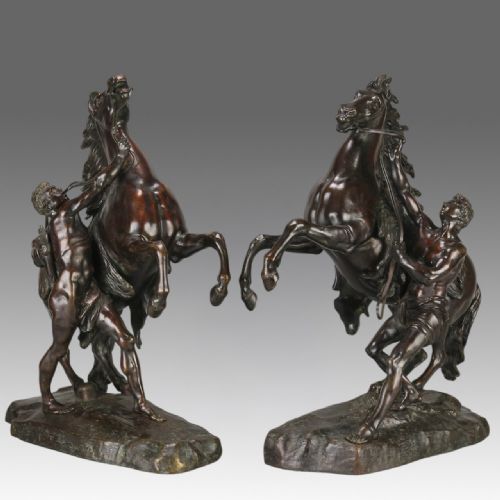
- A pair of monumental marble sculptures created by Guillaume Coustou for the Château de Marly. Reduced bronze copies of these rearing horses and their handlers became a popular subject for nineteenth-century founders.
- Ormolu
- Finely ground high-carat gold applied to a bronze base using a mercury amalgamation technique, producing a bright golden finish. It appears frequently on decorative mounts and nineteenth-century bases.
Bronze Horse Figure: Frequently Asked Questions
What is an animalier bronze horse?
An animalier bronze horse is a nineteenth-century sculpture focused on the realistic and dynamic depiction of equine anatomy and behaviour. These works concentrate on the natural movement of horses rather than idealized classical forms.
Such pieces range from wild stallions rearing on rocky bases to calm cob trotting or racing scenes, reflecting a broader European fascination with natural history and accurate observation.
How do I identify a cold painted bronze?
Cold-painted bronzes feature applied pigments on the metal surface rather than a chemical patina baked into the bronze. You can often spot subtle wear where the original paint reveals the underlying metal beneath.
These pieces were particularly popular in Austria for small cabinet figures, desk tidies and vide poches, usually depicting saddled horses or distinct breeds.
What are Marly horses?
Marly horses are matched pairs of rearing horses restrained by their grooms, originally sculpted in stone by Guillaume Coustou. Nineteenth-century bronze founders frequently reduced these iconic monumental groups for domestic display.
Pairs often appear mounted on marble or wooden bases, depicting the dramatic struggle between man and beast.
Where were Grand Tour bronzes made?
Grand Tour bronzes were typically cast in Italian workshops, particularly in Rome and Florence, during the nineteenth century. Wealthy travellers purchased them as souvenirs of classical antiquities and famous public monuments.
These reductions often sit upon stone or marble plinths, recording historical sculptures for domestic collections across Europe.
How should I clean an antique bronze?
Antique bronzes require minimal intervention, needing only a gentle dusting with a soft dry brush to protect the original patination. Avoid harsh chemical cleaners, polishes or water, which can strip the aged surface finish and exposed highlights.
Leaving the natural patina intact preserves the historical character and appearance developed over decades or centuries of handling.