
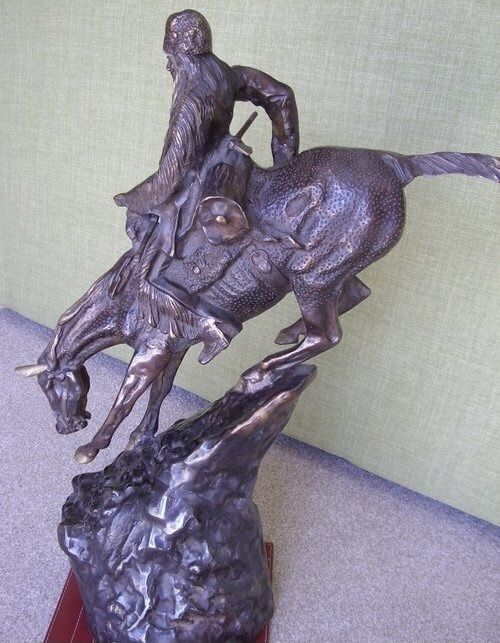
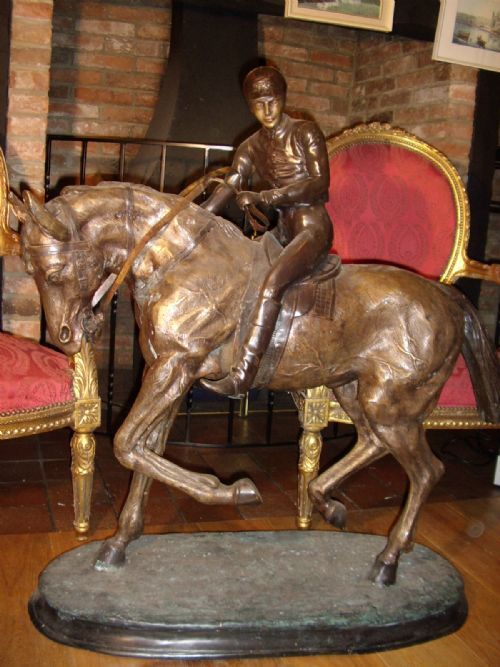
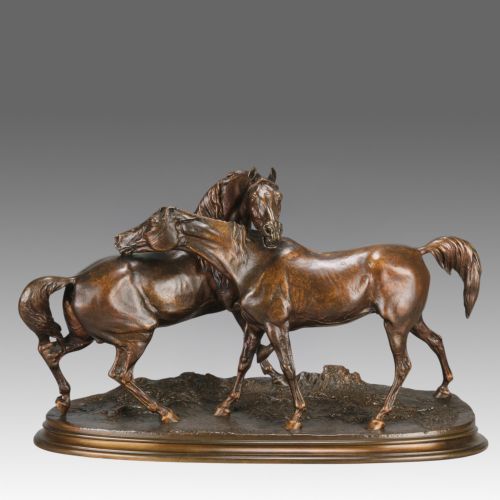
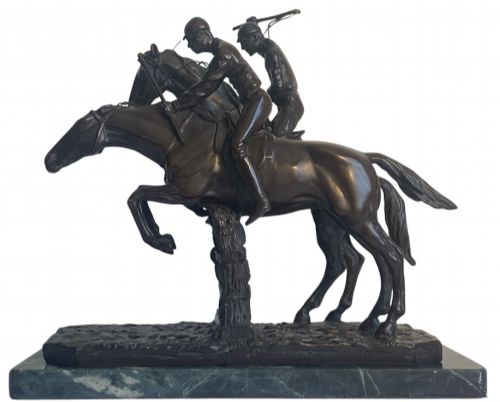
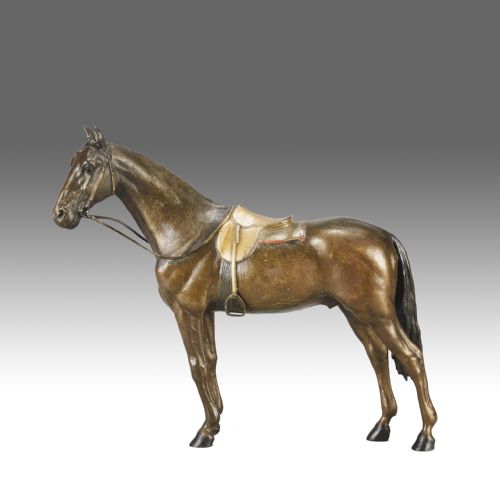
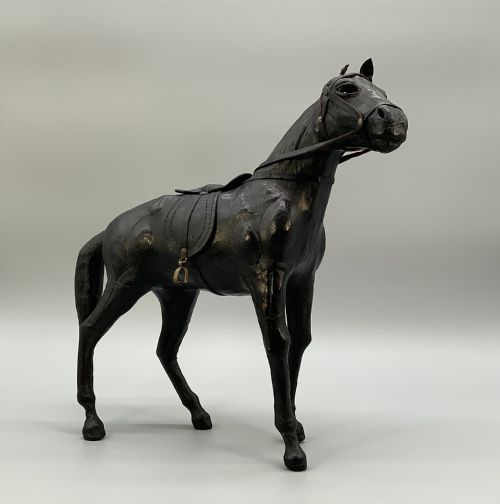
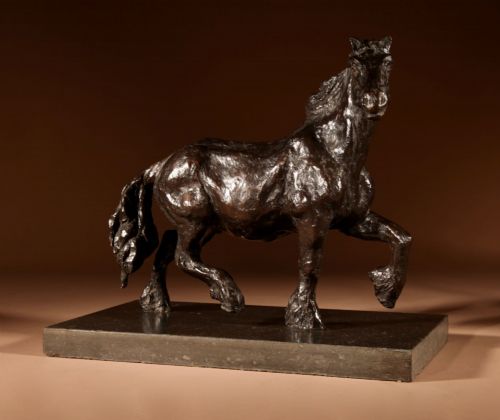
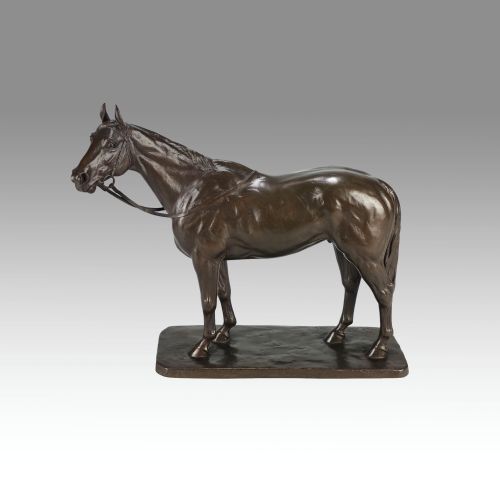
Antique Equestrian Sculpture
These antique equestrian sculpture pieces capture horses and riders in bronze, wood and iron, offering collectors enduring dynamism for display.

Antique Equestrian Sculpture
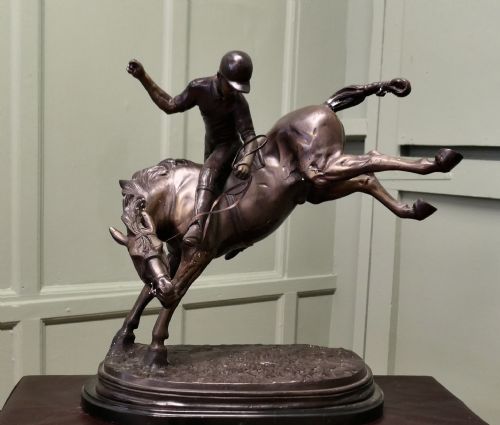
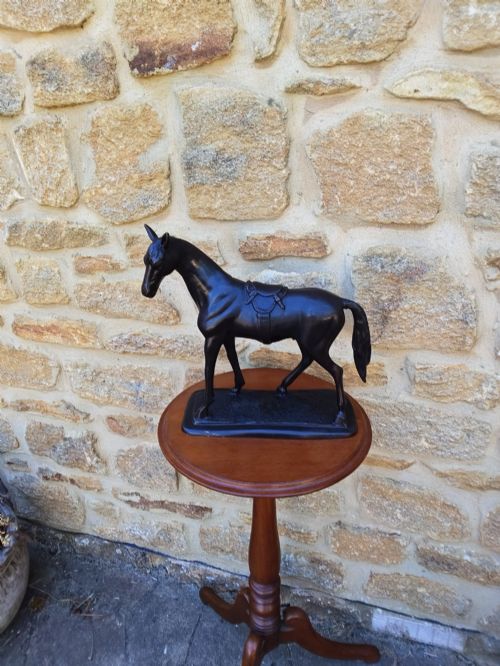
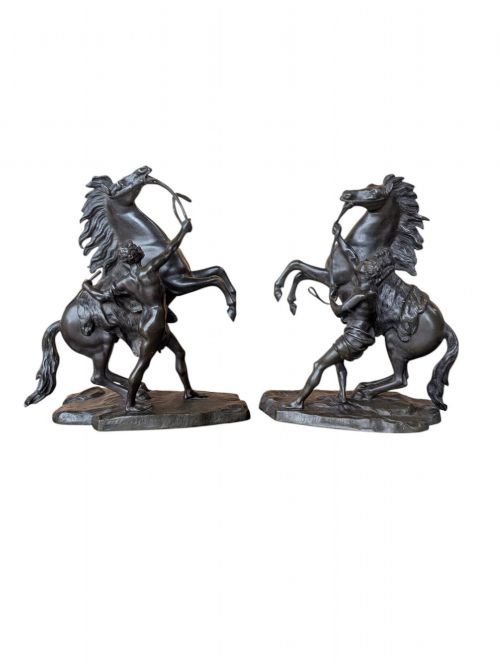
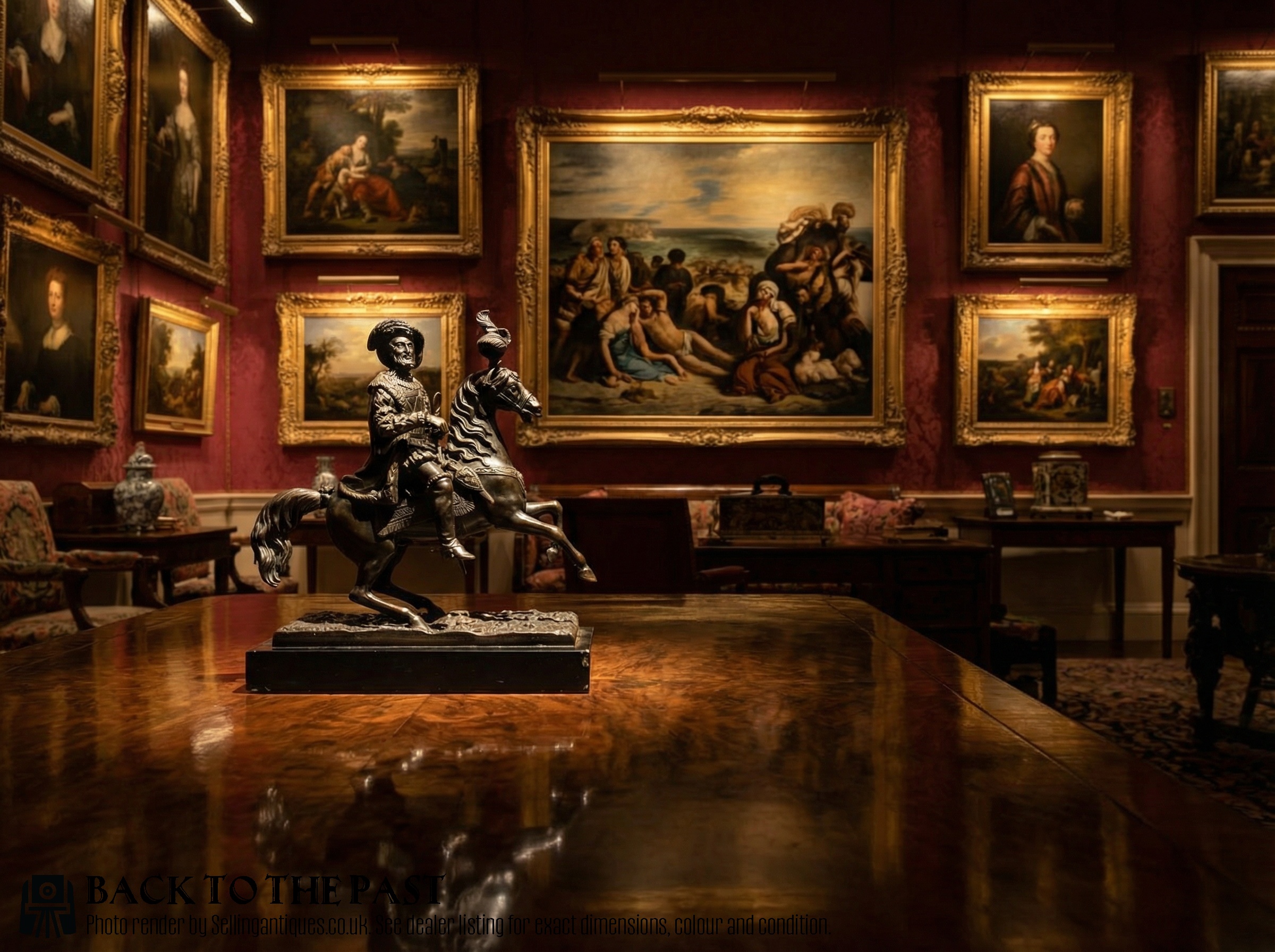
An antique equestrian sculpture captures the form of horses and riders, ranging from spirited polo players to powerful draft animals and classical chariot studies. These works appear most frequently in 19th-century and early 20th-century editions, reflecting a period of intense interest in animal anatomy and sporting subjects.
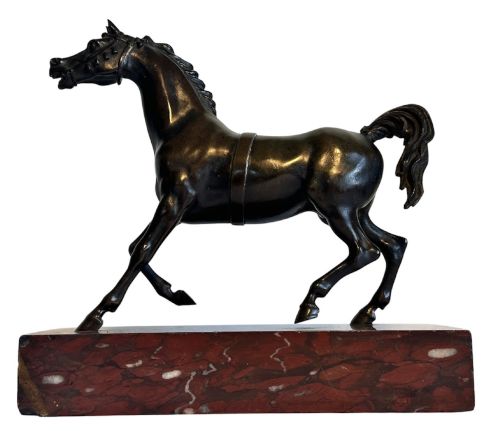
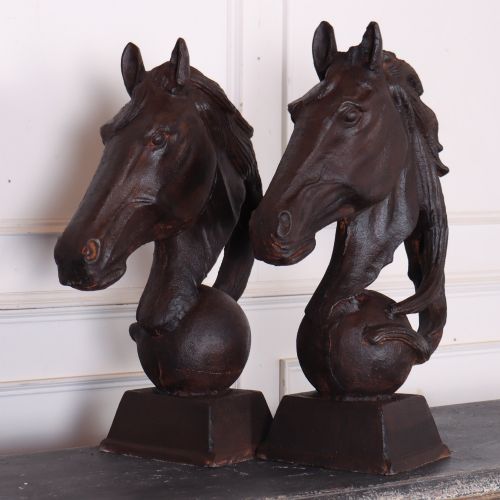
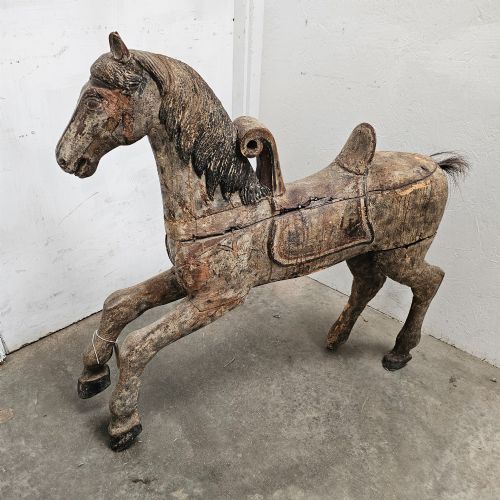
Makers utilised various formats, from freestanding tabletop bronzes on marble bases to cast iron hitching posts and carved wooden carousel figures. French Animalier works and Austrian cold-painted bronzes dominate the selection, alongside Italian Grand Tour souvenirs and English sporting scenes.
How they were made
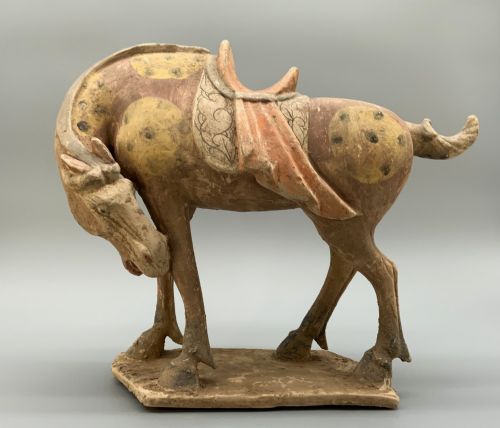
Foundry cast bronze forms the core of these pieces, often finished with dark patination, gilding or delicate cold-painted polychrome details. Artisans also worked in carved wood, cast iron, plaster and painted terracotta, applying traditional methods to shape mane, muscle and harness.
Many bronzes rely on the lost-wax casting technique, allowing precise rendering of sinew and leather before mounting upon fitted marble or wood plinths.
Antique Equestrian Sculpture Retail Price Guide 2026
Typical asking prices for equestrian sculpture among the pieces listed under this phrase on Sellingantiques today, from the lower quarter to the upper quarter. They describe what is for sale here now, not the wider market.
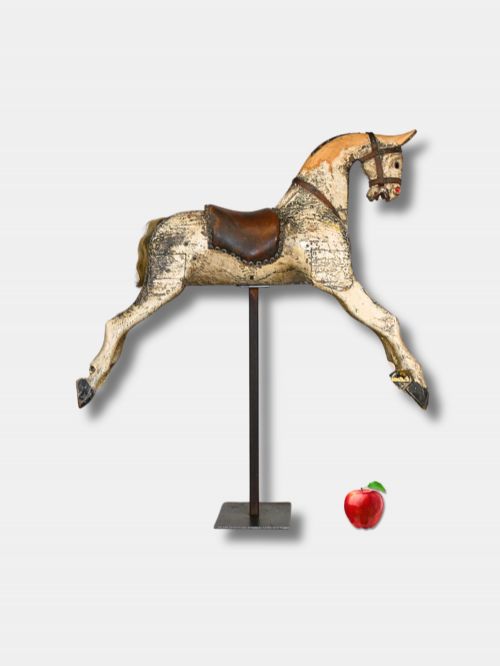
Draft horses occasionally share display space with tiny painted donkeys and carved carousel beasts.
What varies in quality
The definition in muscular and facial rendering separates master foundry output from simpler production pieces, particularly around the articulation of joints and equine expression. Crisp chasing after casting reveals the hand of the workshop, whereas softer edges indicate worn moulds or secondary sand casts.
Base selection and patination depth also dictate standing, with original multi-coloured patinas and heavy integrated marble plinths indicating superior execution.
Pierre Jules Mêne·Franz Bergman·Kunio Itô·John Willis Good·Alfred Dubucand·Pierre Lenordez
The Antique Equestrian Sculpture Glossary
- Animalier
- A 19th-century artistic movement focused on the realistic depiction of animals, particularly horses, lions and hounds. Practitioners studied live subjects intensely to capture motion.
- Cold-painted bronze
- A method where enamel paint is applied to a cold bronze surface rather than fired in a kiln. This technique requires careful sealing to prevent flaking over decades.
- Grand Tour
- A traditional trip through Europe undertaken by upper-class scholars and collectors during the 18th and 19th centuries. Souvenirs often included small bronze sculptures of classical monuments and horses.
- Lost-wax casting
- A metalworking process where a molten metal is poured into a mould that has been created by a wax model. The wax is melted and drained away to leave the cavity.
- Ormolu
- Finely ground high-carat gold applied to a bronze object using a mercury amalgamation process. This imparts a rich golden sheen common on decorative French mounts.
Antique Equestrian Sculpture: Frequently Asked Questions
What is an Animalier sculpture?
An Animalier sculpture depicts animals in realistic poses, capturing natural movement and anatomical detail rather than stylised forms.
This school emerged prominently in 19th-century France with artists who spent hours sketching subjects in menageries and stables.
Where were Grand Tour bronzes made?
Grand Tour bronzes were typically produced in workshops across Italy, particularly in Rome, Florence and Naples, to satisfy foreign travellers.
These compact studies allowed collectors to bring home miniature representations of famous local monuments and classical sculptures.
How do I spot a cold-painted bronze?
Cold-painted bronzes feature vibrant enamel colours applied directly to the metal without high-temperature kiln firing.
Inspect the surface closely under magnification to observe the characteristic matte texture of the applied pigments.