
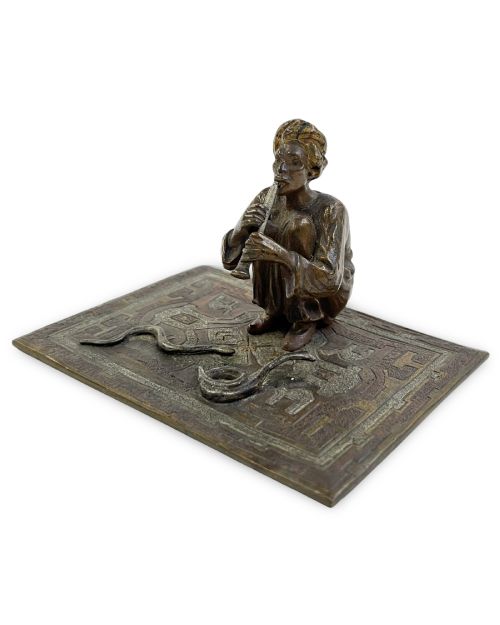


Viennese Cold Painted Bronze
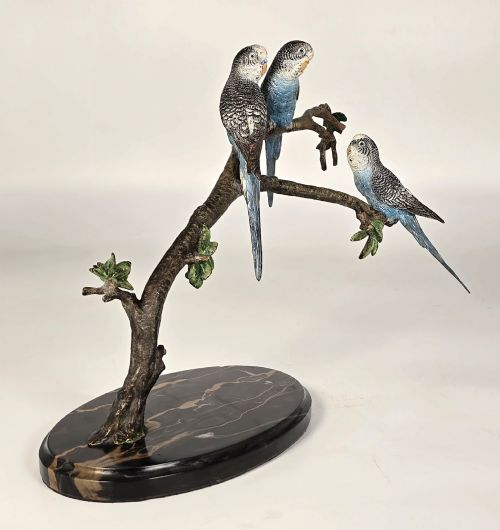
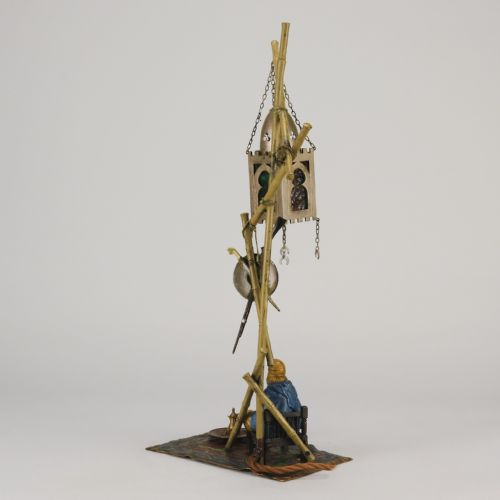
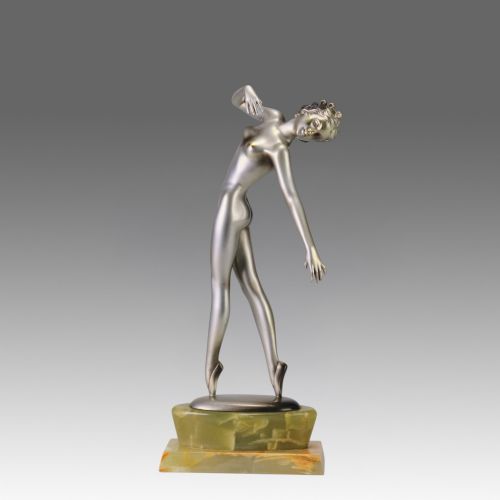
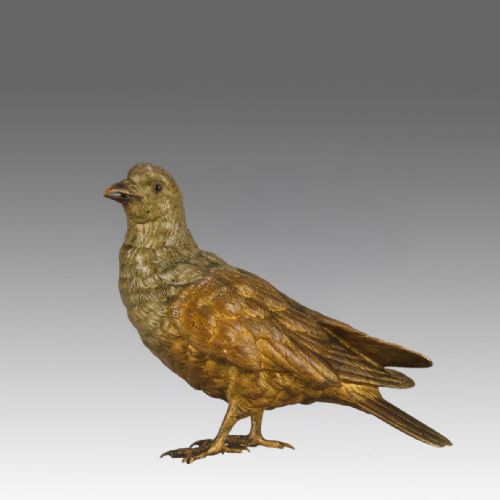
These viennese cold painted bronze figures capture intense character and detail through meticulous hand-applied pigments over cast metal.
Viennese Cold Painted Bronze
A viennese cold painted bronze brings miniature animals, birds, and figural studies to life through distinct polychrome surfaces. You will frequently encounter small animalier subjects, birds on branches, and orientalist figures dating from the nineteenth century into the 1930s.
The objects take many functional and decorative forms, ranging from inkwells and table lamps to pin trays and standalone sculptures. Many pieces incorporate natural bases such as marble or onyx to anchor the metalwork.
Makers from the Austrian and Vienna schools dominated this production, embracing both Victorian animalier realism and later Art Deco designs. These works reflect a specific continental foundry tradition that prioritised vivid realism over uniform patination.
Evaluating quality and preservation
The survival and crispness of the original cold-painted surface dictate the desirability of a piece. Finer examples retain their subtle brushwork and complex shading across feathers, fur, and clothing without extensive overpainting.
The precision of the underlying bronze cast determines how sharply facial expressions and anatomical details emerge. Sculptures with distinct chiselling and solid mounting to marble or onyx bases represent the upper tier of production.
Listings feature pieces spanning the nineteenth century through the 1930s, encompassing both Victorian animalier and Art Deco styles.
Franz Bergman·Josef Lorenzl·Franz Xaver Bergman·Bruno Zach·Goldscheider
The Viennese Cold Painted Bronze Glossary
- Cold-painted
- A technique where pigment is applied to a cast metal object without being fired in a kiln. This method preserves delicate brushwork but leaves the surface vulnerable to friction and moisture.
- Animalier
- Art that realistically depicts animals, particularly popular in nineteenth-century bronze sculpture. Makers observed anatomy closely to capture creatures in natural or dramatic poses.
- Orientalism
- A nineteenth-century artistic movement focused on subjects from the Middle East and North Africa. These bronze figures often depict merchants, snake charmers, and figures in traditional regional attire.
- Polychrome
- The practice of decorating surfaces in multiple colours. In these bronzes, it defines the varied pigments used to render naturalistic feathers, fur, and textiles.
Viennese Cold Painted Bronze: Frequently Asked Questions
How do I clean my bronze?
Dust the surface gently with a soft, dry brush to protect the delicate pigment layers. Avoid all liquids, polishes, and chemical cleaners that will strip the cold-painted finish.
Keep the sculpture away from direct sunlight and high humidity to prevent the paint from flaking or fading over time.
Are these pieces fragile?
The un-fired paint layer requires careful handling because it can chip or rub off with friction. Hold the piece by its solid bronze or stone base rather than painted extremities.
Display the sculptures in low-traffic areas where they will not be knocked or brushed against by daily movement.
How can I tell the period?
Examine the stylistic cues, such as the streamlined geometry of Art Deco pieces compared to the ornate detail of Victorian animalier. Foundry marks, urn symbols, and Bergman stamped signatures help confirm production eras.
The choice of mounting materials, including specific types of onyx and marble, also provides clues to the manufacturing decade.
Where were they made?
Workshops in Vienna produced the vast majority of these painted bronzes during the late nineteenth and early twentieth centuries. These Austrian foundries employed skilled painters who specialised in miniature polychrome detail.
The output reflected both local artistic tastes and export markets across Europe and Britain.