


Equestrian Bronze Sculpture
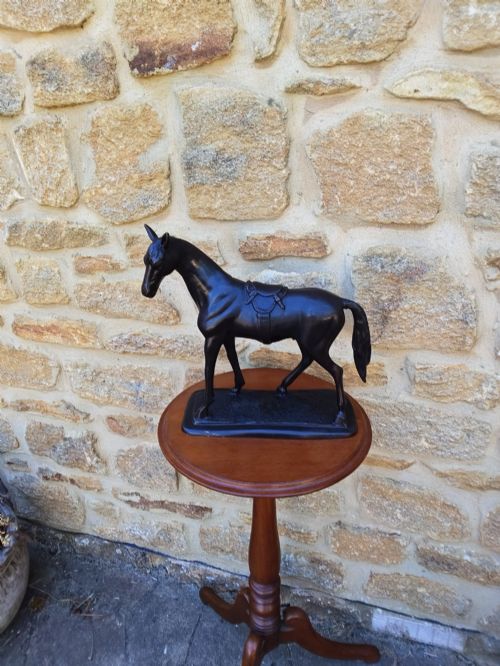
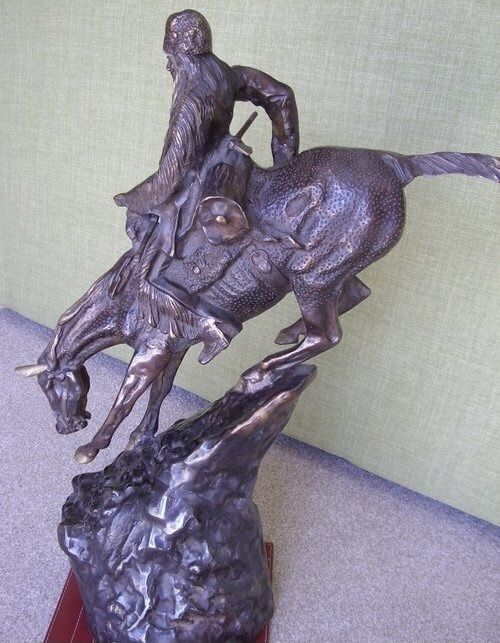
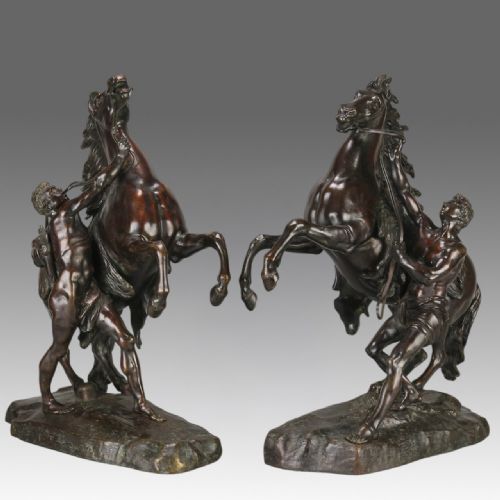
These equestrian bronze sculpture pieces capture horses and riders in metal, offering collectors dynamic forms from the nineteenth and twentieth centuries.
What equestrian bronze sculpture pieces are
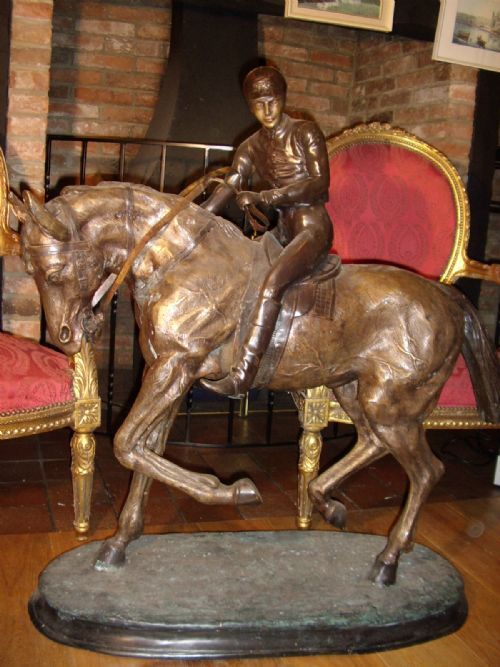
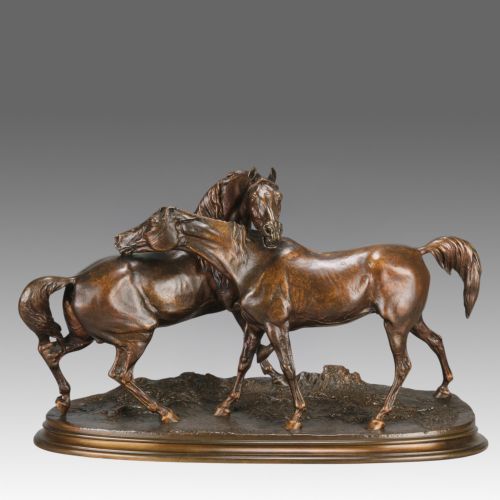
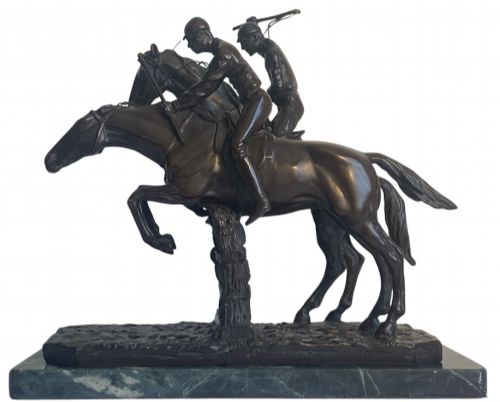
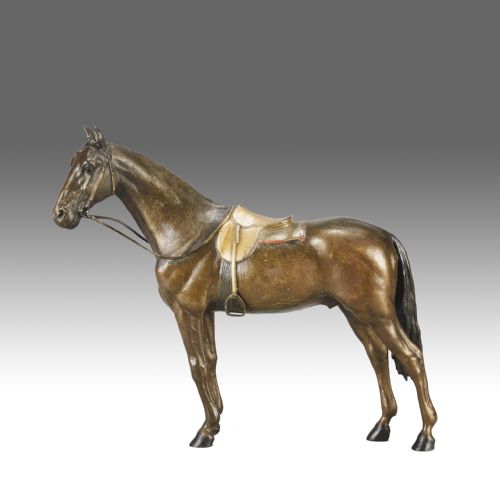
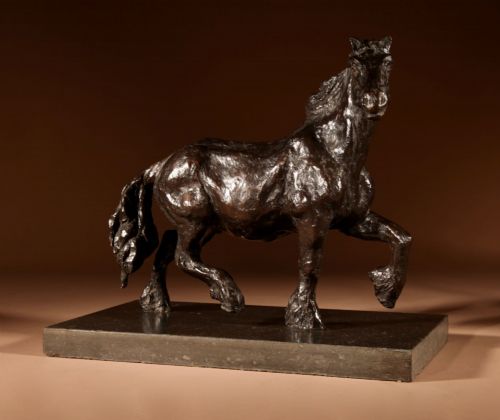
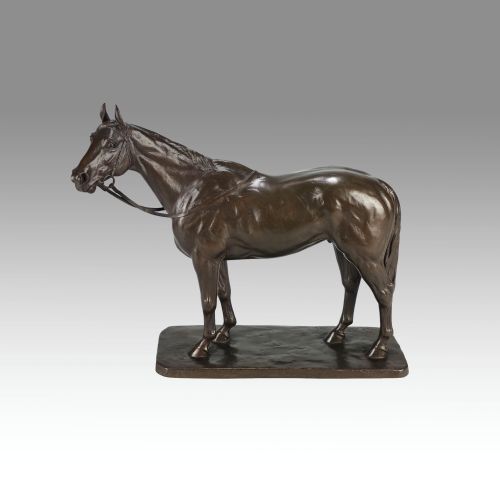
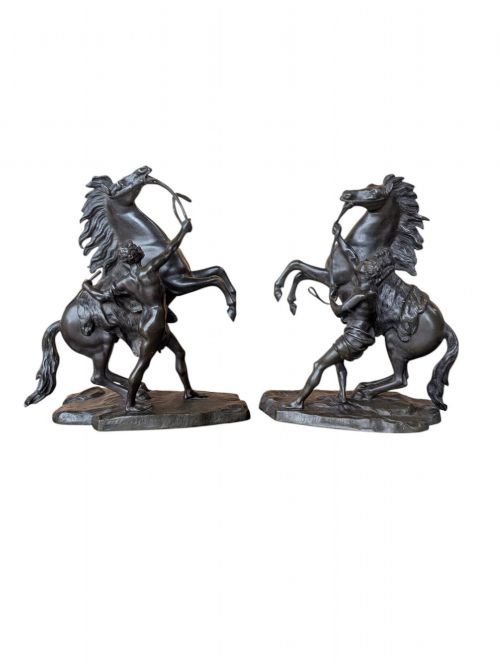
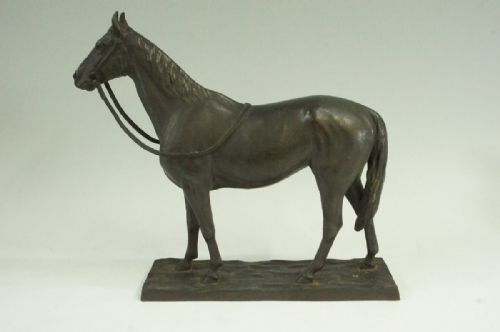
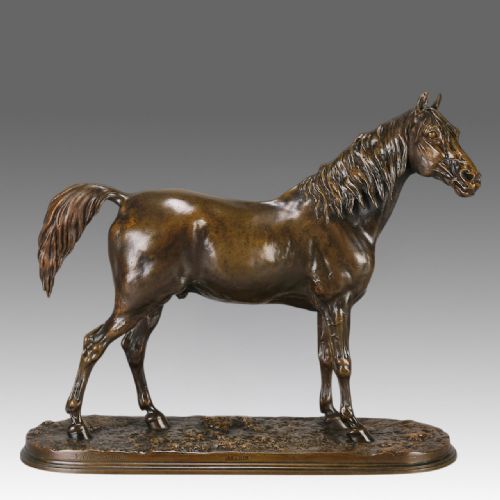
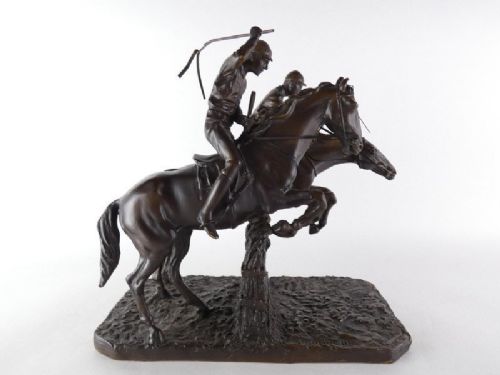
An equestrian bronze sculpture brings together horse and rider or animal subjects in solid metal, drawing on French Animalier, Victorian, and Vienna traditions. The selection includes racehorses with jockeys, hunting groups, and Japanese foundry work from the Meiji period.
Most examples hail from the nineteenth century or the Edwardian era, featuring mounted figures like jockeys, grooms, and Cossacks. Sculptural dishes also appear, pairing cold-painted bronze figures with practical vessels.
How they were made
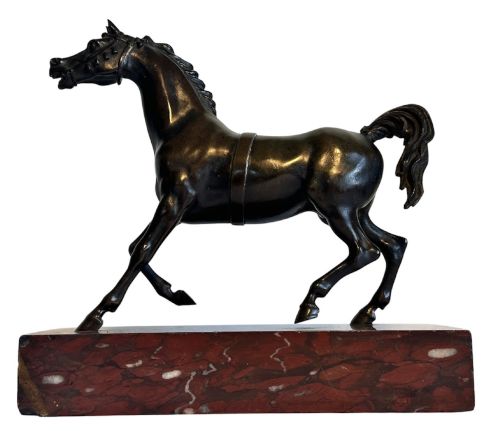
Foundries cast these pieces in bronze, occasionally mounting the heavy metal figures on marble bases for stability. Selected works receive cold-painted surface decoration, adding colour to detailed figures like monkeys and greyhounds.
Maker involvement ranges from individual artists like Pierre Jules Mêne and Franz Bergman to Tokyo foundries and commercial firms such as Cox and Sons. Signatures and foundry stamps occasionally mark the metal surface.
Retail Price Guide 2026
Typical UK retail prices for equestrian bronze sculpture, calculated from the Sellingantiques database of over a million retail prices indexed since 2003. This retail price guide relies exclusively on Sellingantiques data; no external sources or auction records are used, so the figures do not describe the wider market.
Sculptural forms include racehorse groups, hunting scenes, and a monkey racing a greyhound on a cold-painted dish.
What varies in quality
Quality rests in the precision of the casting and the fidelity of the musculature in both horse and rider. Pieces signed by known makers or produced by recognised foundries command greater attention from collectors.
The application of cold-painting and the preservation of the original bronze patina distinguish standard castings from finer works. Compositional energy, such as the tension in a racing or hunting group, defines the upper tier.
Pierre Jules Meme·John Willis Good·Franz Bergman·Tokyo Foundry·Sakai Kozan·Cox and Sons
The Equestrian Bronze Sculpture Glossary
- Animalier
- A nineteenth-century artistic movement focused on the realistic depiction of animals, particularly horses and hounds. French and Victorian sculptors excelled in this genre.
- Cold-painted bronze
- A technique where paint is applied to a cold bronze object rather than fired in a kiln. This finish is especially characteristic of Vienna bronze production.
- Vienna Bronze
- Small-scale bronze figures produced in Austrian workshops during the late nineteenth and early twentieth centuries. These pieces often feature whimsical or sporting subjects.
- Meiji Period
- The era in Japanese history spanning from eighteen sixty-eight to nineteen twelve, known for exceptional metalwork from Tokyo foundries.
Frequently Asked Questions
How do I identify a Vienna bronze?
Vienna bronzes typically feature cold-painted surfaces and small, highly detailed figures like animals in human situations. They date largely from the late nineteenth and early twentieth centuries.
Unlike plain bronze castings, these pieces rely on applied colour for visual impact. Examining the paint retention helps determine the origin and condition of the object.
Where were these sculptures made?
Production spans several regions, notably France, Britain, Austria, and Japan. European foundries focused on Animalier subjects and hunting groups, while Tokyo workshops created refined Japanese bronzes.
Each region brought distinct casting traditions and surface finishes to the medium. Marks and signatures on the bronze often indicate the specific foundry or maker.
How do I care for bronze sculptures?
Bronze requires minimal maintenance, needing only gentle dusting with a soft cloth to protect the patina. Avoid using chemical polishes that can strip the aged surface finish.
Keeping the sculptures away from excessive moisture and direct sunlight preserves the metal and any cold-painted details. Marble bases can be wiped with a dry cloth.