





Painted Wooden Horse
A painted wooden horse brings robust 19th-century folk art character and the tactile charm of early playroom toys directly into a room.
Painted Wooden Horse
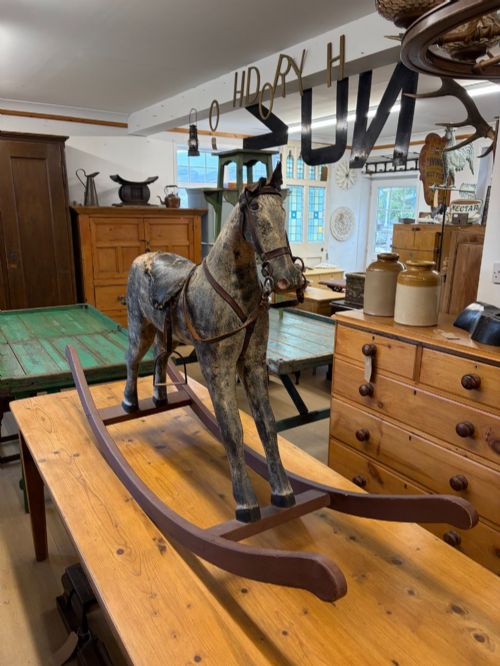
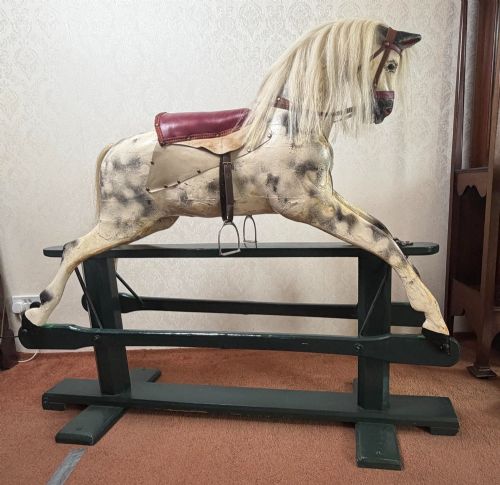
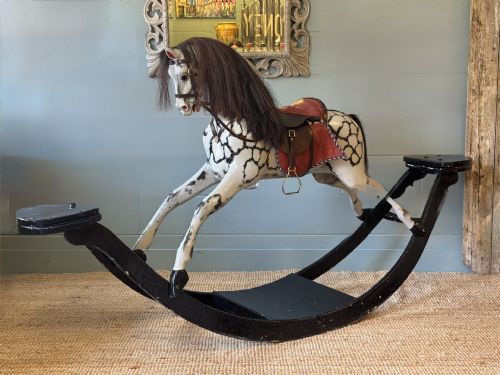
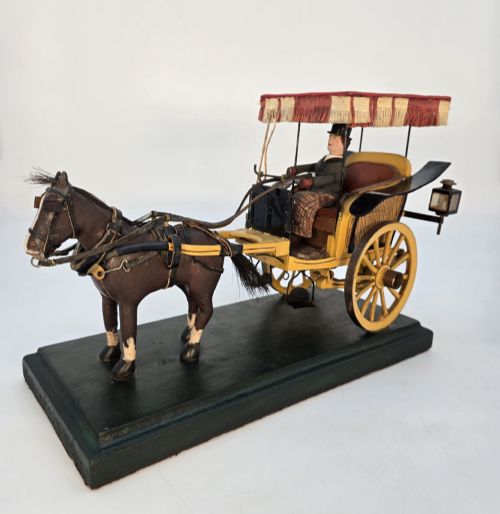
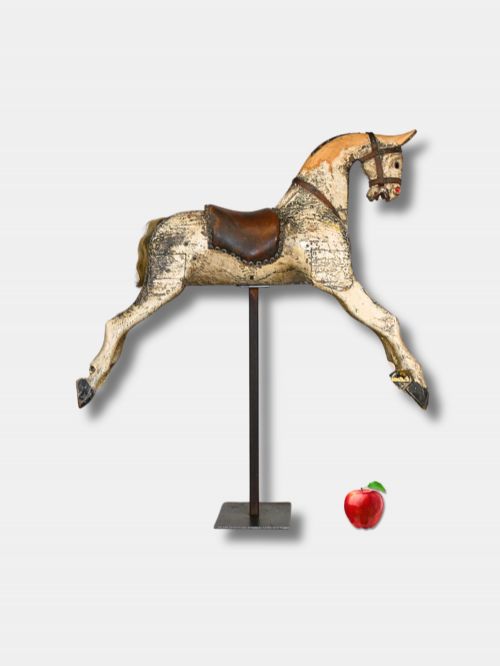
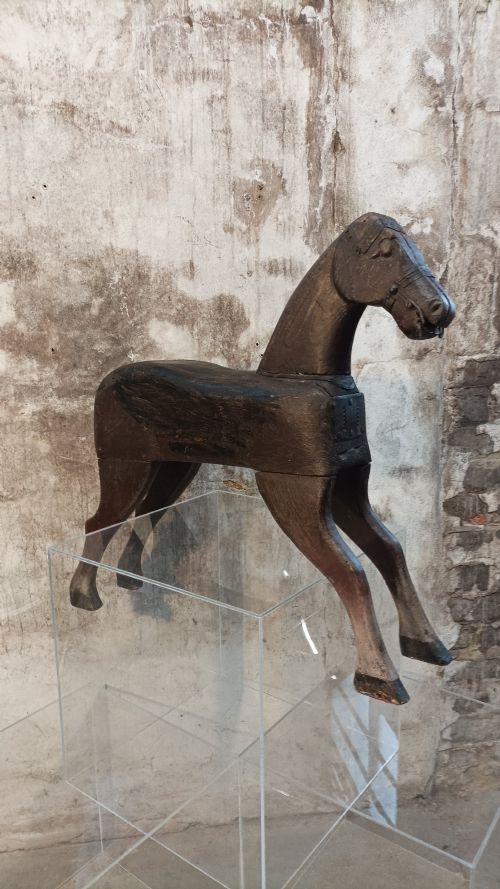
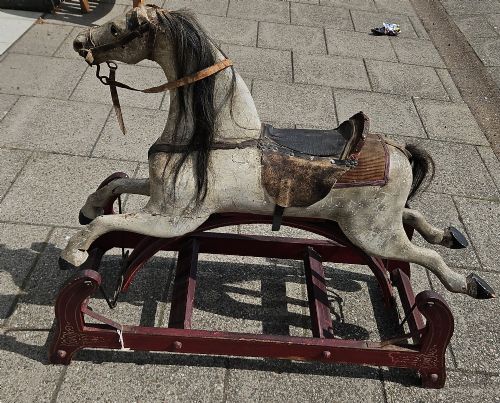
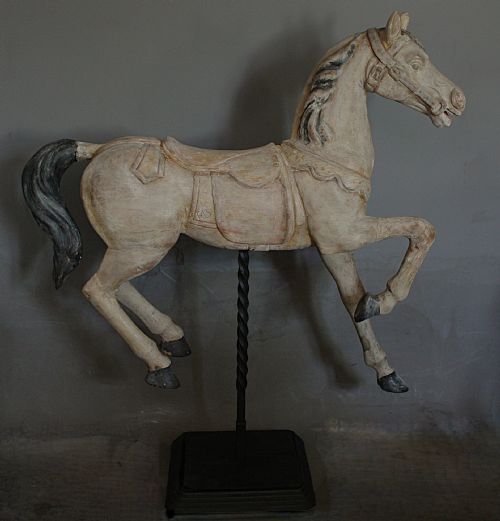
A painted wooden horse encompasses a broad range of carved forms, from substantial nursery rocking horses and fairground carousel figures to smaller decorative folk art sculptures and scale models. The most common iteration you will encounter on this page is the traditional rocking horse mounted on a safety stand or original curved wooden rockers.
These pieces emerge from various regional traditions spanning the Victorian era through the early 20th century, including English, French, Spanish, Swedish, and American examples. Makers utilised durable materials like pine and oak, applying layered paint to depict dapple grey coats or primitive folk finishes.
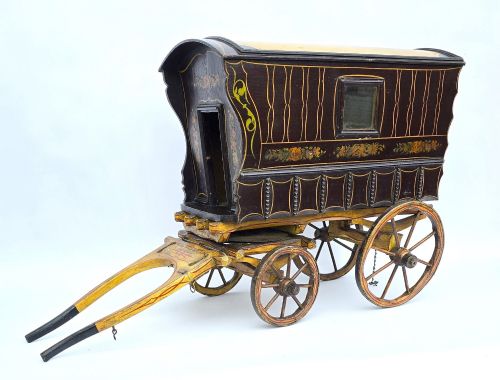
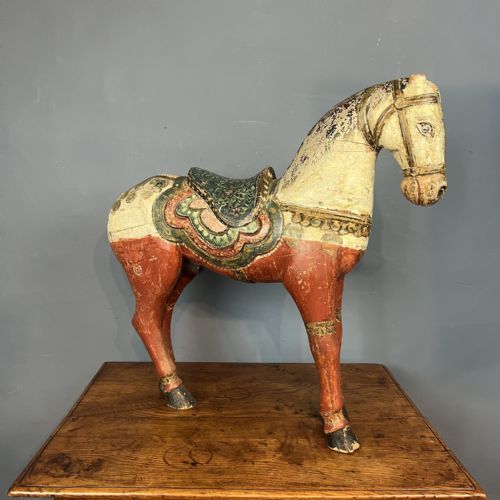
Beyond full-sized rocking horses, the category includes static carved figures, fairground gallopers, and regional export pieces such as Indo-Persian and Rajasthani wooden horses. Each object reflects the utilitarian craft and decorative sensibilities of its specific period, ranging from naive primitives to established London toy makers.
How they were made
Makers constructed the core structures using solid woods such as pine, often carving the bodies in sections before assembling them with iron or metal hardware. Leather tack, real horsehair manes and tails, and glass eyes were frequently added to bring realism to the carved forms.
Surface decoration relied on traditional paint techniques, building up layers of pigment to create dapple grey patterns, polychrome details, or flat folk art finishes. Many pieces retain their original paint layers, showing natural wear from active play or decades of exposure.
Listings feature 19th-century primitives alongside works by prominent early 20th-century makers.
What varies in quality
The degree of anatomical carving and the survival of original paint surfaces heavily influence the standing of an individual piece. Finer examples retain their complete original leather tack, horsehair, and stable wooden stands without excessive structural intervention.
Maker attribution also dictates standing, with documented pieces from notable firms commanding distinct interest compared to anonymous folk art or naive workshop creations.
G & J Lines of London·Collinson & Sons Liverpool·F.H. Ayres·Lines Bros Sportiboy
The Painted Wooden Horse Glossary
- Dapple grey
- A painted coat pattern mimicking a horse with grey hairs grouped in circles over a darker background. This finish is characteristic of many traditional English nursery rocking horses.
- Carousel galloper
- A carved wooden horse designed for a fairground roundabout, typically featuring dynamic postures and decorative harness details. These figures often display bold polychrome paint schemes intended to catch the eye in motion.
- Folk art
- Objects created by self-taught or traditional artisans outside formal academic traditions. In these pieces, naive proportions are balanced by expressive charm and direct use of materials.
- Tack
- The harness, saddle, and stirrups fitted to a horse model. Original leather tack adds considerable context to antique toy and rocking horse survivals.
Painted Wooden Horse: Frequently Asked Questions
How do I date an antique rocking horse?
Dating relies on examining the construction methods, nail types, and the style of the wooden stand or safety bow. Earlier examples often feature more primitive hand-carved bodies and simpler pine trestle bases.
Paint analysis also helps, as original lead-based or early oil paints age with distinct craquelure and patination that modern reproductions cannot replicate.
What is the difference between a rocking horse and a carousel horse?
Rocking horses are engineered for nursery use, mounted on curved floor rockers or rigid swing stands for balance. They prioritize stable construction and child-friendly proportions.
Carousel horses were built for fairground rides, featuring dynamic, windswept postures and mounting holes designed to attach the figure to a rotating platform.
Are these horses made of solid wood?
Most antique examples utilise solid timbers like pine or hardwoods for the main body blocks and legs. Carvers joined multiple pieces of wood together to prevent warping and to accommodate large forms.
Internal iron rods and metal brackets were frequently employed to reinforce high-stress areas like the legs and neck joints.
How should I care for original paint?
Preserving original paint requires keeping the piece away from direct sunlight and maintaining stable indoor humidity levels. Dust gently with a dry, soft cloth rather than using liquid cleaning products.
Harsh cleaners can strip away fragile historic pigments and the aged varnish layers that protect the surface.