


Vintage Rocking Horse
A vintage rocking horse brings a century of craftsmanship and playroom history into a room, offering both decorative presence and tangible folk art heritage.
Vintage Rocking Horse
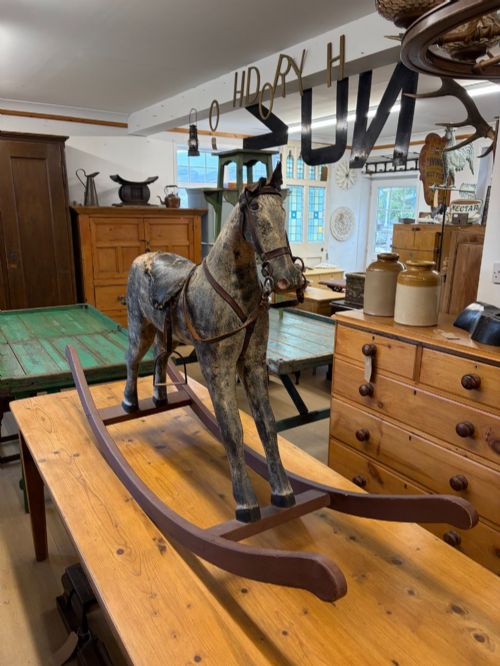
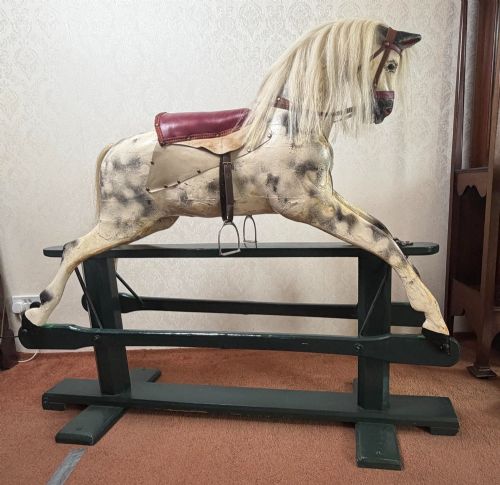
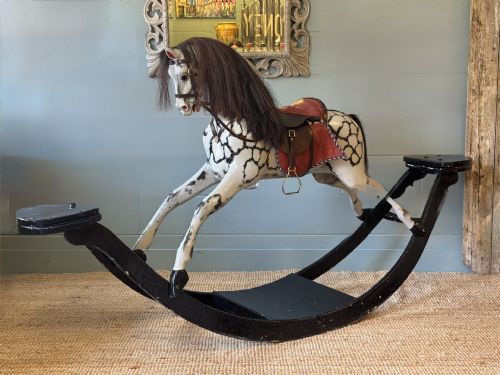
A vintage rocking horse is a child's ride-on toy or decorative sculpture shaped from timber, most commonly encountered from the nineteenth century through the interwar period and mid-century. These pieces appear as large floor-standing toys mounted on bow rockers or safety stands, alongside smaller decorative objects and charms.
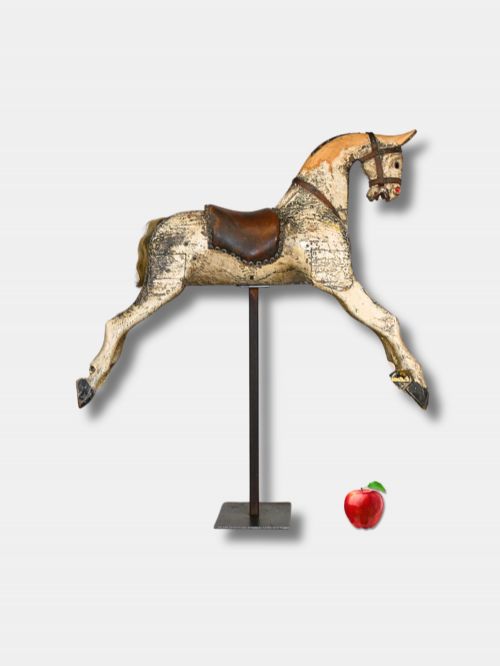
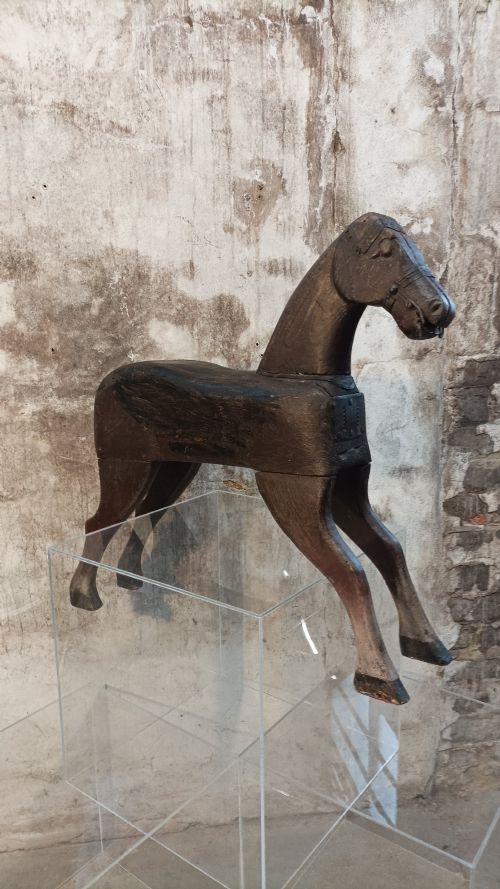
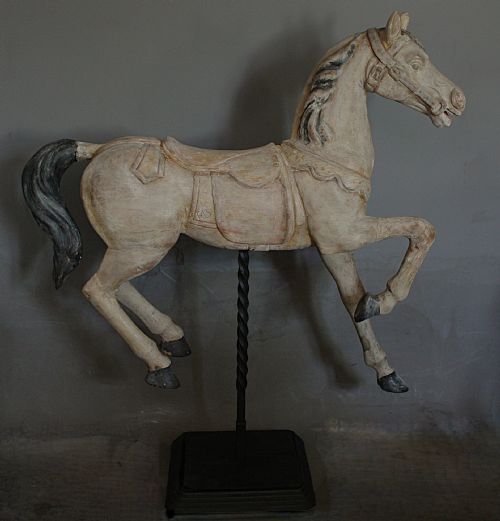
The selection ranges from primitive nineteenth-century carved wooden examples and folk art sculptures to substantial Victorian and Edwardian horses bearing the hallmarks of major makers. Buyers also encounter carousel figures and chain-driven ride-on toys from the same eras.
Originating predominantly from British workshops, alongside American and European examples, these objects reflect domestic and nursery traditions spanning several decades. Their forms vary from heavily painted folk art interpretations to finely carved dappled models intended for affluent Victorian households.
Materials and construction
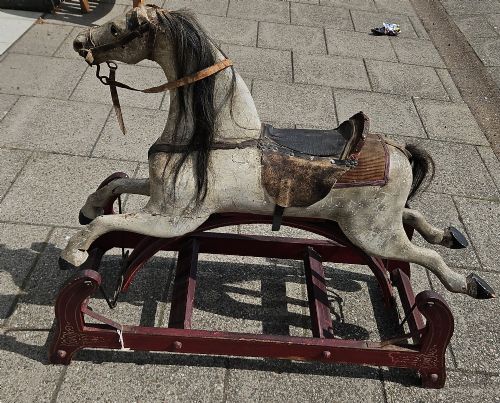
Makers shaped these horses primarily from carved wood such as pine, building bodies around internal wooden frames or blocks before applying surface finishes. Artisans utilised leather for tack and saddles, horsehair for mannes and tails, and iron or steel for brackets, stands, and swing mechanisms.
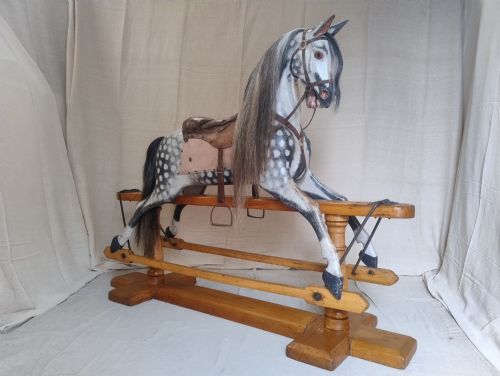
Surfaces were frequently finished with paint, often layered over gesso, creating the characteristic dappled or solid coloured coats seen on Victorian and Edwardian examples. Structural stability relied on robust joinery and heavy wooden rockers or pine safety stands designed to withstand rigorous childhood play.
Vintage Rocking Horse Retail Price Guide 2026
Typical asking prices for vintage rocking horse among the pieces listed under this phrase on Sellingantiques today, from the lower quarter to the upper quarter. They describe what is for sale here now, not the wider market.
Some horses survived over a century of enthusiastic nursery gallops wearing traces of their original harness and authentic braided horsehair tails.
Markers of distinction
Quality rests in the depth and anatomical conviction of the carving, distinguishing master workshop output from naive folk art pieces. Artisans who spent hours detailing musculature, jawlines, and facial expressions produced horses with an enduring sculptural presence.
The integrity of the surface finish dictates much of the standing within the field, with original paint schemes holding particular weight over later overpainting. Surviving tack, genuine horsehair, and intact original rockers or swing stands elevate an example above those altered or stripped down over decades of use.
G and J Lines·F H Ayres·Collinson·Lines Bros Sportiboy
The Vintage Rocking Horse Glossary
- Bow rocker
- A curved wooden arc upon which the horse mounts to allow forward and backward motion. These curved rockers represent the earlier traditional form before safety stands were widely introduced.
- Safety stand
- A rigid wooden frame fitted with swing arms that suspend the horse above the floor. This design replaced bow rockers to prevent the toy from tipping over during vigorous play.
- Gesso
- A plaster-like mixture applied to the carved wooden body to create a smooth surface for painting. It provides the foundational layer for traditional dappled finishes.
- Tack
- The harness, saddle, reins, and stirrups fitted to the horse. Original leather tack adds significantly to the historical completeness of the piece.
- Folk art
- Objects created by self-taught or non-traditional makers outside mainstream academic traditions. In these listings, it describes naive or provincial wooden horses with charmingly unrefined proportions.
Vintage Rocking Horse: Frequently Asked Questions
How old is my rocking horse?
Dating relies on examining construction methods, nail types, paint layers, and mounting styles. Nineteenth-century examples often feature simpler hand-carved pine bodies on bow rockers, while later Edwardian and interwar pieces frequently utilise safety stands and more uniform mechanical fixings.
Makers' stamps or brass plaques, where present on the stand or under the belly, provide the most direct confirmation of origin and date. Comparing the tack, mane material, and overall stance against documented pieces from known workshops further narrows the period of manufacture.
Are these horses safe for children?
Vintage rocking horses are primarily valued as decorative objects, folk art sculptures, or collector's pieces rather than modern nursery toys. Their antique wooden structures, aged iron brackets, and historical finishes may not meet contemporary safety standards for active play.
Many surviving pieces exhibit structural wear or playworn conditions acquired over generations. Buyers wishing for children to ride them should have a specialist inspect the stability of the stand, joints, and fixings before use.
How do I clean original paint?
Conservation requires a gentle approach using dry dusting with a soft brush or microfibre cloth to remove surface dust. Moisture should be avoided unless handled by a professional restorer, as water can lift fragile gesso and nineteenth-century paint layers.
Harsh chemical cleaners and modern polishes strip away aged patina and historical surface character. Preserving the original paint finish, even when worn or craquelured, maintains the integrity and historical value of the piece.
What is a dappled horse?
A dappled finish mimics the grey coat of a horse marked with darker spots or patches. In Victorian and Edwardian workshops, artisans laboriously painted these patterns by hand over a gesso base to create a decorative, lifelike appearance suited to affluent nurseries.
This finish required considerable skill and time from the maker, distinguishing mass-produced toys from high-end workshop commissions. Surviving dappled coats in original condition remain sought-after markers of quality among collectors.