


Painted Wooden Rocking Horse
A painted wooden rocking horse brings tactile charm and nursery heritage into a room, offering enduring appeal for collectors and interior decorators alike.
Identifying a painted wooden rocking horse
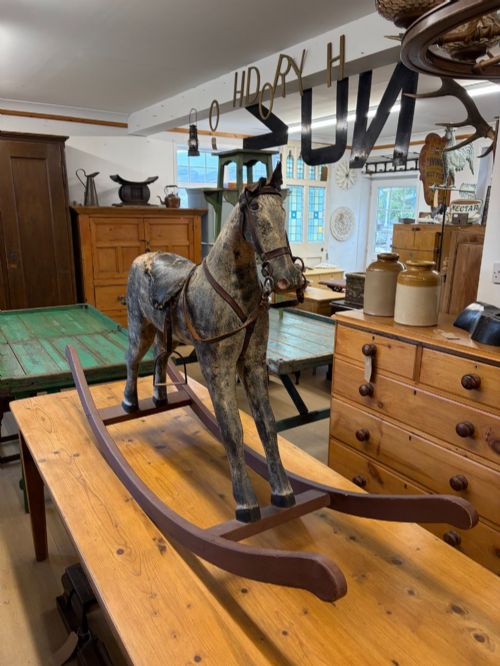
When you search for a painted wooden rocking horse, you encounter sturdy children's toys that double as folk art sculpture. These traditional playthings span the nineteenth century through the early twentieth century, capturing Victorian grandeur and naive provincial craftsmanship.
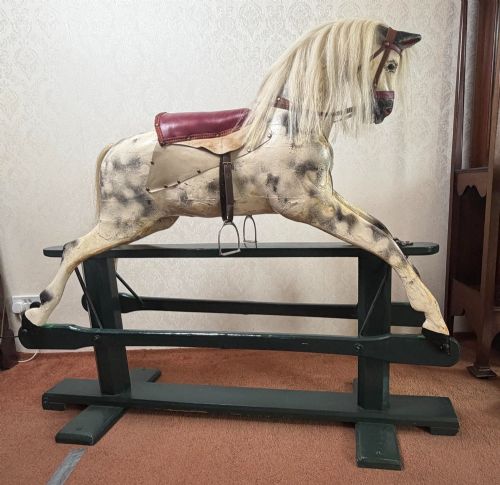
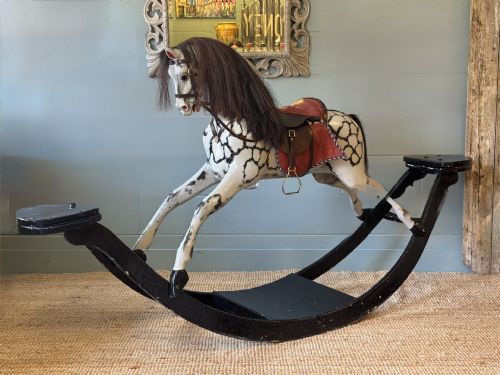
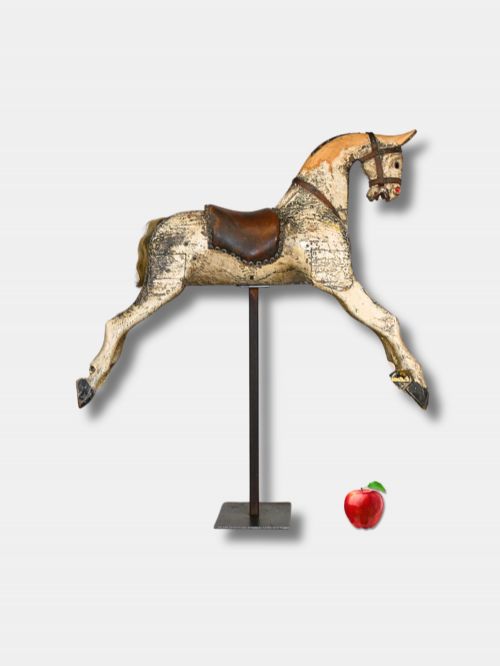
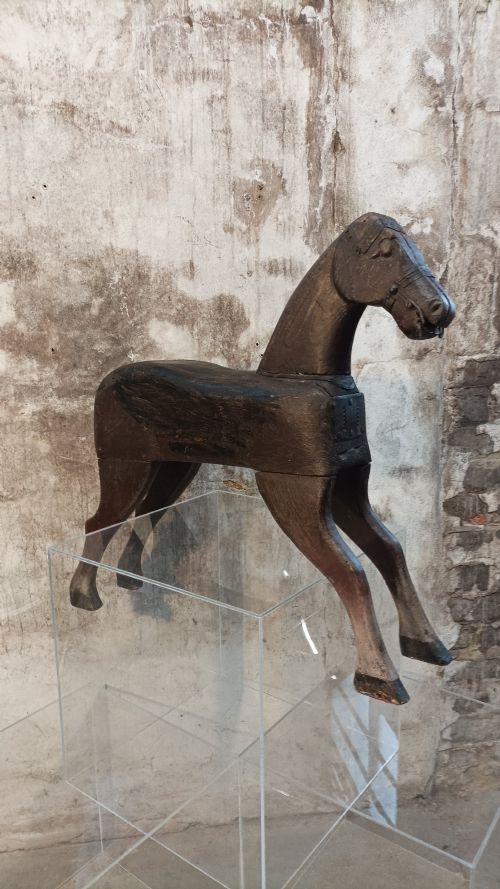
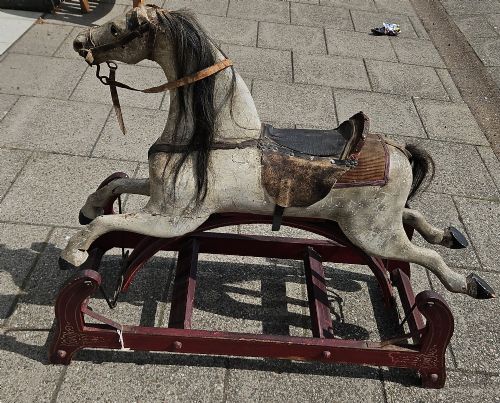
The pieces on this page appear in various forms, from large dappled examples mounted on pine trestle bases to smaller primitive and folk art interpretations. Origins range from British workshops such as Collinson & Sons and F.H. Ayres to American, Spanish, and Anglo-Indian makers.
Victorian and Edwardian iterations dominate the selection, often showcasing carved wooden bodies with layered paint finishes. Buyers frequently meet simpler nineteenth-century primitive items alongside more elaborate dapple grey models designed for Victorian nurseries.
Construction and materials
Makers shaped these animals primarily from wood, carving bodies and heads before applying thick coats of paint. Structural reinforcement relied upon iron and steel components, particularly in the internal bracing and rocking mechanisms.
Authentic examples incorporate traditional upholstery materials like genuine leather for saddles and tack. Real horsehair forms the manes and tails, while glass eyes complete the lifelike expression of the carved figures.
Retail Price Guide 2026
Typical UK retail prices for painted wooden rocking horse, calculated from the Sellingantiques database of over a million retail prices indexed since 2003. This retail price guide relies exclusively on Sellingantiques data; no external sources or auction records are used, so the figures do not describe the wider market.
Periods represented on this page span the 19th Century, Victorian era, Edwardian period, 1910, 1920, and 1930.
Judging quality and character
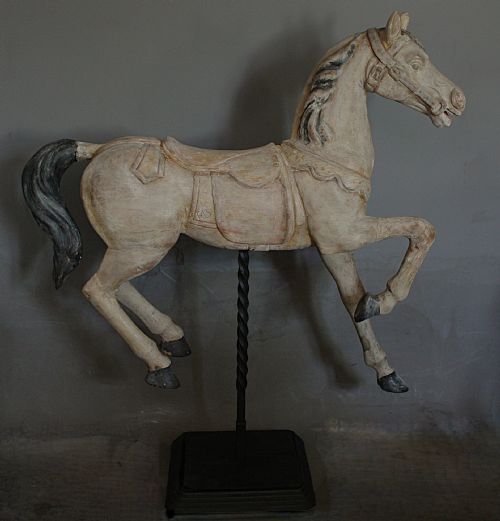
Quality rests upon the sculptural depth of the carving and the nuance of the original painted surface. Finer works display spirited anatomical modeling and sophisticated dapple grey detailing, whereas naive pieces derive their charm from simpler rustic execution.
The integrity of the structural base and the preservation of original materials such as horsehair and leather elevate a piece. Master makers like Collinson & Sons or F.H. Ayres contribute distinct provenance that distinguishes standard nursery items from sought-after works.
F.H. Ayres·Collinson And Sons Liverpool
The Painted Wooden Rocking Horse Glossary
- Dapple grey
- A traditional painted finish mimicking a horse coat with darker spots over a lighter grey base. This style defines many classic Victorian nursery mounts.
- Trestle base
- A robust wooden support frame featuring uprights connected by a horizontal beam. Rocking horses are typically secured to this structure for stability during movement.
- Primitive
- A descriptive term for folk art objects created with basic tools and unpretentious technique. These pieces often exhibit endearing asymmetry and direct charm.
- Folk art
- Cultural art produced within a traditional community by self-taught makers. This category embraces the naive Spanish and nineteenth-century wooden pieces found here.
Frequently Asked Questions
What periods do these rocking horses come from?
The listings encompass items spanning the nineteenth century through the early decades of the twentieth century. Examples frequently date from the Victorian and Edwardian eras, extending into the 1920s and 1930s.
These dates reflect traditional manufacturing periods for wooden nursery toys. Earlier nineteenth-century specimens often lean toward primitive or folk art aesthetics.
How were these rocking horses used originally?
Children rode these carved figures as active indoor playthings in Victorian and Edwardian nurseries. They provided vigorous entertainment before the advent of modern mechanical toys.
Over time, many transitioned from active playthings into decorative showpieces. Today, they serve as striking focal points in domestic interiors.
What materials make up an antique rocking horse?
Primary construction relies on carved wood mounted onto sturdy pine trestle bases. Iron and steel provide internal mechanical support and bracing.
Surface decoration incorporates traditional paint, while details feature genuine leather tack and real horsehair. Inset glass eyes add a realistic finishing touch to the carved heads.
How do I distinguish between maker styles?
Maker attribution often relies on distinctive carving signatures and structural framing. Firms like F.H. Ayres and Collinson & Sons produced refined, anatomically detailed dapple grey models.
Conversely, naive and primitive items display simpler regional characteristics without factory branding. Examining the paint application and base construction helps clarify origin.