
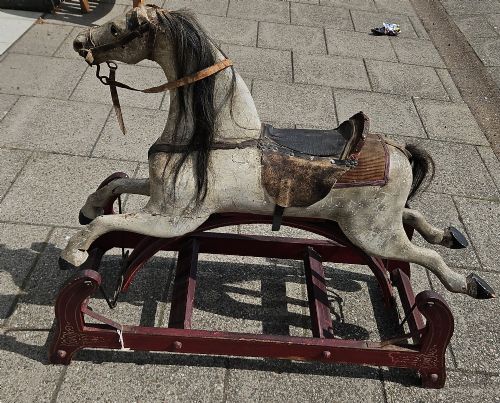


Horsehair Mane Rocking Horse
These horsehair mane rocking horse examples bring carved timber and genuine animal hair together for traditional playroom motion.
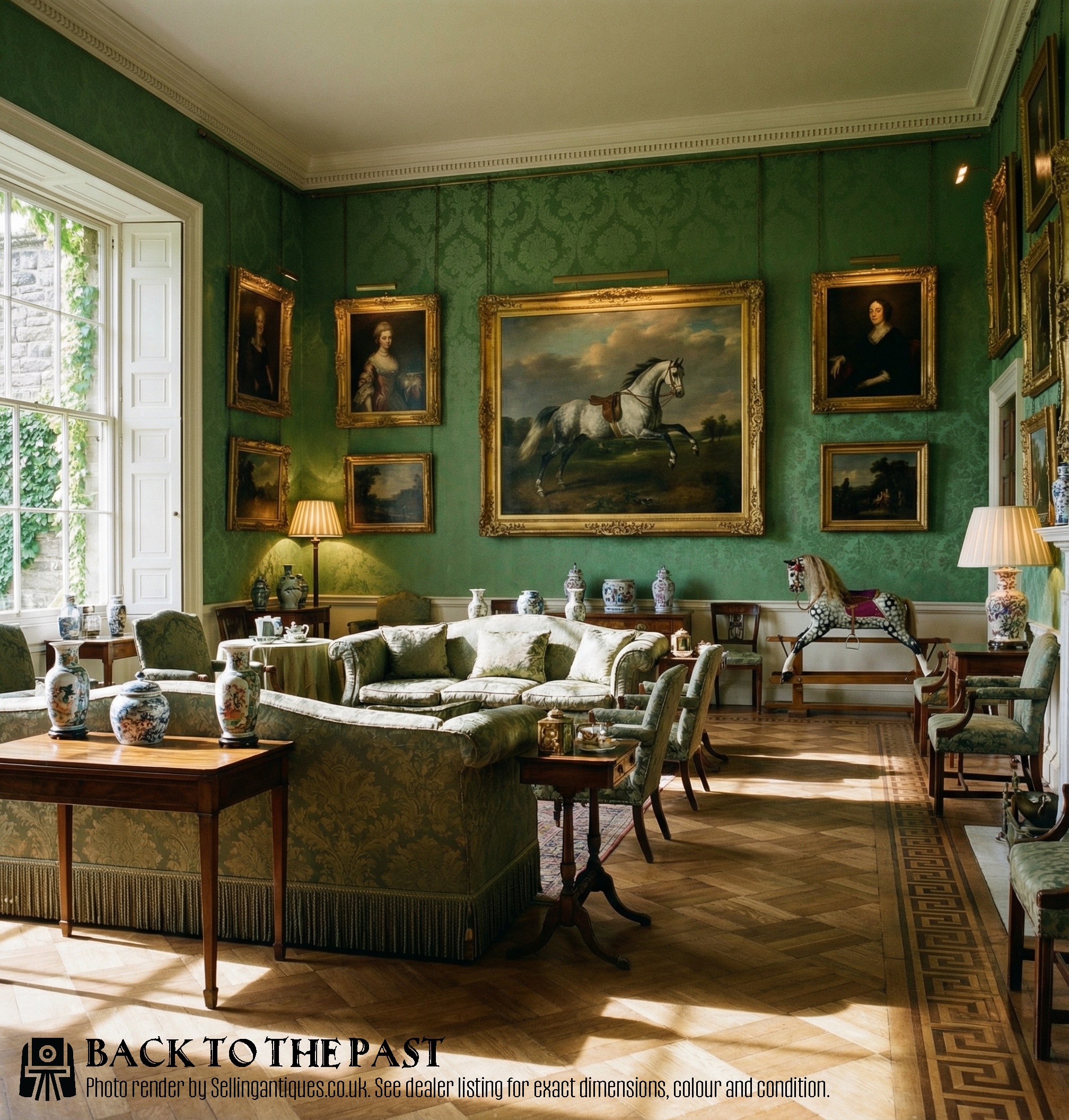
Identifying a horsehair mane rocking horse
A horsehair mane rocking horse represents traditional playroom toys shaped from carved timber and painted finishes, appearing across Victorian, Edwardian, and later vintage British eras. These pieces typically take the form of rocking horses mounted on curved wooden rockers or safety stands designed for motion.
The most common versions met on this page span the period from nineteen hundred through to nineteen forty, reflecting robust construction methods of the early twentieth century. Examples range from standard sizes to extra large figures produced by established makers such as F.H. Ayres and Collinson.
Construction and materials
Makers utilised carved wood and solid pine for the core structure, shaping bodies to mimic the musculature of real mounts before applying painted finishes and dapple patterns. Genuine horsehair was then secured for the mane and tail to complete the lifelike appearance.
Tack such as leather harnesses, metal bits, and iron or steel fixings were integrated into the design alongside glass eyes to add realistic detail. The entire assembly rested upon curved wooden rockers that permitted the swaying motion.
Retail Price Guide 2026
Typical UK retail prices for horsehair mane rocking horse, calculated from the Sellingantiques database of over a million retail prices indexed since 2003. This retail price guide relies exclusively on Sellingantiques data; no external sources or auction records are used, so the figures do not describe the wider market.
Glass eyes peer out from beneath authentic horsehair manes, watching generations of imaginary gallops across the nursery floor.
Distinctions in quality
Quality rests upon the depth of the carving and the articulation of the wooden form, where finer examples display muscular definition and carefully painted dapple markings. The presence of original materials like genuine horsehair manes and period leather tack elevates the integrity of the piece.
Proportion and scale dictate the visual impact, with extra large models and signed works by makers like F.H. Ayres representing the upper tier of craftsmanship. The retention of original glass eyes and sturdy curved wooden rockers further separates superior specimens from simpler productions.
F.H. Ayres·Collinson
The Horsehair Mane Rocking Horse Glossary
- Rocking horse
- A toy equine figure mounted on curved rockers or a stand designed for a child to ride and sway. These objects have anchored nursery furniture for centuries.
- Carved wood
- Timber shaped by hand using gouges and chisels to form three-dimensional figures. This technique allowed makers to create realistic anatomy.
- Horsehair
- Natural hair taken from the tail or mane of a horse, utilised here for authentic texture. It forms the flowing mane and tail of the toy.
- Curved wooden rockers
- Arched wooden arcs attached to the base of the toy that enable the rolling motion. They define the earliest traditional mounting style.
- Tack
- The equipment fitted to a riding animal, including bridles, reins, and saddles. On these toys, tack is typically rendered in leather and metal.
Frequently Asked Questions
How do I date a rocking horse?
Dating relies on construction methods, timber types, and stylistic indicators such as the shape of the head and the form of the safety stand or rockers. Earlier Victorian examples often feature distinct body proportions compared to pieces from nineteen thirty.
Examining the materials used for tack, eyes, and the mane can also help narrow down the decade of production. Comparing construction details with known examples from makers like F.H. Ayres provides further chronological context.
What wood was used?
Makers primarily relied on pine and other carvable timbers for the main body and structural frame of the toy. These woods were chosen for their stability and ability to hold detailed carving before being painted.
Curved rockers and base components required dense hardwoods to withstand the repeated motion and weight during use. Pine remains the most frequently recorded primary material in these listings.
Are manes always real hair?
Traditional pieces typically incorporated genuine horsehair for the mane and tail to achieve an authentic texture and appearance. This natural material was securely fastened into the carved wooden head and neck.
Later or restored examples may utilise alternative fibres, but period pieces from the early twentieth century predominantly featured real hair. The presence of original horsehair contributes to the historical integrity of the piece.
How were they mounted?
The traditional mounting method utilised curved wooden rockers attached beneath the feet of the horse, allowing the entire figure to arc back and forth. This configuration required ample floor space in nurseries.
Later developments introduced safety stands that kept the horse elevated on swinging iron or steel arms, preventing the base from travelling across the floor. Both styles are encountered in early twentieth-century pieces.