

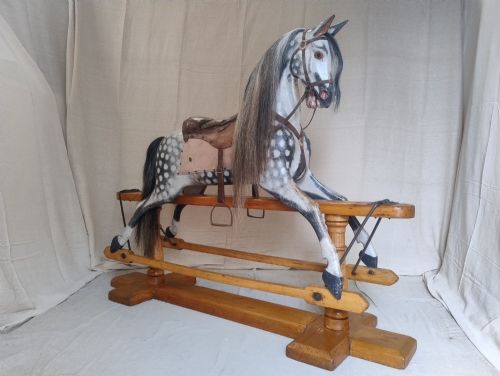


Antique Toy Horse
An antique toy horse brings tactile history home, offering solid wood construction and genuine period character that modern reproductions simply lack.
Antique Toy Horse
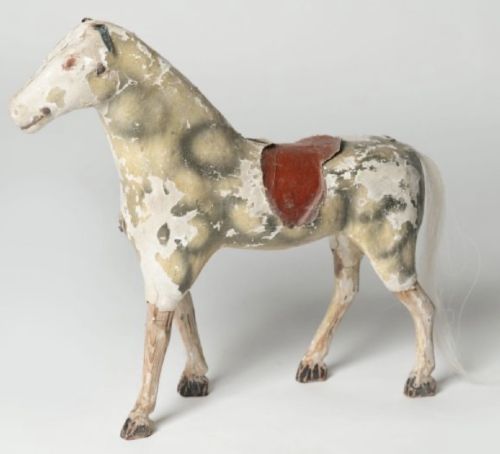
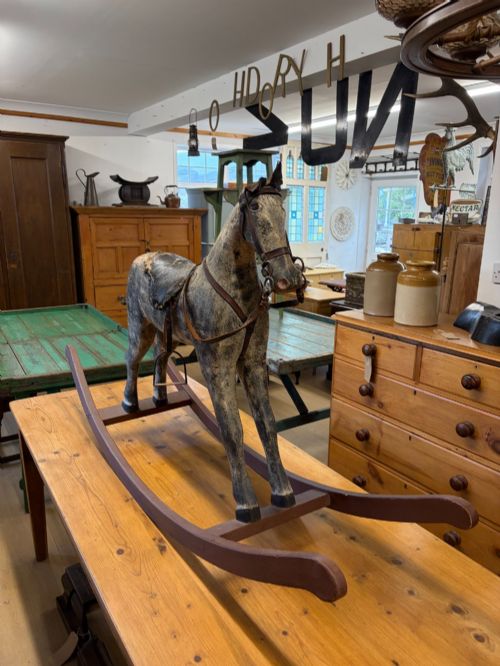
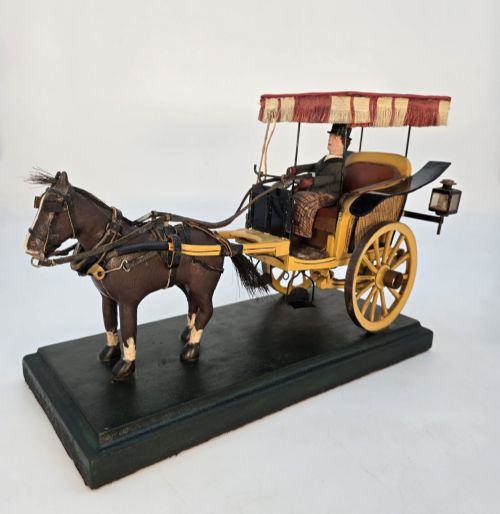
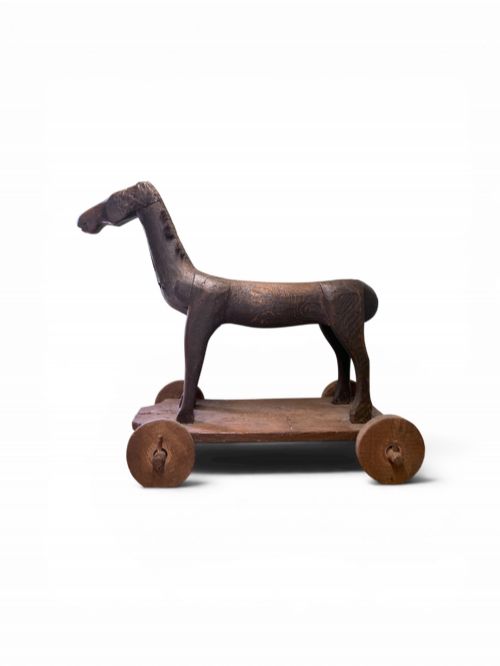
When you search for an antique toy horse, you encounter a fascinating range of children's playthings spanning several centuries. The selection centres heavily on carved wooden rocking horses, alongside pull-along toys on wheels, push-along models, and decorative folk art sculptures.
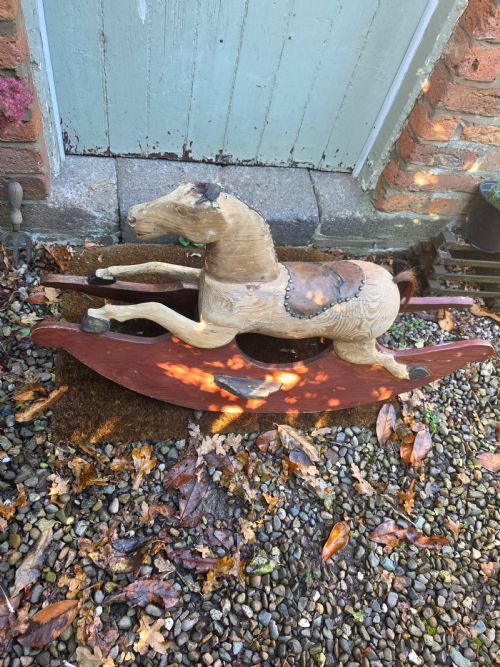
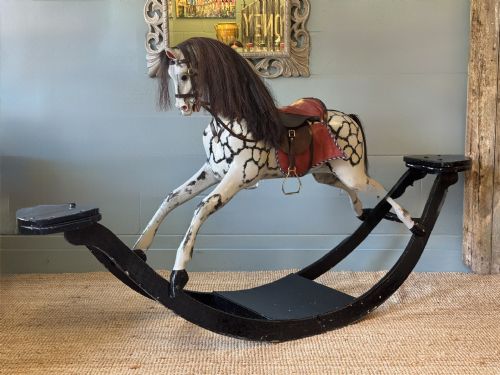
Most examples you meet on this page date from the nineteenth century into the mid-twentieth century. These pieces encompass various forms including large rocking horses mounted on original stands or curved rockers, smaller pull-along toys, and unique naive wood sculptures.
Materials and construction methods
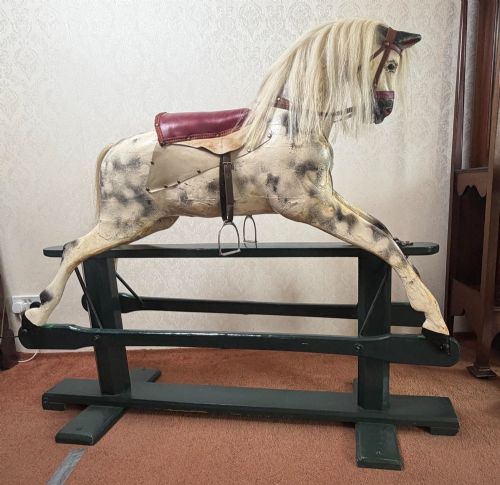
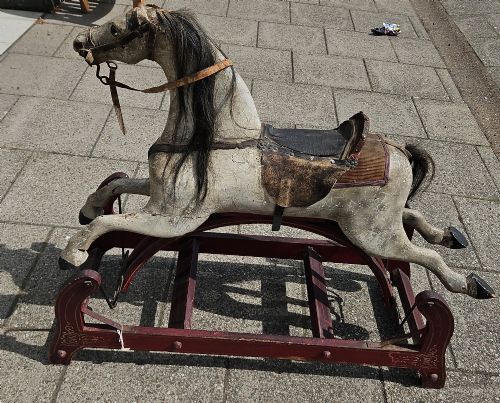
Makers fashioned these pieces primarily from carved wood and pine, often incorporating horsehair for manes and tails, leather for tack, and iron or metal components for structural support. Artisans applied layers of paint to finish the surfaces, frequently creating dappled patterns or retaining primitive painted finishes.
Construction techniques ranged from professional workshop production by established makers to scratch-built folk art creations. Craftsmen shaped solid timber bodies by hand, mounting larger horses onto sturdy wooden rockers or floor stands while attaching smaller toy versions to wheeled platforms for children to pull or push.
Antique Toy Horse Retail Price Guide 2026
Typical asking prices for toy horse among the pieces listed under this phrase on Sellingantiques today, from the lower quarter to the upper quarter. They describe what is for sale here now, not the wider market.
One remarkably adventurous nineteenth-century horse traded its rockers entirely to become part of a French chain-driven tricycle.
Distinguishing quality across examples
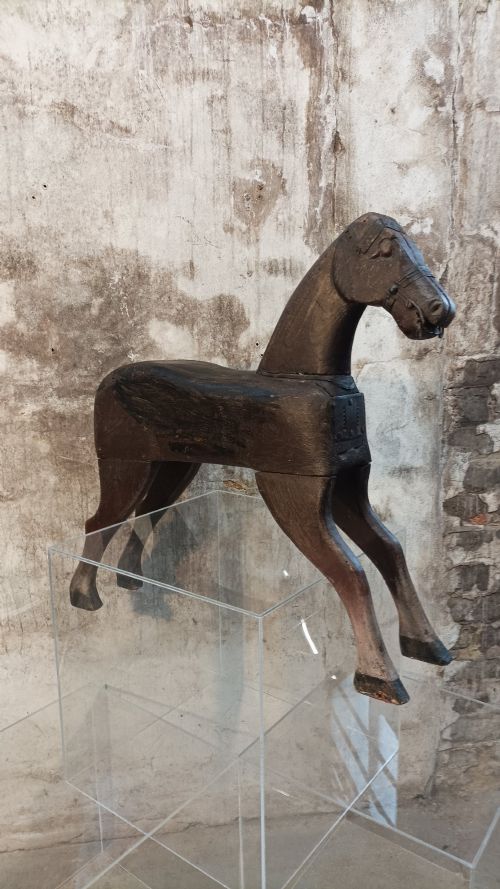
The degree of artistic expression and anatomical proportion sets individual pieces apart. Highly regarded examples display confident carving in the wooden head and body, whereas simpler naive or primitive pieces rely on charm and directness rather than naturalistic detail.
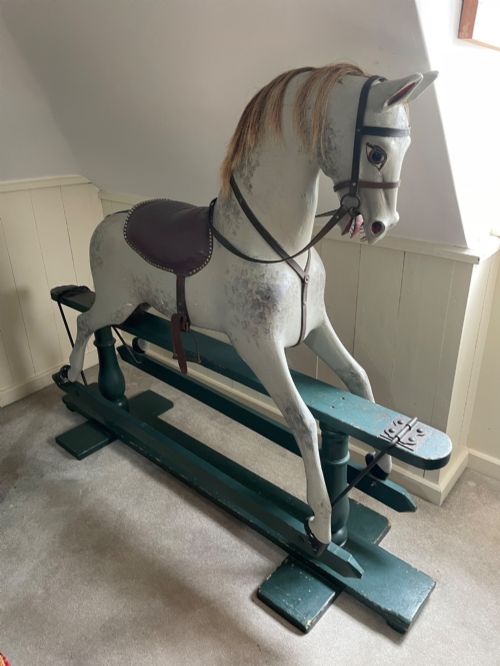
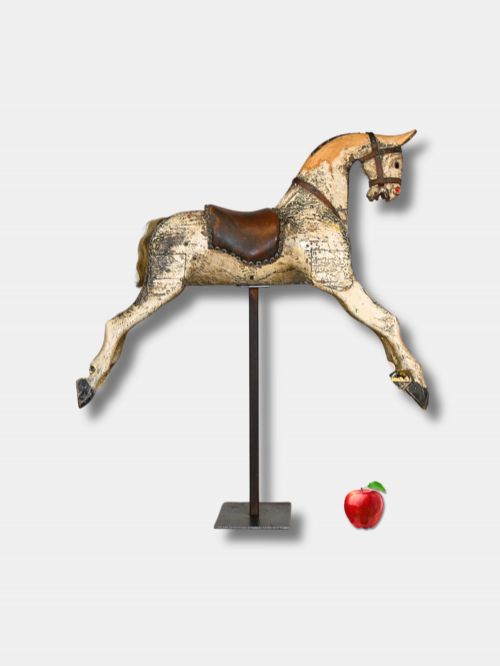
Survival of original surface finishes significantly influences the character of each piece. Retaining the original paint, glass eyes, leather tack, and authentic horsehair distinguishes well-preserved specimens from those subjected to later repainting or heavy restoration.
G & J Lines of London·F.H.Ayres·Collinson·Lines Bros Sportiboy
The Antique Toy Horse Glossary
- Folk art
- Objects created by self-taught individuals or regional craftsmen outside academic traditions. These pieces often exhibit a naive or primitive aesthetic.
- Dappled
- A painted finish mimicking the mottled coat pattern of a grey horse. This technique appears frequently on nineteenth-century rocking horses.
- Rocking horse
- A carved wooden toy horse mounted on curved wooden rockers or a standing wooden frame. Children ride these toys by shifting their weight to create a rocking motion.
- Pull-along
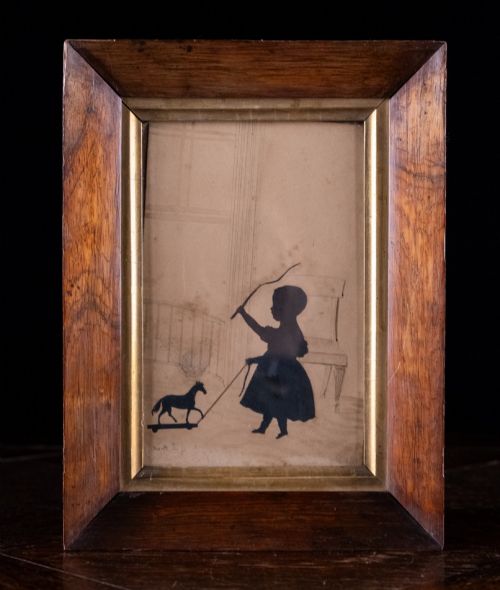
- A toy horse mounted on a wooden platform fitted with wheels. Children pull these objects along the floor using a cord or handle.
- Tack
- The harness, reins, and saddle fittings attached to a horse. These elements are sometimes made from real leather and metal.
Antique Toy Horse: Frequently Asked Questions
How do I date an antique toy horse?
Dating relies upon examining the construction methods, nail types, paint layers, and materials used in the body. Stylistic shifts between Georgian, Victorian, and later periods also provide reliable chronological markers.
Comparison with documented examples from known makers helps narrow down the decade of production. Original tack and fittings offer further clues regarding the era.
What is the difference between a rocking horse and a push along horse?
Rocking horses are mounted on curved wooden rockers or rigid floor stands designed for stationary riding. Children straddle the horse and rock back and forth in place.
Push-along and pull-along horses are fitted with wheels on platforms. These toys are meant to be mobilised across the floor by the child.
Are these toy horses safe for children to ride today?
Most antique toy horses serve primarily as decorative objects or collector pieces rather than robust nursery toys. Their historical construction may not meet modern safety standards for active play.
Displaying them securely in a home setting preserves their fragile materials and original paint surfaces. Gentle interaction is generally advised for older wooden pieces.
What materials make up an antique toy horse?
Makers constructed the primary bodies from carved timber such as pine and other hardwoods. Additional materials included horsehair for manes, leather for saddles, and iron for internal bracing.
Surfaces were typically finished with traditional oil paints or gesso. Glass eyes were frequently inserted to lend realism to the carved heads.