



Dapple Grey Rocking Horse
A dapple grey rocking horse brings the nursery into the room with carved wood, leather tack and real horsehair.
Dapple Grey Rocking Horse
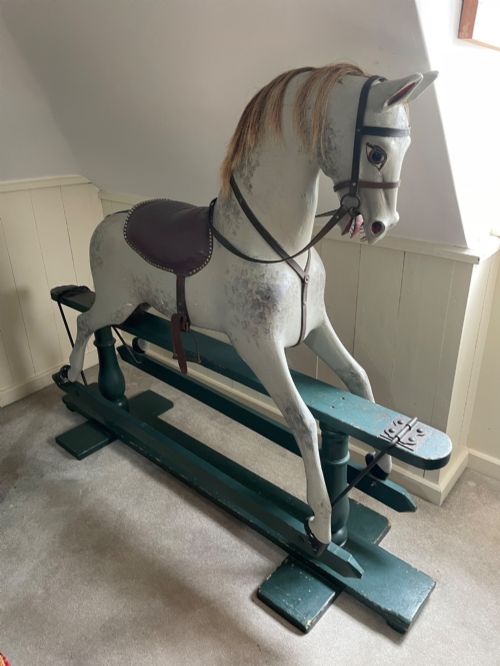
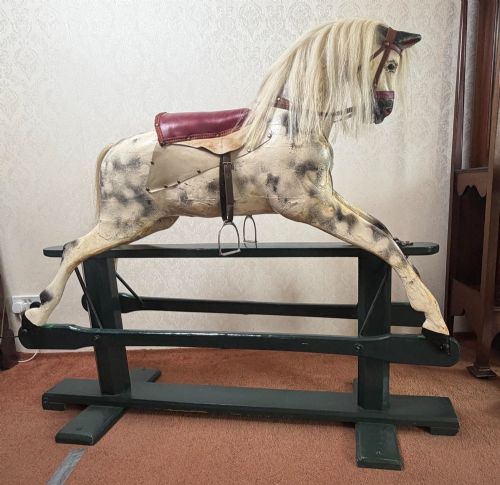
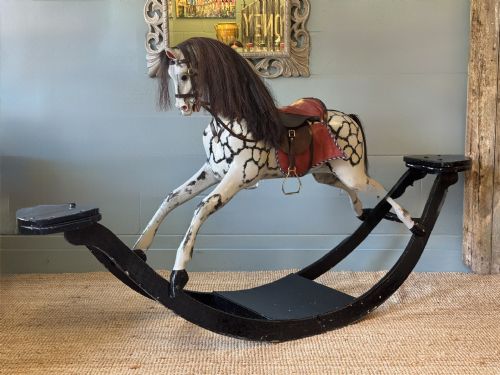
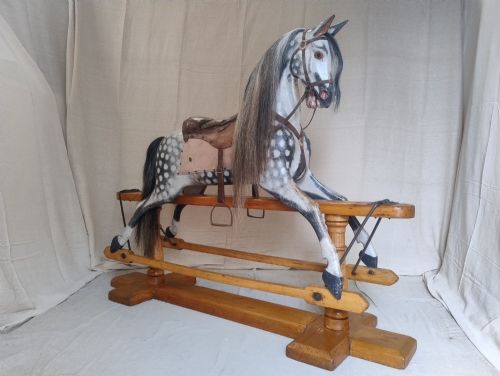
A dapple grey rocking horse is a traditional toy that appears across several periods, from the Victorian era through the Edwardian years and into the interwar period. When you search for a dapple grey rocking horse, you encounter carved wooden bodies mounted on safety stands or curved wooden rockers.
The most common examples on this page date from the late nineteenth century to the mid-twentieth century. Makers such as F.H. Ayres, G & J Lines, and Collinson & Sons dominate the surviving pieces, constructed in sizes ranging from medium to extra large.
Makers utilised carved pine and other timbers to build these toys, finishing them with painted dappling, glass eyes and real horsehair manes and tails. The form persists as both a folk art object and a substantial nursery antique.
Materials and construction methods
Makers constructed the body from carved wood, frequently using pine for the main structure, and mounted the animal on either curved wooden rockers or a sturdy pine trestle base. Metal and iron components provided internal reinforcement and brackets for the swinging mechanism.
The characteristic dapple grey finish required skilled paintwork layered over a prepared wooden surface. Craftsmen completed the piece by attaching leather tack, glass eyes and genuine horsehair for the mane and tail.
Dapple Grey Rocking Horse Retail Price Guide 2026
Typical asking prices for dapple grey rocking horse among the pieces listed under this phrase on Sellingantiques today, from the lower quarter to the upper quarter. They describe what is for sale here now, not the wider market.
Many surviving horses retain their original glass eyes, watching over the playroom with an eternal, glass-eyed stare.
Assessing quality in antique rocking horses
The integrity of the original maker matters greatly, alongside the survival of original tack, leather components and horsehair manes. Pieces retaining their original curved rockers or maker markings stand apart from heavily altered or later school examples.
G & J Lines·F.H.Ayres·Collinson Rocking Horse·Lines Bros Sportiboy·Collinson & Sons Liverpool
The Dapple Grey Rocking Horse Glossary
- Dapple grey
- A coat colour featuring darker grey spots or rings over a lighter grey base paint. This finish defines the classic appearance of traditional nursery horses.
- Safety stand
- A fixed wooden frame that holds the horse on swinging iron irons rather than traditional curved floor rockers. This design prevents the horse from tipping over during vigorous play.
- Tack
- The harness, saddle, stirrups and reins fitted to the horse. Original leather tack adds considerable interest to an antique example.
- Trestle base
- A heavy wooden frame supporting the rocking mechanism. Larger workshop models frequently employ this stable floor-standing arrangement.
- Glass eyes
- Inset eyes made from blown or moulded glass that provide a lifelike expression. Hand-painted glass eyes appear on better quality workshop pieces.
Dapple Grey Rocking Horse: Frequently Asked Questions
How do I date a dapple grey rocking horse?
Dating relies upon construction methods, carcase design and identifiable maker stamps on the woodwork or swing brackets. Victorian and Edwardian examples typically feature deeper hand-carving and distinct ironwork compared to later mid-century models.
Changes in paint technology and the style of tack also help narrow down the decade of manufacture. Examining the bolts, nuts and fixings provides further clues to the period of origin.
Were these horses made for children to ride?
These substantial wooden toys were built for children to ride in nurseries and playrooms. Workshops produced various sizes, from medium nursery models to extra-large versions designed for older children.
Sturdy pine frames and iron swing brackets ensured the toys could withstand robust daily use. Today, many survive in playable or restored condition after decades in family homes.
What is the difference between rockers and a safety stand?
Traditional floor rockers allow the horse to rock back and forth on curved wooden feet resting directly on the floor. Safety stands suspend the horse within a fixed wooden frame using swinging metal arms.
Introduced in the late nineteenth century, safety stands reduced the risk of the horse tipping over. Both formats appear frequently among surviving antique examples.
How should I care for a painted wooden horse?
Keep the piece away from direct sunlight and damp environments to protect the painted dapple finish and wooden carcase. Dust the surface gently with a dry cloth and avoid harsh modern cleaning chemicals.
Leather tack benefits from occasional specialist conditioning to prevent drying and cracking. Preserving the original finish maintains both the character and historical integrity of the object.