


Victorian Rocking Horse
A victorian rocking horse brings centuries of playroom character into a room through carved timber, real horsehair and traditional paint.
Victorian Rocking Horse
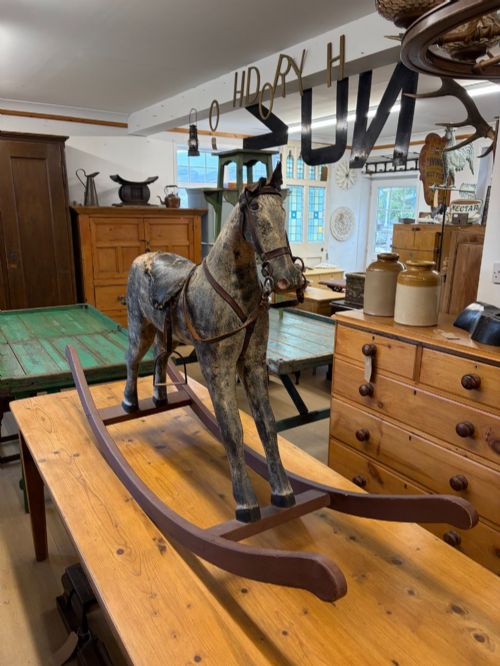
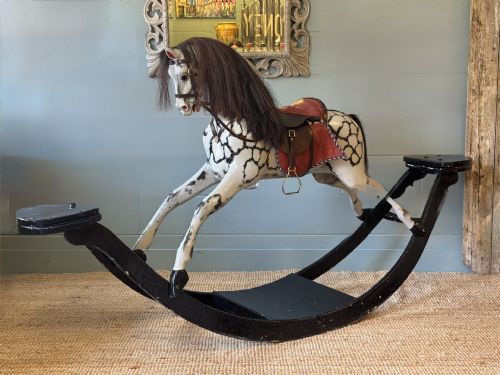
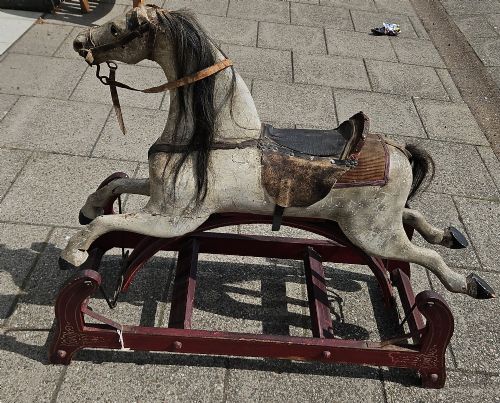
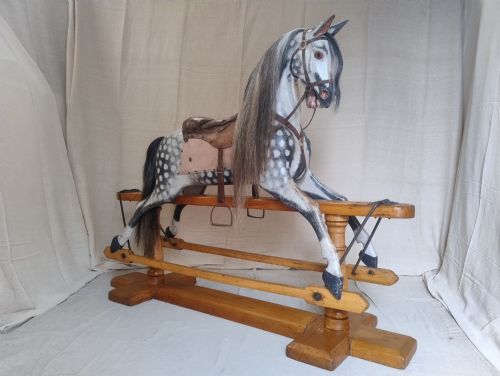
A victorian rocking horse is a childs ride-on toy or decorative sculpture shaped from carved timber and mounted on curved wooden rockers or safety stands. You will find examples ranging from primitive folk art models to large workshop pieces produced by known makers.
Most pieces date from the nineteenth century into the early twentieth century, taking the form of substantial wooden ponies finished in paint or horsehair. These objects combine utilitarian playthings with traditional craftsmanship, reflecting the domestic life and toy-making traditions of the period.
How they were made
Carvers shaped bodies primarily from pine and beech, often utilising laminated or solid timber blocks fastened with iron and steel fixings. Makers added leather tack, hessian stuffing and genuine horsehair manes to complete the realistic appearance of each animal.
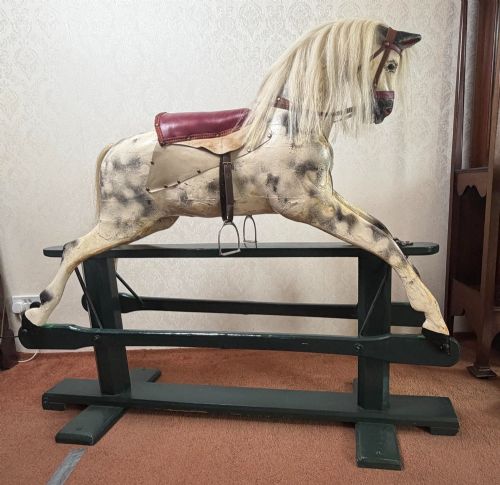
Surfaces received layers of traditional paint, frequently finished with dappling effects or left in original unpainted wood finishes. Structural integrity relied upon sturdy wooden floor stands or curved wooden rockers secured underneath.
Victorian Rocking Horse Retail Price Guide 2026
Typical asking prices for victorian rocking horse among the pieces listed under this phrase on Sellingantiques today, from the lower quarter to the upper quarter. They describe what is for sale here now, not the wider market.
Several horses survive with their original glass eyes staring out across modern living rooms.
What varies in quality
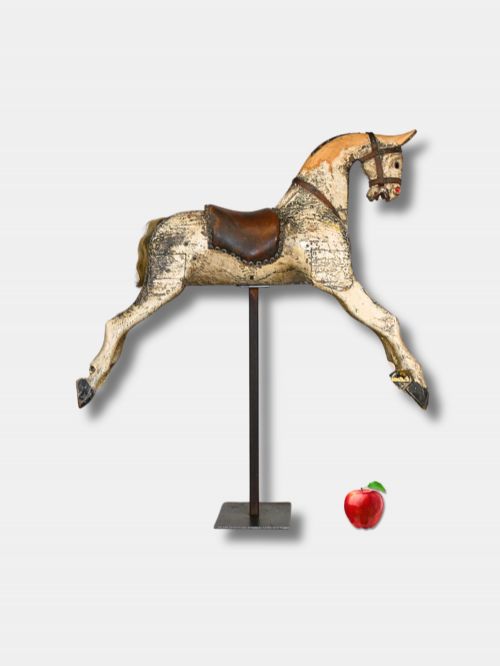
Quality rests upon the depth of anatomical carving in the head and legs, distinguishing naive folk art interpretations from master workshop output. The survival of original paint, leather tack and horsehair determines the historical integrity of each animal.
Proportion and scale also separate standard models from extra large examples produced by prominent firms. Structural soundness in the wooden stand or curved rockers affects both the display presence and the physical balance of the piece.
G & J Lines·F.H. Ayres·Collinson
The Victorian Rocking Horse Glossary
- Dappling
- The painted spot pattern applied to the body of a horse to simulate a coat colour. This finish often shows natural age wear.
- Folk art
- Objects created by self-taught makers or provincial craftspeople outside academic traditions. These pieces display naive charm and simplified forms.
- Safety stand
- A rigid wooden frame holding the animal above the floor on swinging iron arms. This design replaced traditional curved rockers.
- Tack
- The harness, saddle and bridle fitted to the horse. Original leather elements add considerable character to antique examples.
Victorian Rocking Horse: Frequently Asked Questions
Were these toys meant for play?
These horses served as childhood playthings in nurseries and parlours during the nineteenth and early twentieth centuries. Many bear the marks of heavy domestic use and affectionate childhood games.
Some surviving examples remained as decorative objects rather than active toys. Their sturdy construction allowed generations of children to ride them.
How do I care for original paint?
Preserving original paint requires keeping the horse away from direct sunlight and damp environments. Dust the wooden surface gently with a dry, soft cloth.
Avoid chemical cleaners or aggressive polishing agents that might lift the historic pigment. Stable room temperatures protect both the timber and the painted finish.
What is the difference between folk art and workshop horses?
Folk art horses stem from local makers working without industrial templates, resulting in naive and charming proportions. Workshop horses come from established firms using standardised carving patterns and quality materials.
Workshop pieces often display finer anatomical detail in the head and legs. Both types hold distinct places in the history of toys.