




Traditional Nursery Decor
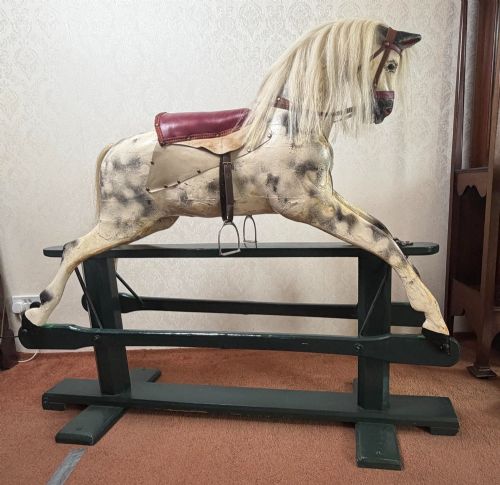
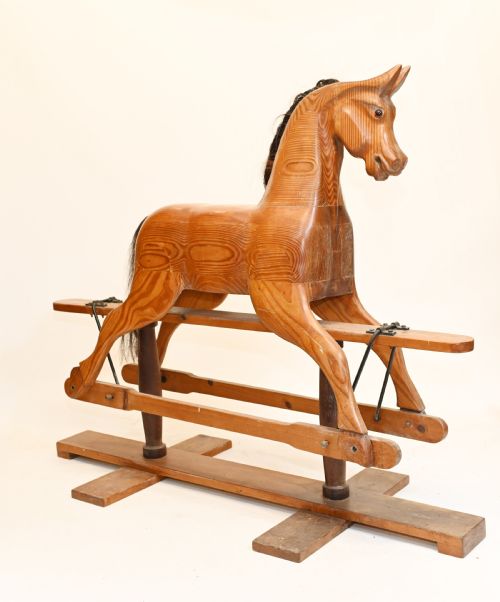
Traditional nursery decor brings enduring character to a room through antique carved wooden rocking horses and children's toys.
Traditional Nursery Decor
Traditional nursery decor centres on antique rocking horses and pull-along toys spanning the nineteenth century through the mid-twentieth century. Buyers encounter carved wooden figures on original rockers, naive painted folk art pieces, and early children's toys.
The pieces on this page represent traditional British and European craftsmanship, with origins ranging from Victorian workshops to twentieth-century makers like Ayres and Collinsons. Most examples take the form of substantial rocking horses rendered in pine or carved wood.
Materials and construction
Makers utilised carved wood and pine as the primary structural materials for these figures, often finishing the surfaces with traditional paint or retaining original leather and horsehair elements. Artisans shaped the bodies by hand to create durable toys designed for daily use in nurseries.
Many examples sit upon original wooden rockers that allow the classic gliding motion, while smaller pull-along versions incorporate metal or iron components to secure the wheels.
A nineteenth-century pull-along horse patiently waits to be towed across your floor once more.
Distinctions in quality
Quality rests in the integrity of the original carved wood and the survival of early paint surfaces rather than modern restoration. Pieces retaining their original rockers and authentic tack display a higher degree of historical completeness.
The skill of the carver dictates the expressiveness of the horse's head and the proportion of the body, separating standard workshop output from finer folk art and branded examples.
Ayres·Collinsons
The Traditional Nursery Decor Glossary
- Rocking horse
- A carved wooden toy mounted on curved wooden bows or a safety stand designed for a child to ride. These figures form the primary focus of traditional nursery collections.
- Folk art
- Objects created by self-taught or traditional craftsmen using local materials and vernacular styles. Naive painted finishes typify this category.
- Original paint
- The uncompromised primary surface coating applied during the manufacture of the piece. Collectors prize surviving early paint for its historical honesty.
- Pull-along horse
- A smaller toy mounted on a platform with wheels and a pull string. Children towed these figures across the nursery floor.
Traditional Nursery Decor: Frequently Asked Questions
What periods do these pieces date from?
The pieces span from the late nineteenth century through the Victorian era and into the mid-twentieth century. Most examples reflect traditional crafting methods used between eighteen eighty and nineteen fifty.
Dates are determined by the construction techniques, the style of the carving, and the materials employed in the horse's manufacture.
How were rocking horses used in the nursery?
Rocking horses served as central playthings for children in Victorian and Edwardian nurseries, built to withstand daily use. They encouraged imaginative play and physical balance.
Over decades of use, many acquired patination from children's hands, paint touch-ups, and playworn surfaces that record their history.
Are these toys suitable for modern homes?
These pieces function as striking decorative focal points in modern interiors, bringing warmth and historical texture to a room. Their sculptural forms suit living spaces as well as children's bedrooms.
Placing them away from direct heat sources helps preserve the antique wood and any surviving horsehair or leather.
What materials make up these objects?
Makers constructed the primary bodies from carved wood and pine, frequently adding horsehair for manes and tails and leather for saddles or bridles. Metal and iron parts appear on rockers and pull-along wheels.
Surfaces are typically finished with traditional paint that has worn down gracefully over generations.