



Carved Pine Rocking Horse
These carved pine rocking horse examples bring robust traditional craftsmanship and enduring play into a room.
Carved Pine Rocking Horse
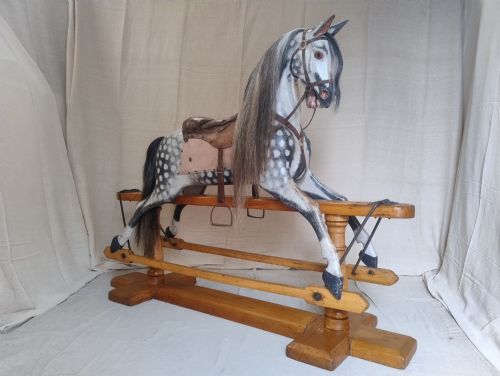
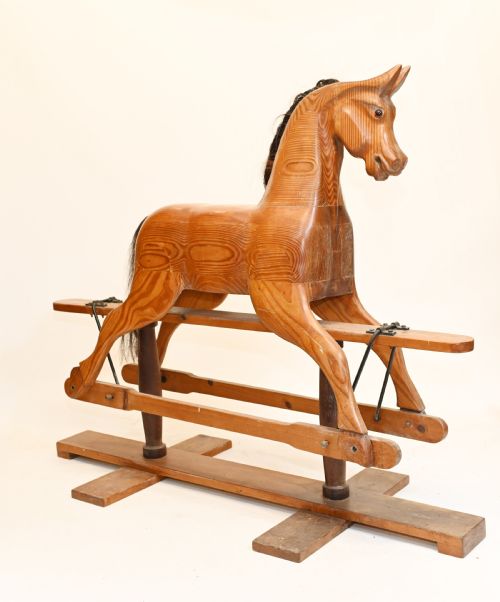
When you search for a carved pine rocking horse, you are looking at substantial children's toys and decorative objects shaped from solid timber. The pieces seen on this page span the nineteenth century up to the mid twentieth century, covering periods such as Victorian, nineteen thirty, and nineteen forty.
You are most likely to meet traditional British and Victorian folk art examples fashioned from pine, wood, and carved wood. Many of these sturdy forms stand on trestle bases and reflect decades of domestic history.
How they were made
Maker workshops shaped these animals primarily from pine and carved wood, forming bodies and heads with hand tools. Craftsmen utilised additional materials such as horsehair for manes and tails, leather for tack, and iron or metal for structural stability.
Surfaces were frequently finished with paint, often retaining original coats or showing the marks of active childhood use. Joinery combined structural woodwork with sturdy metal components to withstand the vigorous motion of a rocking mechanism.
Carved Pine Rocking Horse Retail Price Guide 2026
Typical asking prices for carved pine rocking horse among the pieces listed under this phrase on Sellingantiques today, from the lower quarter to the upper quarter. They describe what is for sale here now, not the wider market.
Materials recorded across these listings include pine, horsehair, leather, paint, iron, and carved wood.
What varies in quality
Quality rests upon the sculptural confidence of the carving and the survival of original surface details such as early paint and horsehair. Bold proportions and substantial scale separate more impressive examples from simpler decorative objects.
The degree of historical survival shapes the character of each piece, distinguishing items that retain their early finish from those showing heavy later intervention.
F H Ayres·Collinson·Collinson And Sons Liverpool
The Carved Pine Rocking Horse Glossary
- Pine
- A softwood commonly utilised for the bodies and bases of traditional rocking horses. It provides a workable medium that accepts carving and paint readily.
- Horsehair
- Natural hair utilised historically for the manes and tails of traditional rocking horses. It adds a tactile texture that distinguishes older examples.
- Trestle base
- A supporting wooden frame upon which the rocking horse body is mounted to allow movement. These structures are frequently fashioned from sturdy pine.
- Folk art
- Objects created within a traditional or vernacular aesthetic, often by makers outside formal academic traditions. Victorian examples frequently share these robust stylistic traits.
Carved Pine Rocking Horse: Frequently Asked Questions
How old is a carved pine rocking horse?
The pieces seen here range from the nineteenth century through to nineteen fifty, encompassing Victorian and mid twentieth century examples.
Specific dates within titles point towards eras like eighteen ninety or nineteen thirty, reflecting the working periods of notable makers.
What materials were used?
Construction relies heavily on pine and carved wood for the animal bodies and supporting frames.
Additional materials include horsehair for tails, leather for tack, and iron or metal components within the rocking mechanism.
Are these pieces painted?
Many examples retain traces of paint, with some items specifically noting original paint finishes from the nineteenth or twentieth centuries.
Surfaces vary from remnants of early decorative schemes to weathered finishes acquired through active play.
What styles do these pieces represent?
The listings show strong connections to traditional British craft, Victorian design, and folk art aesthetics.
These styles emphasise sturdy construction and domestic utility over refined classical ornamentation.