



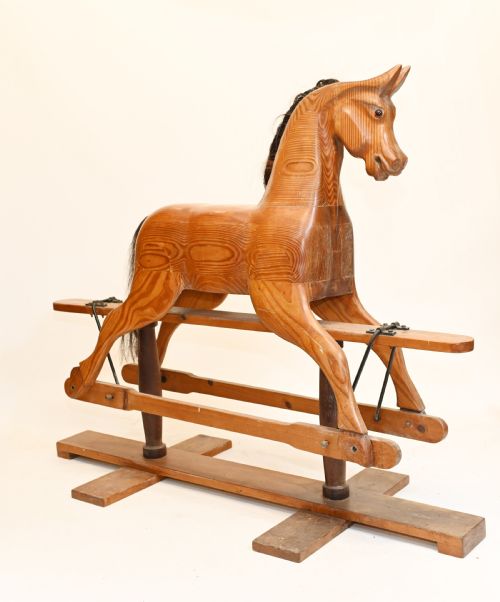

Antique Glider Rocking Horse
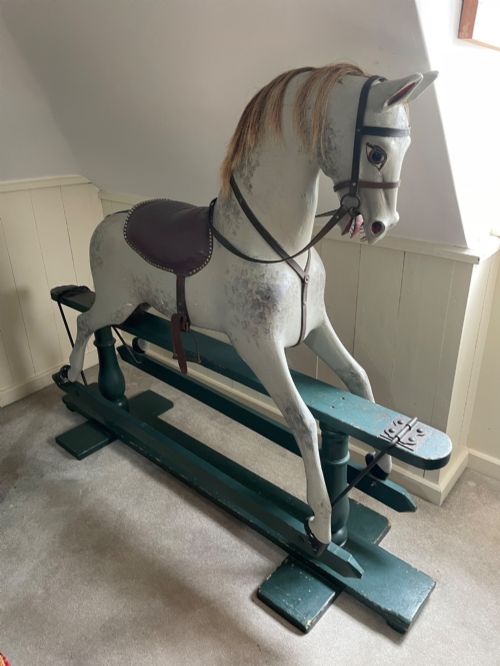
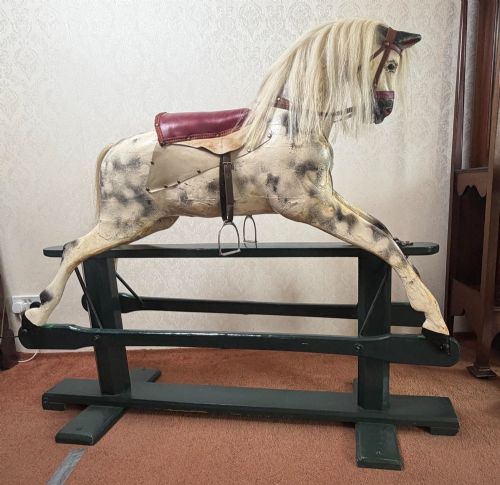
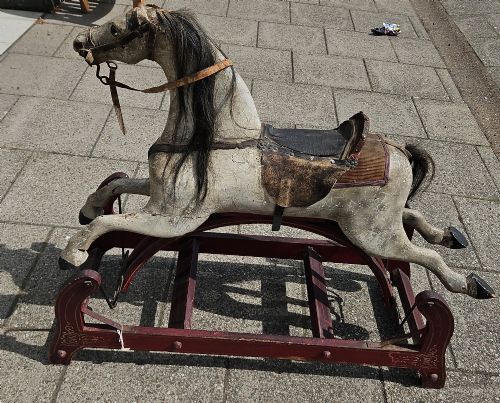
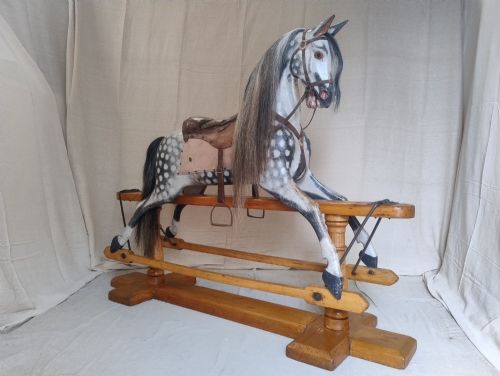
These antique glider rocking horse examples bring nineteenth and twentieth century childhood playrooms straight to life with traditional carved wooden forms.
Antique Glider Rocking Horse
When you search for an antique glider rocking horse, you encounter traditional British and American children's toys spanning the Victorian, Edwardian, and interwar periods. These pieces include substantial carved wooden forms mounted on stands and rockers, often finished with painted dappling.
The pieces on this page range from nineteenth century examples to mid twentieth century models such as the Lines Bros Sportiboy. They appear in pine and other woods, capturing decades of playroom history through varied forms and finishes.
How they were made
Makers constructed these toys from carved wood and pine, building robust wooden structures designed to withstand vigorous childhood use. Artisans applied carved details and painted surfaces, including traditional dappling across the bodies.
Fittings incorporated leather, horsehair, metal, iron, steel, and glass components for tack, eyes, and mechanical swing mechanisms. These materials combined to create durable nursery toys that survived across generations.
Antique Glider Rocking Horse Retail Price Guide 2026
Typical asking prices for glider rocking horse among the pieces listed under this phrase on Sellingantiques today, from the lower quarter to the upper quarter. They describe what is for sale here now, not the wider market.
Listings span from the Victorian period through the Edwardian era and the interwar period, utilising wood, iron, leather, and horsehair.
What varies in quality
The distinction between examples rests in the depth of the carving and the preservation of original paint schemes. Pieces retaining their initial surface treatment and standard of craftsmanship demonstrate greater fidelity to their period of origin.
Makers such as F.H. Ayres and Collinsons established distinct standards of construction, where the complexity of the wooden carving and the integrity of the original rocker assembly define the standing of the piece.
F.H. Ayres·Lines Bros·Collinsons
The Antique Glider Rocking Horse Glossary
- Rocking Horse
- A traditional children's toy shaped like a horse, mounted on wooden rockers or a safety stand to allow motion.
- Dappled
- A painted spotting pattern applied to the body of a wooden horse to mimic coat markings.
- Horsehair
- Natural hair utilised for the mane and tail of traditional nursery horses.
- Rocking
- The swinging or oscillating motion generated by the curved base or glider mechanism.
- Pine
- A common softwood utilised for the carved bodies of nineteenth and twentieth century nursery toys.
Antique Glider Rocking Horse: Frequently Asked Questions
What is a rocking horse?
A rocking horse is a traditional toy carved in the shape of a horse and mounted on wooden rockers or a swing frame. These toys provided children with motion play in nineteenth and twentieth century nurseries.
They range from folk art creations to factory-made models bearing maker marks from firms like F.H. Ayres and Lines Bros.
How do I date a rocking horse?
Dating relies on stylistic clues, construction methods, and materials such as iron, steel, leather, and horsehair. Victorian and Edwardian examples often feature hand-carved wooden bodies and early paint.
Interwar and later twentieth century models introduce different manufacturing techniques and branding from makers like Collinsons.
Were rocking horses used outdoors?
These toys were designed primarily for indoor playroom and nursery use, constructed from pine, carved wood, and painted finishes. Their metal and leather components suited domestic environments rather than weather exposure.
Their survival in original paint and playworn condition reflects decades of indoor childhood entertainment.
How do I clean a wooden rocking horse?
Maintenance involves gentle dusting and preserving the historic surface finish, whether painted dappling or bare wood. Avoid harsh chemical cleaners that might damage nineteenth century or early twentieth century paint.
Consulting a specialist conservator helps protect leather tack, horsehair manes, and glass eyes during upkeep.