




Vintage Nursery Decor
Vintage nursery decor brings character to a room through traditional pieces like carved wooden rocking horses and silver napkin rings.
Vintage Nursery Decor
Vintage nursery decor encompasses historic items made for children, dominated here by wooden rocking horses and pull-along toys alongside sterling silver napkin rings. These pieces span from the Victorian era through the mid-twentieth century, reflecting the craftsmanship of past generations.
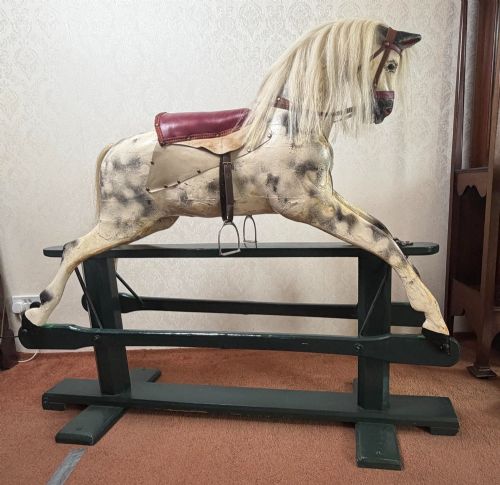
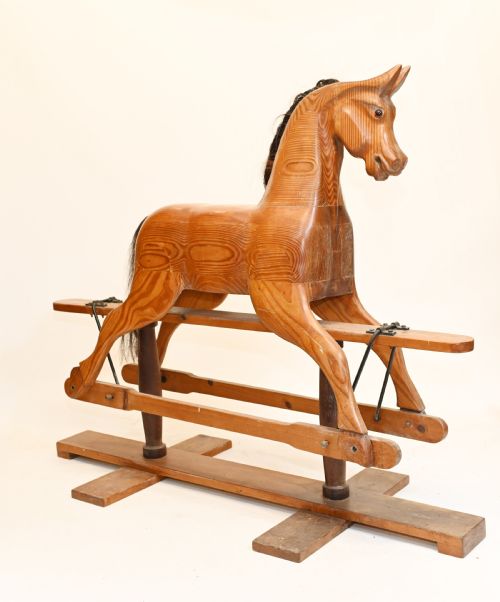
Rocking horses form the core of what you will encounter on this page, appearing in various sizes and finishes from pine to heavily painted folk art. Alongside them, smaller decorative objects and novelty napkin rings provide varied touches of domestic history.
How they were made
Makers shaped these pieces primarily from wood such as pine, employing hand-carving techniques to fashion structural forms like rocking horses. Metal components and iron work often reinforced these wooden frames, while horsehair provided realistic manes and tails.
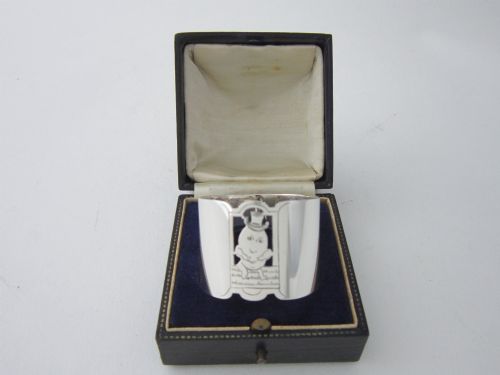
Surface finishes rely heavily on traditional paint, often surviving in original layers that record decades of childhood use. Artisans also worked with precious metals for smaller items like sterling silver napkin rings, using standard smithing methods of the period.
Early pull-along horses patiently waited out centuries on nursery floors, enduring endless imaginary journeys before retiring to collector status.
What varies in quality
Quality in these decorative pieces rests on the integrity of the original materials and the degree to which early surface paint survives. Pieces retaining their untouched rocker bases and genuine tack stand apart from heavily restored examples.
The sophistication of the carving distinguishes standard production from finer folk art pieces, particularly in the expression and proportion of wooden horses. Maker attribution also elevates certain works, linking anonymous craft to established nineteenth and twentieth-century workshops.
Ayres·Collinsons
The Vintage Nursery Decor Glossary
- Folk art
- Objects created by self-taught or traditional artisans using local materials and conventional motifs. This style appears frequently across nineteenth-century children's toys and painted horses.
- Pine
- A softwood commonly utilised for larger structural items like rocking horses due to its workability. It forms the base material for many carved pieces on this page.
- Horsehair
- Natural hair harvested from horses and used historically for stuffing and for the manes and tails of toy horses. It provides a tactile authenticity to period animal figures.
- Novelty napkin ring
- A table accessory shaped to represent an animal or object rather than standard geometric forms. Sterling silver versions from the mid-twentieth century occasionally appear in nursery collections.
Vintage Nursery Decor: Frequently Asked Questions
How do I date an old rocking horse?
Dating relies on construction methods, timber types, and the style of the carving. Nineteenth-century examples often display heavier pine bodies and simpler rocker designs compared to later twentieth-century models.
Paint layers and fixings also offer chronological clues. Original paint finishes and hand-forged iron components generally point towards the Victorian or Edwardian periods.
Are these items suitable for modern nurseries?
Many buyers incorporate these traditional pieces as visual focal points in contemporary children's rooms. Their scale and historic presence add texture and warmth to an interior scheme.
Larger wooden horses function well as static decorative objects. Smaller items like silver napkin rings sit securely on display shelves or mantelpieces.
What does original condition mean for toys?
Original condition indicates that a piece retains its primary paint layers, components, and structure without modern replacements. This includes untouched rocker bases and early surface patination.
Such items show the natural wear of historic play rather than subsequent restoration. Collectors value this untouched state for its historical honesty.
How should I care for painted wood?
Painted wooden objects require stable environmental conditions away from direct sunlight and rapid temperature changes. Excessive heat can cause old pine to split and fragile paint layers to flake.
Dusting gently with a dry, soft cloth preserves the surface without introducing moisture. Avoid chemical cleaning products that might strip historic finishes.