
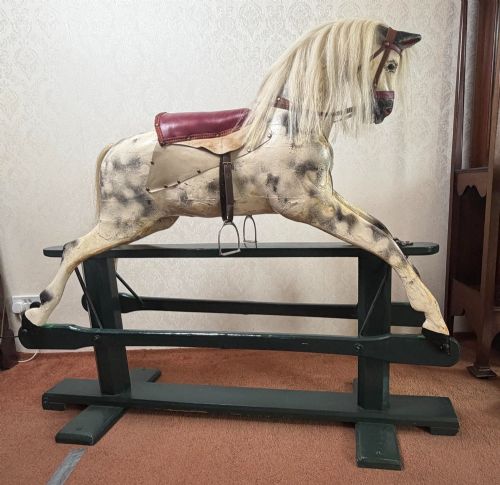
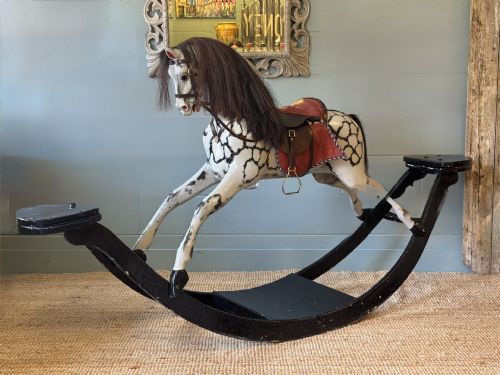
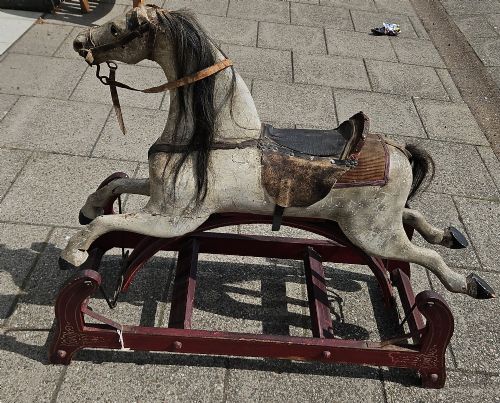
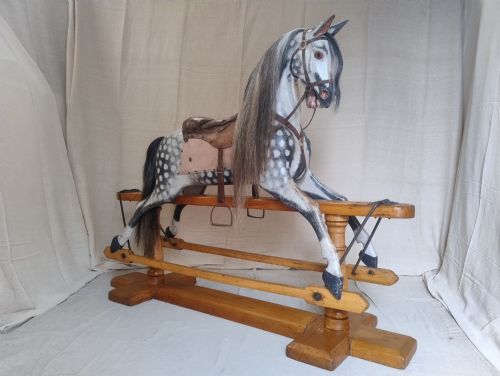
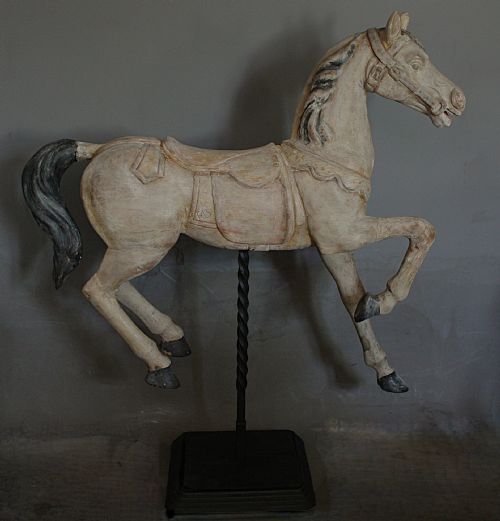


Traditional Rocking Horse
A traditional rocking horse brings motion and character into a room, offering the enduring charm of carved wood and painted finishes.
Traditional Rocking Horse
A traditional rocking horse is a carved wooden sculpture designed for children to ride, mounted on curved wooden rockers or safety stands. When searching for this phrase, buyers encounter examples originating from the nineteenth century up through the interwar period and nineteen-forties.
The pieces on this page span several distinct stylistic traditions, including Victorian, Edwardian, and folk art interpretations. Makers utilised various woods such as pine, whilst some examples hail from international workshops like Spain or America.
Most pieces display carved bodies with mounted saddles, bridles, and reins. These objects function equally as playroom toys and decorative sculptures within domestic interiors.
How they were made
Makers carved these figures primarily from wood such as pine, shaping the bodies and heads before applying layers of paint to create dappled or solid finishes. Iron, steel, and metal components reinforced the internal structures and the joints connecting the horses to their rockers.
Real leather formed the tack, including saddles and bridles, while genuine horsehair provided the manes and tails. Artisans secured these materials by hand, ensuring the fittings withstood regular use.
Listings span from the nineteenth century through to the nineteen-forties, utilising wood, paint, leather, and horsehair.
What varies in quality
The survival of original paint, leather tack, and horsehair distinguishes better-preserved examples. Retaining the original wooden rocker base also elevates the integrity of the piece.
G & J Lines of London·F.H.Ayres·Collinson·Lines Bros Sportiboy
The Traditional Rocking Horse Glossary
- Rockers
- The curved wooden arcs upon which the horse moves back and forth. These allow the toy to glide smoothly across the floor.
- Dappled
- A spotted coat pattern painted onto the wooden body of the horse. This finish mimics the natural markings of certain grey horses.
- Folk art
- Items created within a traditional community style rather than by academic fine artists. These pieces often display naive or charmingly unrefined carving and painting techniques.
Traditional Rocking Horse: Frequently Asked Questions
How do I date a rocking horse?
Dating relies upon examining the construction methods, carved details, and the style of the wooden rockers. Earlier nineteenth-century examples often feature heavier pine frames and simpler folk art carving.
Later Edwardian and interwar pieces display more refined proportions and distinct maker-specific design traits. Paint layers and hardware fittings also offer clues to the manufacturing decade.
Are these toys safe for children?
These historical objects served as children's toys in the past, but many older examples are now valued primarily as decorative sculptures. The older construction materials and aged leather might not meet modern toy safety standards.
Buyers intending them for daily play by children should inspect the structural stability of the joints and rockers carefully. Many owners choose to display them safely out of reach.
What is original paint?
Original paint refers to the initial decorative coating applied by the maker when the horse was first built. This finish has survived decades of use without being stripped or repainted in later years.
Patina and minor wear on the original paint are valued by collectors as evidence of age and authenticity. It gives each horse a distinct character that modern restoration cannot replicate.
Where were these horses made?
Most pieces originate from British workshops and factories, particularly in London and other manufacturing hubs. Some examples also trace back to international origins including Spain and America.
Regional differences appear in the carving styles and the type of wood utilised. Folk art pieces often reflect local crafting traditions rather than large factory production.