


Antique Dapple Grey Horse
These antique dapple grey horse pieces bring the charm of historic children's toys and equine art directly into your home.
Antique Dapple Grey Horse
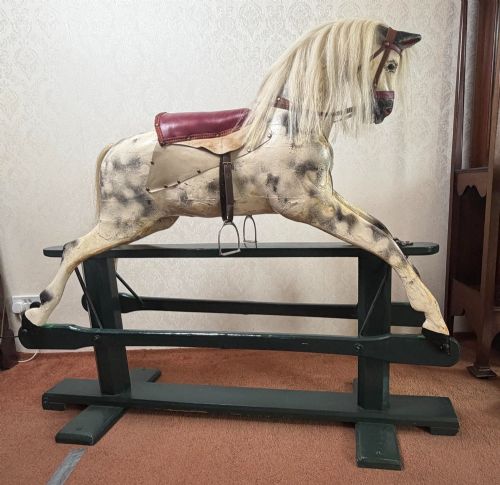
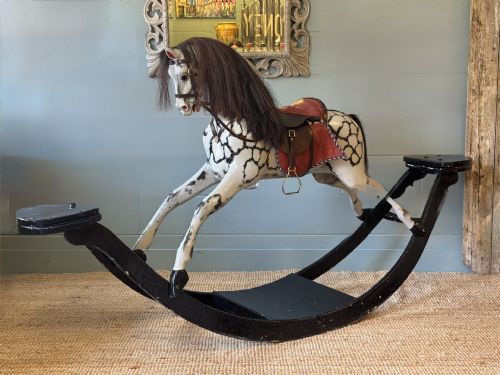
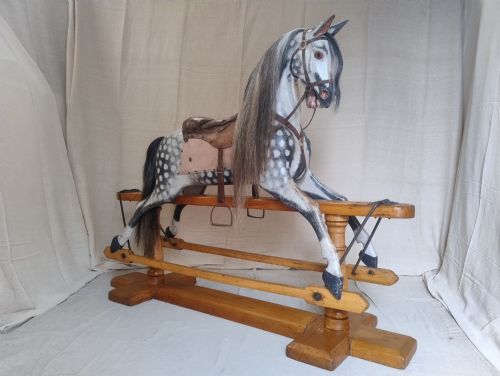
When you search for an antique dapple grey horse, you encounter a selection centred heavily on carved wooden rocking horses alongside a smaller number of oil and watercolour paintings. These sculptural toys and artworks span from the Victorian period through the Edwardian era and into the interwar years.
The rocking horses appear mounted on traditional curved wooden rockers or safety stands, often showcasing the characteristic painted dapple grey finish. Alongside the three-dimensional figures, equestrian portraits on canvas and paper capture horses in various settings.
What varies in quality
The distinction between average and exceptional pieces lies in the sculptural depth of the carving and the preservation of the original painted surface. Finer examples display more lifelike proportions in the head and legs, coupled with skilled brushwork on the dapple grey coat.
Maker attribution elevates desirability, particularly when pieces retain authentic leather tack and original horsehair manes rather than modern replacements. Paintings vary according to the artist's ability to render equine anatomy and the expressiveness of the subject.
Several horses maintain a stubbornly cheerful expression, having survived a century of enthusiastic indoor gallops without ever leaving the nursery.
G & J Lines of London·F.H. Ayres·Collinson·Lines Bros Sportiboy·Clifton Tomson
The Antique Dapple Grey Horse Glossary
- Dapple grey
- A coat colour pattern consisting of dark grey spots or rings distributed over a lighter grey background. This classic finish defines the traditional appearance of most antique rocking horses.
- Safety stand
- A stable wooden or iron floor frame that holds a rocking horse via swing irons instead of traditional curved floor rockers. This design prevents the horse from tipping over during vigorous play.
- Rockers
- The curved wooden beams attached to the bottom of a rocking horse feet to allow front-to-back motion. Earlier pieces rely exclusively on these floor-sweeping arcs.
- Folk art
- Items created by self-taught or traditional craftsmen outside academic art traditions. Many antique rocking horses fall into this category due to their vernacular workshop origins.
Antique Dapple Grey Horse: Frequently Asked Questions
How do I date an antique rocking horse?
Dating relies on stylistic shifts in the carving of the head, the shape of the body, and the construction of the stand. Earlier Victorian examples often feature more robust, heavy bodies with distinct head carvings.
Later pieces from the Edwardian period and interwar years tend towards different mounting systems and lighter proportions. Surviving maker marks or stamps on the wooden frame provide the most definitive chronological anchor.
Are these rocking horses suitable for children?
Most antique rocking horses are treated primarily as decorative objects or collector pieces rather than everyday toys. Their historic construction and aged materials mean they require careful handling to preserve their condition.
Buyers intending for children to ride them often look for structurally stable models on safety stands. Even then, supervision is necessary to protect the original paint and horsehair.
What is the difference between oil and watercolour horse paintings?
Oil paintings use pigment suspended in drying oil on canvas or panel, offering rich textures and deep colour layers. They usually present a heavier, more substantial visual weight on the wall.
Watercolours utilise water-soluble pigments on paper, resulting in a lighter, more translucent aesthetic. Both mediums capture historic sporting subjects but require different framing and light protection.
How do I care for a painted dapple grey horse?
Preserving the surface requires keeping the piece away from direct sunlight and maintaining stable indoor humidity. Sudden temperature changes can cause the historic wood to expand and the paint to crack.
Dusting should be done gently with a dry, soft cloth without applying liquid cleaners or polishes to the painted finish. Leather tack benefits from occasional specialist conditioning to prevent drying out.