

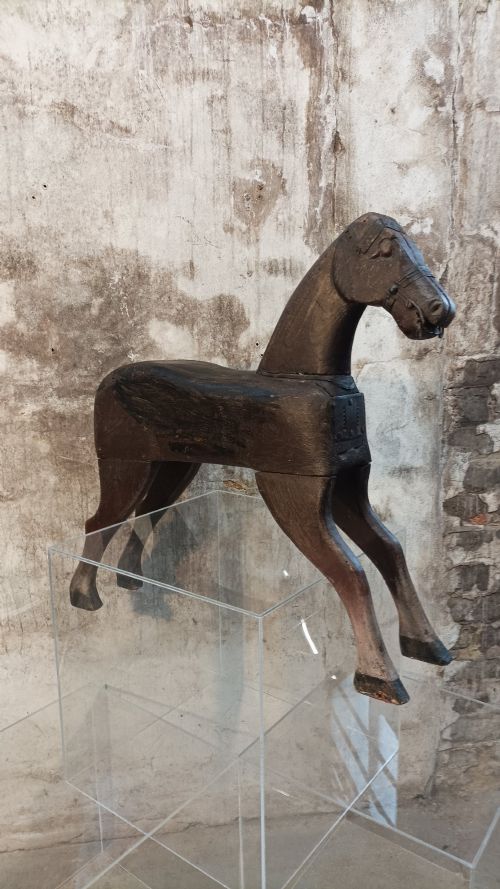


Painted Wood Rocking Horse
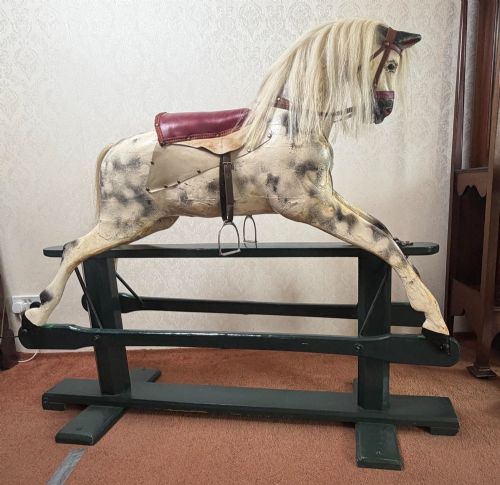
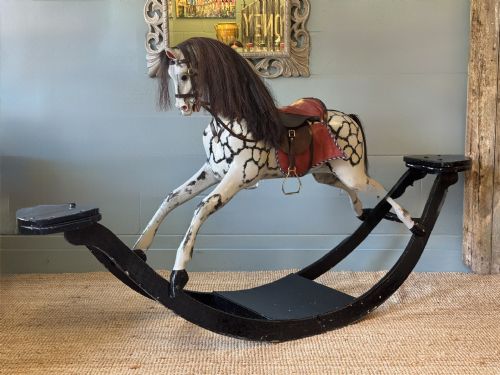
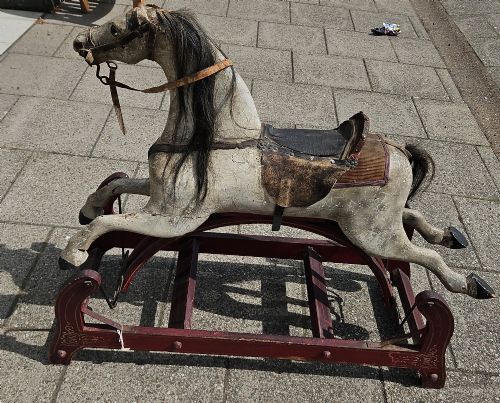
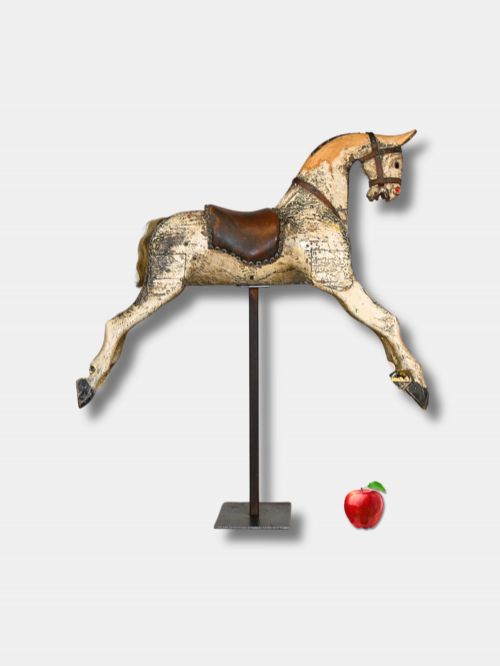
These painted wood rocking horse pieces are traditional carved items built for play and display.
Painted Wood Rocking Horse
When you search for a painted wood rocking horse, you encounter sturdy children's toys and decorative sculptures shaped from timber. These pieces span the nineteenth century, the Victorian era, the Edwardian period, and up to nineteen twenty.
You are most likely to meet examples mounted on original rockers or pine trestle bases. The selection includes English, American, and Spanish origins, ranging from formal workshop production to folk art naive primitive styles.
How they were made
Maker workshops shaped these animals primarily from carved pine and wood, supported by iron and metal structural components. Artisans applied surface paint, often retaining original paint schemes.
Details such as leather tack, horsehair manes and tails, and glass eyes completed the figures. Carpenters mounted the carved bodies onto wooden rockers or trestle stands designed for motion.
Painted Wood Rocking Horse Retail Price Guide 2026
Typical asking prices for painted wood rocking horse among the pieces listed under this phrase on Sellingantiques today, from the lower quarter to the upper quarter. They describe what is for sale here now, not the wider market.
Listings feature items built from pine and wood, detailed with leather, horsehair, metal, and glass components across the Victorian and Edwardian periods.
What varies in quality
Quality rests upon the depth of the carving and the survival of the original painted surface. Finer examples retain their genuine leather harness work, horsehair, and glass eyes intact.
Pieces bearing documented maker attributions command greater interest than anonymous naive or primitive sculptures. The structural integrity of the wooden rocker or base also dictates the standing of the piece.
G & J Lines of London·Collinson & Sons Liverpool
The Painted Wood Rocking Horse Glossary
- Rocking horse
- A carved wooden toy equine mounted on curved slats of wood or a standing frame to allow forward and backward motion. These objects evolved from simple nursery playthings into decorative sculptures.
- Pine trestle base
- A supporting wooden frame composed of horizontal beams and angled legs. This structure keeps the heavy carved horse steady during use.
- Folk art
- Artistic work produced from an indigenous culture or peasant society without professional academic training. Naive primitive examples display charming proportions rather than strict anatomical accuracy.
- Original paint
- The initial decorative coating applied to the timber surface during manufacture. Surviving layers without modern overpaint preserve the historic character.
Painted Wood Rocking Horse: Frequently Asked Questions
How old is my wooden rocking horse?
You can date these items by examining the construction methods, timber types, and surface finishes. Nineteenth-century examples often display hand-carved details and early paint layers.
Makers' marks or stamps on the wooden stand help pinpoint the workshop of origin. Victorian and Edwardian pieces show specific stylistic traits typical of their decade of manufacture.
Are these horses safe for children?
Most antique rocking horses serve primarily as decorative sculptures or collector items rather than active nursery toys. Their historic timber and original iron components require careful preservation.
Structural joints may weaken over generations, making modern display preferable to robust play. Collectors generally place them in rooms where their condition remains stable.
What materials make up the mane?
Traditional makers utilised genuine horsehair to form realistic manes and tails on the carved wooden bodies. This natural material withstands gentle brushing but requires protection from pests.
Leather components typically form the saddle and bridle straps, fastened with small metal tacks. Glass eyes provide the lifelike expression seen in quality Victorian models.
How do I care for original paint?
Preserve original painted surfaces by keeping the timber away from direct sunlight and damp conditions. Dust the carved wood gently with a dry, soft cloth without applying harsh cleaning solutions.
Maintain stable indoor humidity to prevent the pine from splitting or the historic paint from flaking off. Avoid any aggressive restoration that removes the historic patina.