
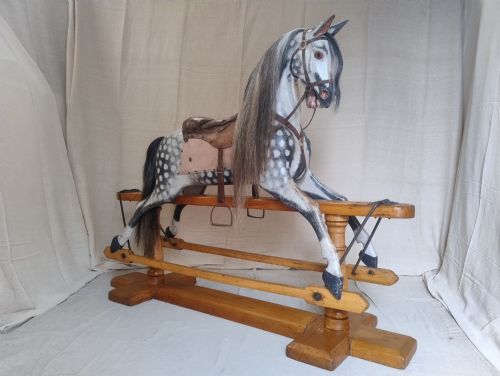


Carved Nursery Horse
These carved nursery horse figures are traditional wooden toys built to last generations, offering any collector a tangible piece of childhood history.
Carved Nursery Horse
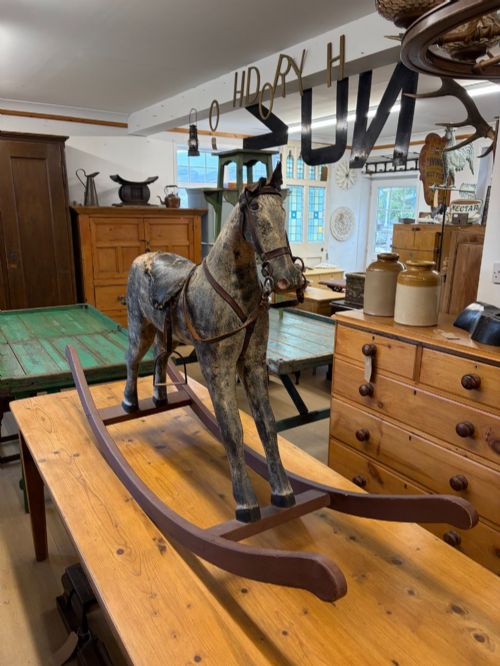
A carved nursery horse is typically a wooden rocking horse designed for children, appearing in forms ranging from naive folk art to substantial workshop productions. Buyers encountering this search phrase find pieces spanning the nineteenth century through the mid twentieth century, reflecting various regional British and international traditions.
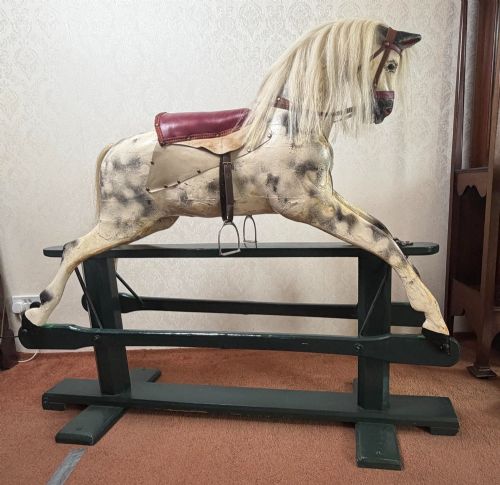
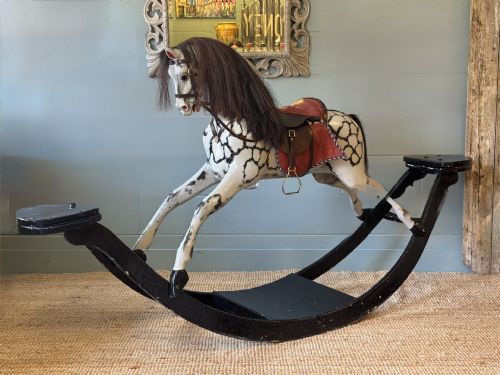
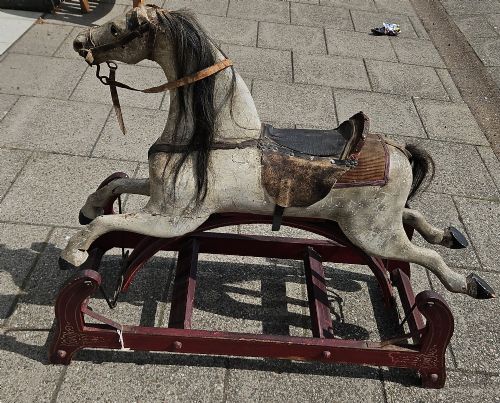
The most common examples on this page are large wooden rocking horses mounted on bow rockers or safety stands. These heavy toys demonstrate the enduring appeal of traditional playroom furniture, often showing the honest wear of decades of childhood use.
Materials and Construction Methods
Construction relies heavily on carved pine and other solid woods, shaped to form the body and head of the animal. Iron and steel brackets or bolts often secure the components together and attach the horse to its wooden rocking base.
Surface finishes include traditional paint schemes alongside natural wood textures. Details such as leather tack and genuine horsehair manes complete the traditional construction of these substantial toys.
The selection includes Victorian examples alongside mid-twentieth-century interwar pieces.
Assessing Quality and Character
Quality in a carved nursery horse rests primarily on the depth and skill of the carving, particularly around the head and expression. Maker attribution also plays a role, with established firms like Lines or Ayres commanding attention for their robust build quality.
The survival of original painted surfaces and tack significantly elevates a piece. Examples retaining their untouched historic finish and genuine horsehair offer a more complete historic record than heavily restored or repainted alternatives.
G & J Lines of London·F.H.Ayres·Collinson·Lines Bros Sportiboy
The Carved Nursery Horse Glossary
- Bow rockers
- The curved wooden slats beneath the horse that allow it to swing back and forth. These are typical of earlier nineteenth century designs before safety stands became common.
- Original paint
- The initial surface coating applied to the wooden body. Surviving traces show the historic colours and dappling patterns intended by the maker.
- Folk art
- Objects created by self-taught makers or within a regional tradition rather than a commercial factory. These pieces display a naive charm and individual carving style.
- Tack
- The harness, saddle, and bridle fittings attached to the horse. Leather and metal components complete the realistic appearance of the ride-on toy.
Carved Nursery Horse: Frequently Asked Questions
How do I date an old rocking horse?
Dating relies on examining the construction methods, nail types, and the shape of the rocker bow beneath the animal. Earlier nineteenth-century examples often display simpler, more naive carving styles compared to later commercial workshop production.
Changes in branding, stance, and mounting hardware also help narrow down the decade of manufacture. Comparing the piece to documented examples from known makers provides further chronological clarity.
Are these horses safe for children to ride?
These antique and vintage nursery horses are primarily collected as decorative objects or historic artefacts rather than modern nursery toys. Their historic construction and aged materials may not meet contemporary safety standards for active play.
Displaying them securely in a home ensures they remain stable and protected. Gentle handling preserves the original wood, paint, and hair components for the future.
What is the difference between folk art and factory horses?
Folk art horses are typically handmade by local artisans or anonymous creators, resulting in unique, naive proportions and charming irregularities. Factory-produced horses follow standardised patterns from established makers with professional carving.
Workshop pieces often feature more anatomical precision and standardised ironwork. Both styles hold distinct appeal for collectors depending on their preference for individual character versus commercial craftsmanship.
How should I care for wooden nursery horses?
Keep wooden rocking horses away from direct sunlight and extreme temperature fluctuations to prevent the timber from splitting or warping. Dust them gently with a dry, soft cloth rather than using liquid polishes that might damage fragile historic paint.
Preserving the original leather and horsehair requires a stable indoor environment with moderate humidity. Avoid placing heavy loads on antique rockers to protect their structural integrity.