



Wooden Glider Horse
A wooden glider horse is a traditional nursery toy built to give generations of children the motion of riding.
Wooden Glider Horse
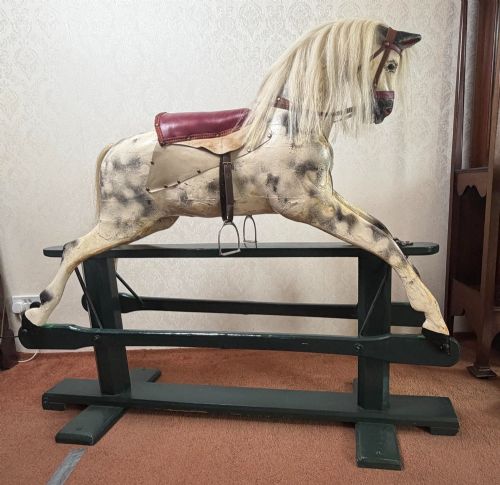
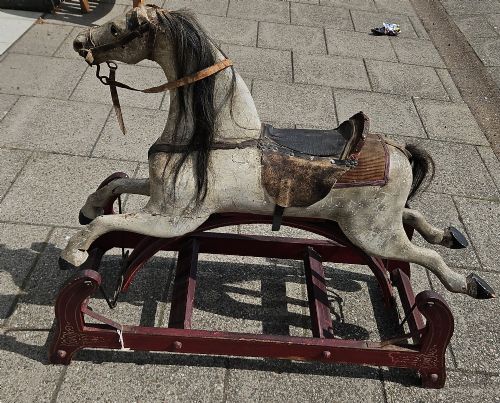
A wooden glider horse is a substantial children's toy designed for indoor play, appearing here in forms ranging from late nineteenth-century carved examples to mid-twentieth-century models. These horses are built primarily as traditional rocking horses and stand on bow rockers or safety stands, carrying riders through a swinging motion.
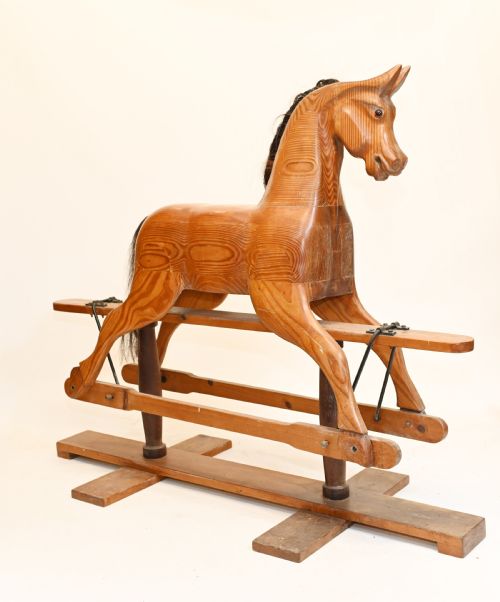
The pieces on this page span the Victorian period, the Edwardian era, and the interwar period up to the 1940s and 1950s. You will encounter both grand dappled workshop pieces and simpler carved pine items reflecting regional British and American toy-making traditions.
Makers such as F.H. Ayres, Lines Bros, and Collinsons dominate the larger examples, while unsigned folk art pieces show simpler hand-carved construction. Buyers most frequently meet large traditional nursery horses alongside smaller playroom variants from the early twentieth century.
How they were made
Makers constructed the bodies of these horses from carved wood, frequently utilising pine or hardwoods shaped to form the torso, head, and legs. Iron and steel reinforcement rods or brackets often secure the internal frame and connect the body to the base rockers.
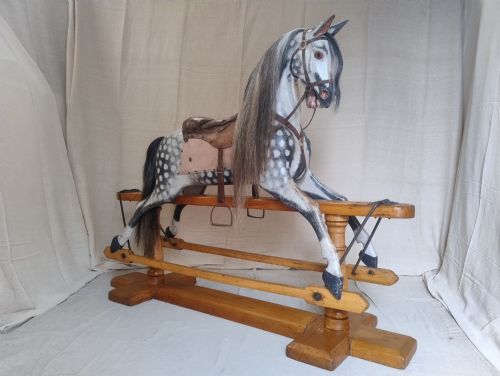
Traditional upholstery techniques finish the pieces, incorporating genuine horsehair for the manes and tails alongside leather tack, saddles, and bridles. Glass eyes complete the head, while layers of gesso and paint create the dappled or plain coats seen on the finished animals.
Listings feature traditional wooden horses spanning from the Victorian period through the interwar years to the 1950s.
What varies in quality
The distinction between standard playroom horses and top-tier workshop examples rests on the depth of the carving and the original finish. Master makers such as Ayres invested significant labour into realistic facial expressions, detailed muscle definition, and layered dapple paintwork that survives beneath subsequent wear.
The integrity of the original rocker mechanism and the retention of genuine materials like horsehair manes and leather tack separate ordinary survivors from exceptional pieces. Workshop provenance marked by stamps or plates further elevates a piece within the range.
F.H. Ayres·Lines Bros·Collinsons
The Wooden Glider Horse Glossary
- Bow rocker
- The curved wooden arc upon which the horse mounts to allow a swinging motion. These stands permit the horse to glide back and forth across the nursery floor.
- Dappled
- A painted finish mimicking the spotted coat of certain horses, applied in layered grey or brown spots over a pale ground. This technique required skilled workshop painters.
- Horsehair
- Natural hair utilised for the mane and tail of traditional horses. It is secured into the carved wooden head and rump during manufacture.
- Tack
- The leather harness, bridle, and saddle fitted to the horse. Original leather components add historical interest to a piece.
Wooden Glider Horse: Frequently Asked Questions
How do I date an old wooden horse?
Dating relies on construction methods, fastener types, and stylistic indicators found across the body and stand. Earlier nineteenth-century examples often feature heavier pine blocks and hand-forged ironwork.
Maker marks, where present on the wooden safety stand or under the belly, provide precise attribution to workshops active during the Victorian and Edwardian periods.
Are these horses safe for children today?
Most antique wooden horses are collected as decorative nursery items or historic toys rather than active play equipment. Their historical structures and weathered iron fittings may not meet modern safety standards.
Placing them in a static position or restricting use to gentle supervised sitting protects the original wood, leather tack, and glass eyes from accidental damage.
How do I clean the original paint?
Cleaning requires a soft dry cloth to remove dust from the carved wooden surfaces and horsehair manes. Avoid harsh chemical cleaners or excess moisture, which can lift fragile gesso and nineteenth-century paint layers.
Preserving the original surface condition maintains the historical character and visual appeal of the piece.
What is the difference between Ayres and other makers?
F.H. Ayres established a reputation for robust construction and lifelike carving that defined the upper tier of British rocking horse production. Their models typically feature finely turned handles and detailed dappling.
Other makers, such as Lines Bros or regional workshops, produced lighter domestic toys or utilised simpler pine construction suited to everyday nurseries.