

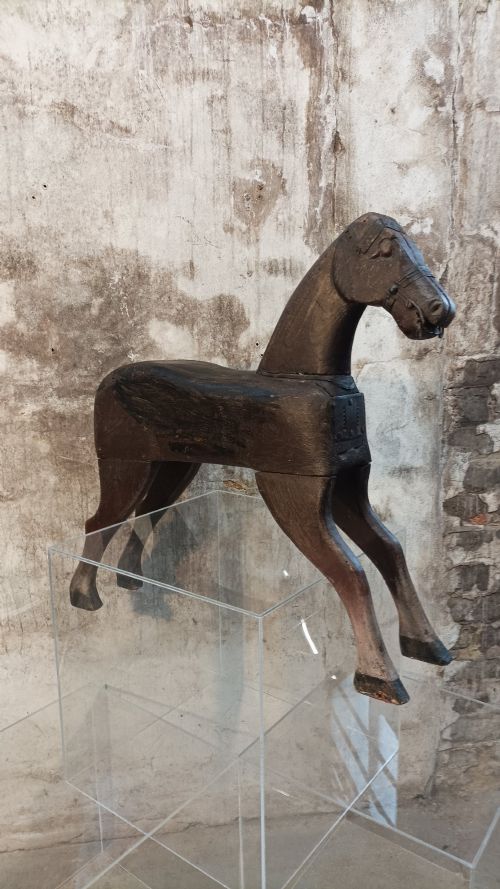


19th Century Rocking Horse
A 19th century rocking horse is a substantial timber ride-on toy and folk art sculpture that brings undeniable character to a room.
19th Century Rocking Horse
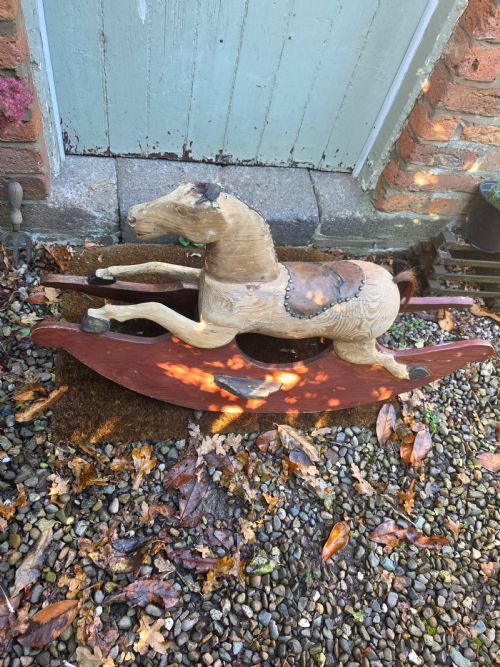
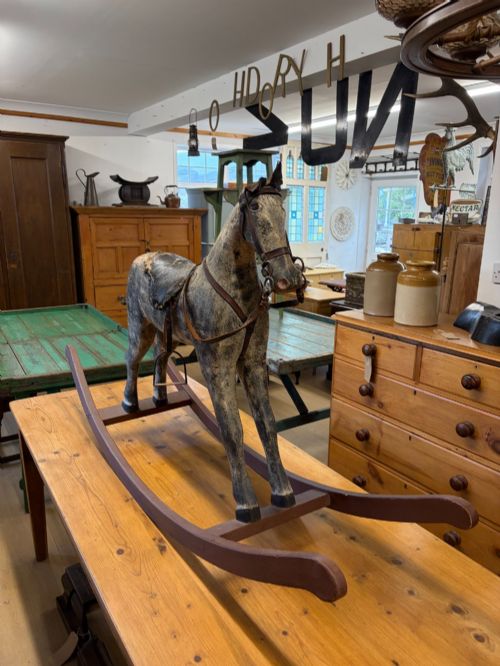
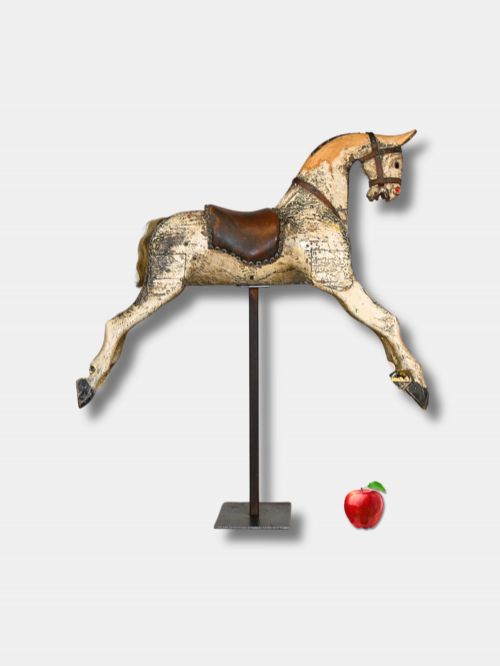
When you search for a 19th century rocking horse, you are looking at carved wooden toys and folk art sculptures made for children or decorative display. These pieces range from naive primitive carvings to substantial English and continental examples mounted on original rockers or stands.
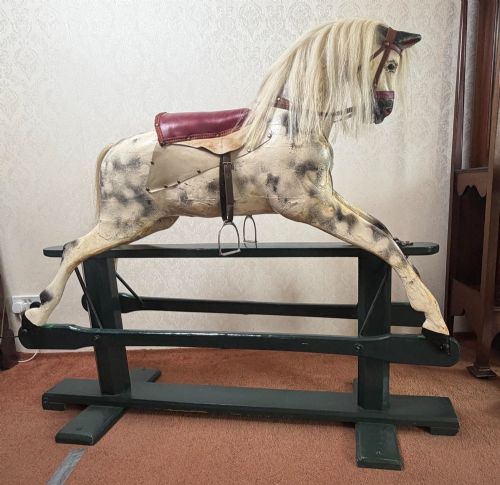
The versions you are most likely to meet on this page span the Victorian era, utilising timber, carved wood, and iron fittings. They appear as full-sized ride-on toys or decorative sculptures, sometimes retaining traces of early paint or dapple finishes.
How they were made
Makers fashioned these pieces primarily from carved wood and solid timber, shaping bodies by hand before mounting them onto curved wooden rockers or static stands. Many examples incorporate horsehair for manes and tails, alongside leather tack and iron hardware for the mechanical or structural joints.
Surfaces were frequently finished with paint, creating either a dapple pattern or a plain primitive coat that has worn down over decades of use. The construction combined heavy joinery with traditional woodworking techniques to withstand the vigorous motion of a child riding.
19th Century Rocking Horse Retail Price Guide 2026
Typical asking prices for 19th century rocking horse among the pieces listed under this phrase on Sellingantiques today, from the lower quarter to the upper quarter. They describe what is for sale here now, not the wider market.
Some horses still carry the faint ghost of dapple spots beneath layers of later history.
What varies in quality
The distinction between a standard example and a superior one rests largely on the depth of the carving and the survival of original surface finishes. Pieces retaining their early paint and original rocking stands command greater interest among collectors than those stripped down or heavily restored.
Proportion and stance also separate the ordinary from the exceptional, as master makers captured a more spirited and lifelike posture in the timber. The presence of authentic tack, leather, and horsehair further elevates the integrity of the piece.
Ayres
The 19th Century Rocking Horse Glossary
- Rocking horse
- A carved wooden equine figure mounted on curved rockers or a safety stand designed for children to ride. These objects served as both playthings and nursery furnishings.
- Folk art
- Traditional decorative or utilitarian items created by self-taught or provincial makers outside academic traditions. In these listings, it describes naive carved wooden horses with individual character.
- Original rocker
- The curved wooden base supplied with the toy when first made. Surviving on its original rocker adds historical value to a 19th century piece.
- Horsehair
- Natural hair harvested from the mane and tail of equines, used traditionally for stuffing and upholstery. On these figures, it forms the authentic mane and tail.
19th Century Rocking Horse: Frequently Asked Questions
How do I clean a wooden rocking horse?
Dust the timber gently with a dry, soft cloth to protect any surviving old paint or dry surface finishes. Avoid using liquid polishes or harsh detergents that might soften the historic patina.
Keep the piece out of direct sunlight and away from radiators to prevent the wood from drying out and splitting over time.
Are these toys safe for children to ride?
These antique pieces are treated primarily as decorative sculptures and folk art rather than robust modern toys. The historic joinery and dry timber may not withstand modern weight or rigorous play.
Collectors generally place them in living spaces or nurseries as static display items to preserve their structural integrity.
How do I tell an 18th century horse from a 19th century one?
Dating relies on examining the tool marks left on the timber, the style of the carving, and the construction methods used in the body. Earlier examples often feature heavier, simpler joinery and blockier proportions.
Comparative study of recorded pieces and known workshop styles helps clarify the likely period of manufacture.