

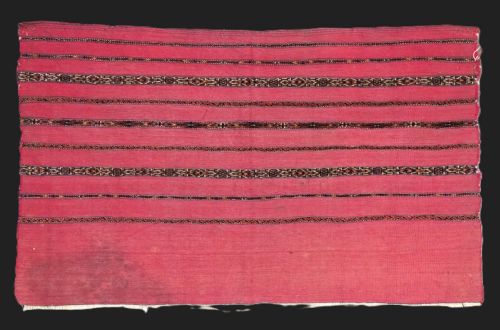
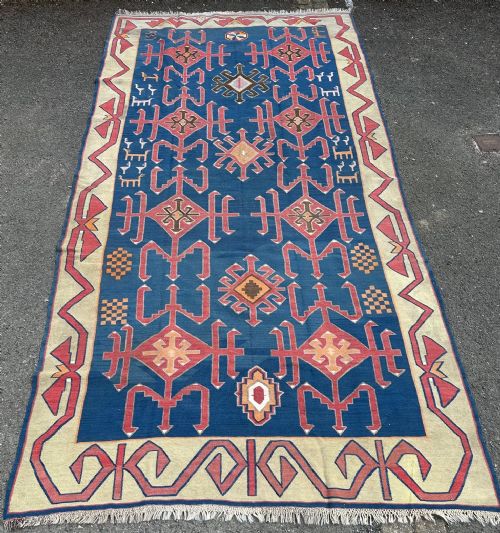


Red Flatweave Carpet
When buying a red flatweave carpet, you are choosing a woven textile carrying geometric motifs from tribal and regional traditions.
Red Flatweave Carpet
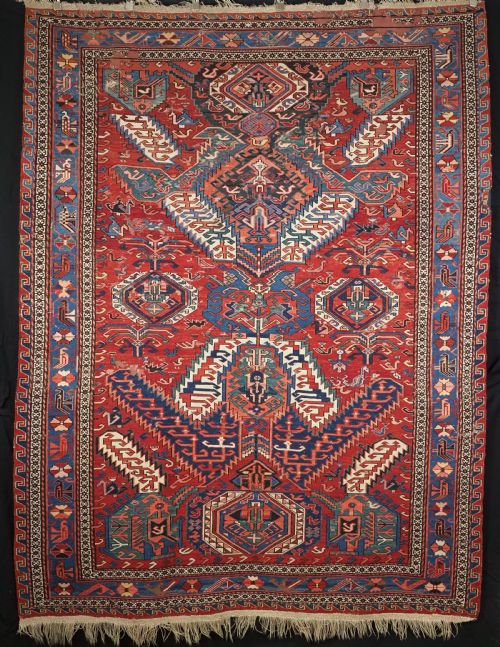
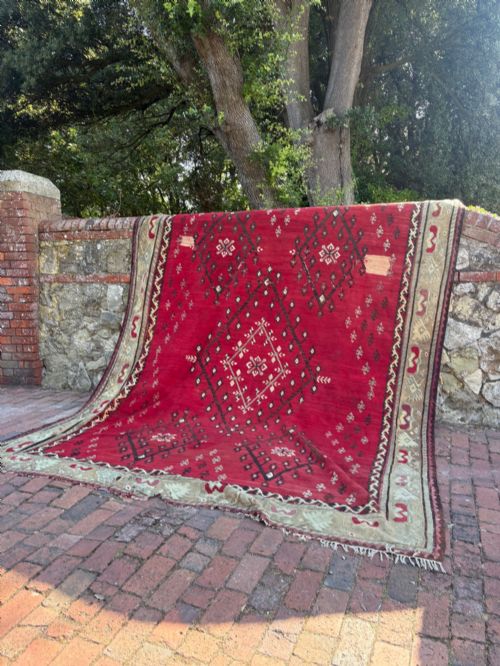
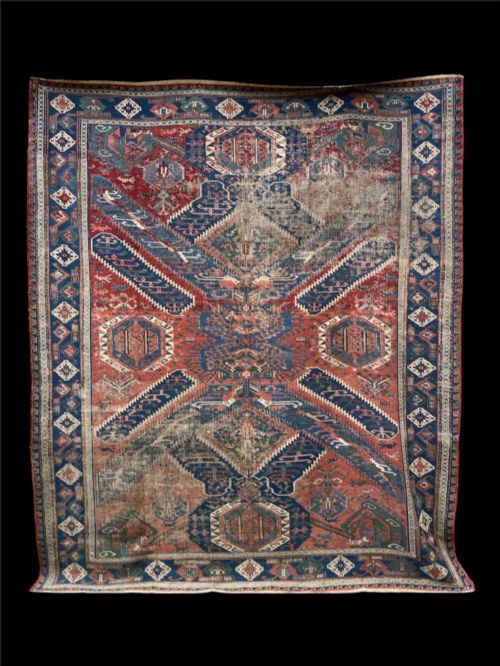
A red flatweave carpet brings together floor coverings and wall panels produced across Central Asia, the Caucasus, Persia, Anatolia, and Eastern Europe. The pieces listed here span the nineteenth and early twentieth centuries, representing regional weaving traditions from specific tribal groups.
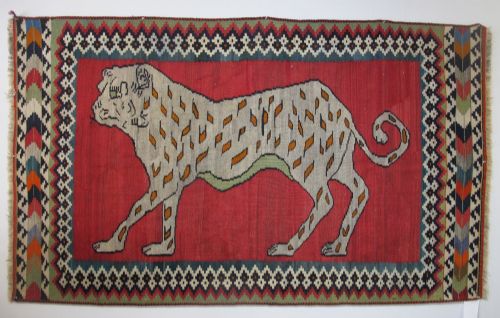
Most examples take the form of kilim rugs, runners, storage bags, or large format carpets. Buyers meet pieces originating from workshops and nomadic camps alike, ranging from small Qashqai and Baluch formats to expansive Bessarabian and Anatolian room-sized kilims.
Geometric patterns, banded designs, and stylized animal motifs dominate the visual language of these textiles. Structural forms include single-piece weaves alongside panels joined in multiple strips.
How they were made
Makers utilised hand-spun wool and cotton as the primary structural foundations for these flatweaves, occasionally incorporating goat hair for added durability. Natural dyes produced the characteristic red tones and secondary hues seen across the regions.
The construction relies on tapestry weaving techniques rather than pile knotting, producing a smooth surface on both sides. Soumak variations add a supplementary wrapping technique that creates raised surface patterns.
Larger floor coverings were frequently woven in separate strips and joined down the length to achieve room-sized dimensions. Storage bags and tent bands utilised similar flatweave principles adapted for nomadic transport.
Some nineteenth-century storage bags still retain their original woven wool backs used for packing tent gear.
What varies in quality
Quality rests upon the fineness of the weave and the precision of the geometric layout. Tighter, more disciplined interlacings demonstrate greater skill by the weaver.
The choice and depth of natural dyes dictate visual success. Subtle variations in red shades achieved through botanical or insect sources impart a richness that chemical substitutes lack.
Structural integrity, including the survival of original borders and selvages, determines the overall condition of older pieces. Repairs alter the original fabric, though historical mends frequently accompany authentic working-life usage.
The Red Flatweave Carpet Glossary
- Flatweave
- A textile produced without knotted pile by interweaving warp and weft threads directly. This creates a thin, reversible fabric without a plush surface.
- Kilim
- A tapestry-woven carpet or rug originating from regions including Anatolia, Persia, and the Caucasus. These pieces rely on slit-weave techniques where colour changes occur.
- Soumak
- A brocaded flatweave technique utilising wrapping threads over the warps to create a textured, durable surface. It often appears alongside standard kilim structures.
- Mafresh
- A nomadic storage bag or saddlebag face produced in flatweave or soumak construction. They were utilised for transport and domestic storage within tribal settlements.
- Warp
- The vertical foundation threads stretched tightly on the loom before weaving begins. Weft threads pass horizontally through these structural lines.
Red Flatweave Carpet: Frequently Asked Questions
What is a flatweave carpet?
A flatweave carpet is a textile constructed without knotted pile, using interlaced warp and weft threads to form a smooth fabric. These floor coverings are reversible and lightweight compared to traditional piled rugs.
Nomadic and village weavers produced them across the Caucasus, Anatolia, and Central Asia for domestic use, transport, and floor insulation.
How do I care for a kilim rug?
Regular gentle vacuuming without a rotating brush roll prevents dust accumulation within the tight weave of the fabric. Professional cleaning suited to antique textiles preserves the natural dyes and wool.
Placing a breathable rug underlay prevents slipping and reduces friction between the flatweave and the floor.
Where were these carpets made?
The pieces originate from tribal and regional centres across Central Asia, the Caucasus, Persia, Turkey, and Eastern Europe. Specific groups such as the Qashqai, Yomut, Tekke, and Shahsavan developed distinct local weaving styles.
Nomadic camps and sedentary villages both contributed specific geometric patterns, formats, and structural techniques.
How do I date an old flatweave?
Dating relies on examining the specific natural dye palette, wool preparation, structural format, and regional design traits. Nineteenth and early twentieth-century examples display hand-spun characteristics distinct from later industrial production.
Structural wear patterns and traditional tribal motifs provide further context for determining the age of a textile.