





1920s Pirot Kilim Rug
A 1920s pirot kilim rug brings rich Balkan folk art traditions into a room with striking flatweave geometric patterns.
1920s Pirot Kilim Rug
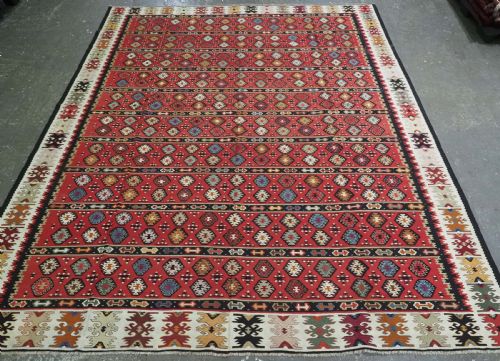
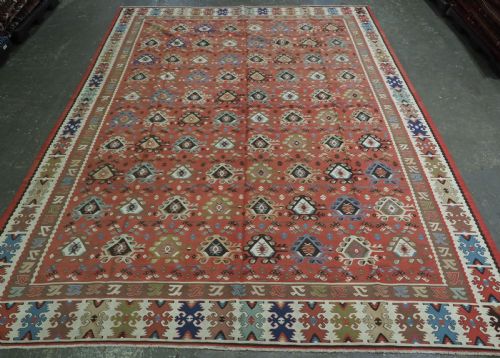
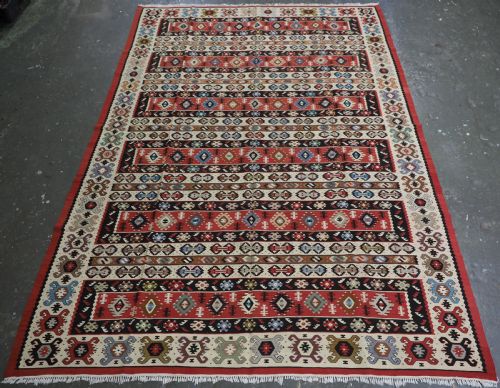
A 1920s pirot kilim rug represents traditional Balkan textile craft, appearing in forms such as area rugs and large room size carpets. These pieces display distinct Balkan folk art and tribal motifs that define their visual character.
The inventory on this page showcases specific layouts including classic designs, flowering trees, banded patterns, and repeat medallions. Each rug uses flatweave techniques native to the region, offering collectors authentic examples of early twentieth-century weaving.
Materials and Techniques
Every 1920s pirot kilim rug relies entirely on wool for its construction, utilising traditional flatweave methods without a knotted pile. This technique creates a lightweight, reversible textile with crisp pattern edges.
Weavers employed regional dyeing methods to achieve the warm soft colours and outstanding hues seen across the designs. The integration of wool fibres with precise flatweave execution produces durable floor coverings.
Current listings exclusively feature wool materials from the year 1920, categorised under Balkan folk art, traditional, and tribal styles.
Assessing Quality and Design
Quality in a 1920s pirot kilim rug rests upon the complexity of the design, distinguishing standard repeat patterns from scarce lattice motifs and flowering trees. Finer weave density and deliberate colour placement elevate certain examples above others.
Visual impact also depends on the preservation of the palette, where warm soft tones or outstanding colours remain intact across the wool surface. Large room size pieces require exceptional structural consistency across a wider expanse.
The 1920s Pirot Kilim Rug Glossary
- Kilim
- A flatweave carpet or rug produced without a pile, common in Balkan traditional craft. This construction method results in a thin, flexible textile.
- Balkan Folk Art
- Decorative styles and motifs originating from regional cultural traditions of the Balkan Peninsula. These patterns often feature geometric or stylised natural forms.
- Flatweave
- A textile production technique where warp and weft threads interlace directly to form the fabric surface. No knots are tied during this process.
- Medallion
- A central ornamental motif incorporated into the field design of a rug. Repeat medallion layouts feature multiple units across the woven surface.
1920s Pirot Kilim Rug: Frequently Asked Questions
What is a pirot kilim?
A pirot kilim is a flatweave rug originating from the Balkan region, known for its distinctive wool construction and traditional folk art patterns. These textiles are woven without a pile.
They display various layouts such as banded designs, flowering trees, and repeat medallions, reflecting local weaving heritage from the nineteen twenties.
How do I style a large room size rug?
Large room size examples serve as a central anchor for living spaces or dining areas, where their flat profile allows furniture to sit evenly. Their vibrant wool colours complement wooden floors and neutral interiors.
Because these rugs are reversible and lack a pile, they fit easily beneath doors and heavy furniture without crushing under pressure.
Are these rugs reversible?
Yes, flatweave construction means that a pirot kilim looks nearly identical on both sides. This makes turning the rug periodically a practical way to manage wear.
The absence of a knotted pile simplifies maintenance while preserving the crisp geometric lines of the Balkan tribal motifs.
What designs are common in this period?
The nineteen-twenties pieces feature classic layouts, banded arrangements, and repeat medallion structures. Rarer examples incorporate lattice patterns and flowering tree motifs.
Each design showcases the distinct wool texture and traditional Balkan aesthetic associated with these regional flatweaves.