


Red Blue Ceramic Urns
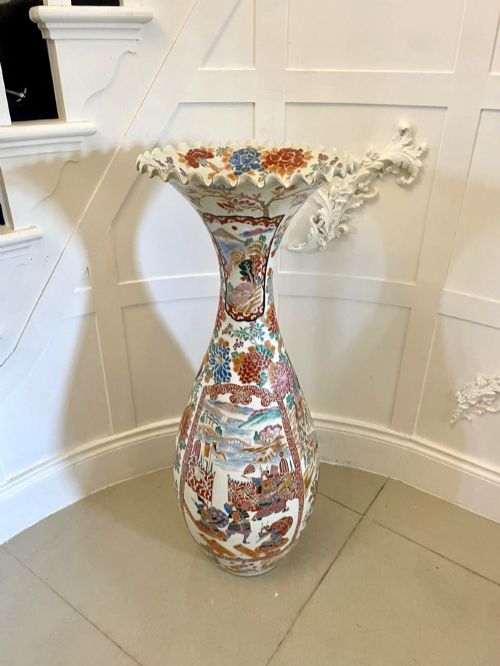
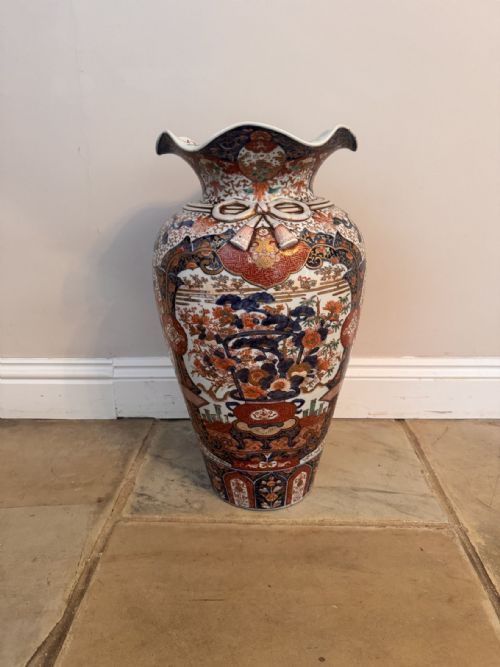
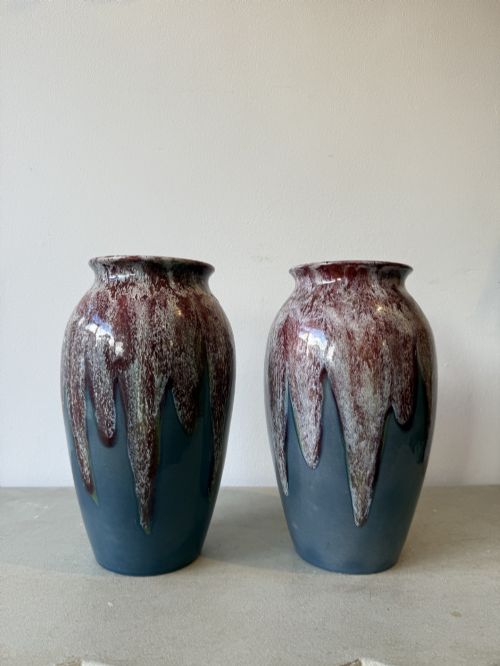
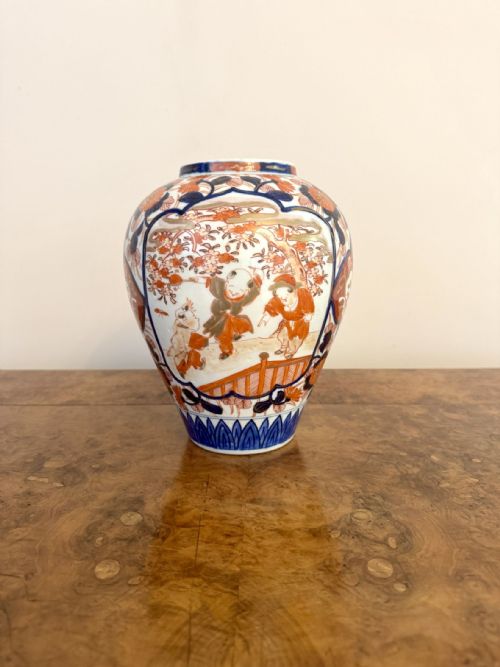
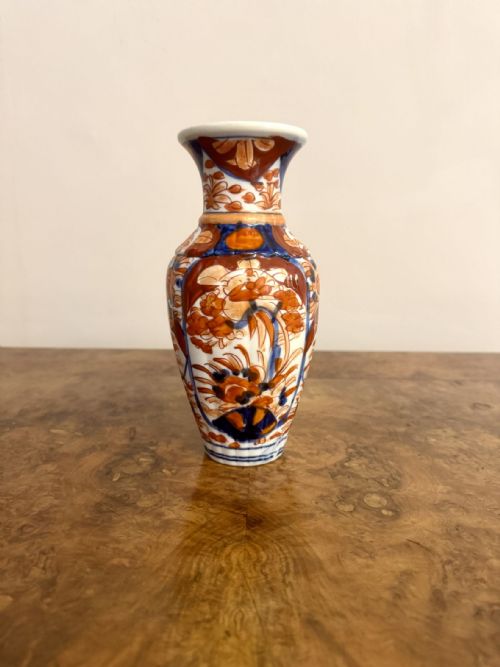
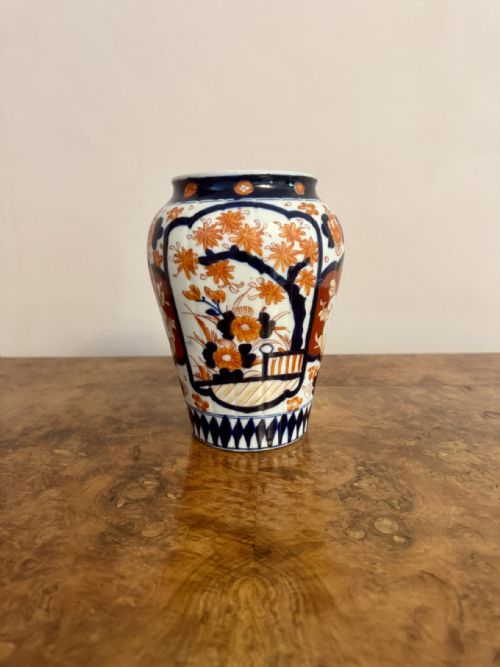
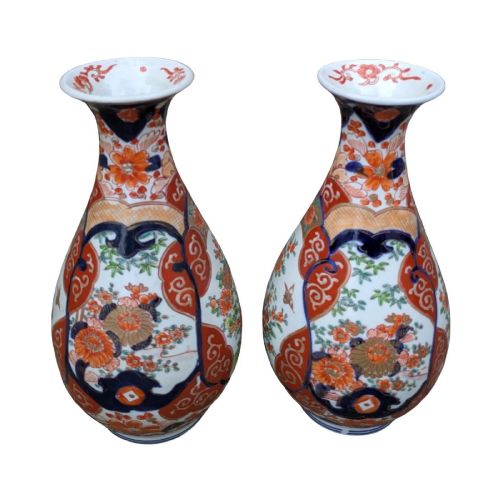
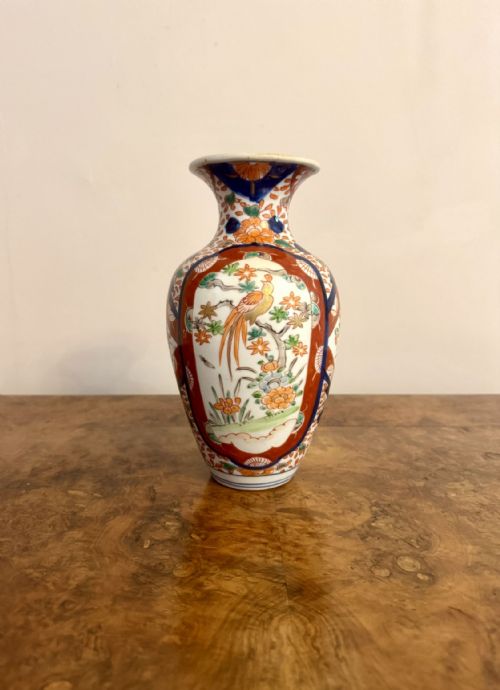
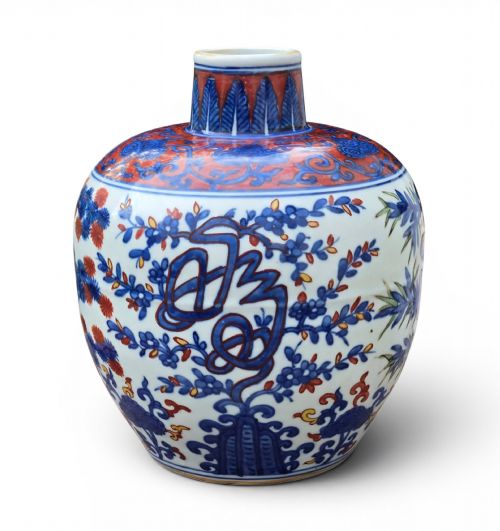
These red blue ceramic urns bring the bold palette of Japanese Imari and art pottery into a room.
Red Blue Ceramic Urns
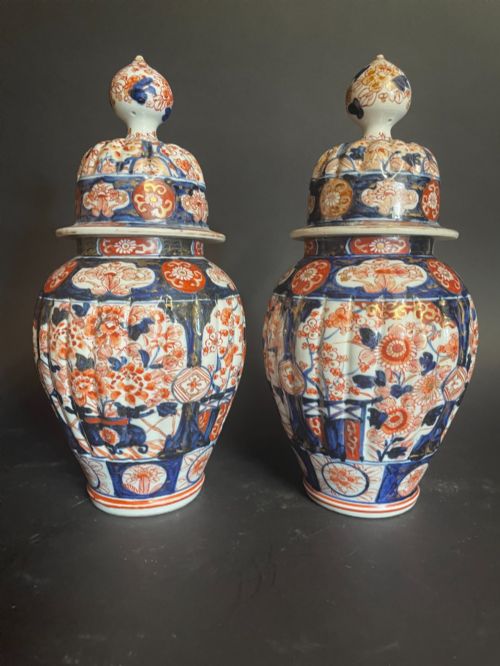
Red blue ceramic urns encompass large floor-standing vessels, covered ginger jars, and lidded vases associated with Japanese Imari porcelain and later art pottery. You will frequently encounter nineteenth-century pieces from the Meiji period alongside eighteenth-century Edo examples decorated in the characteristic palette.
Forms range from double-gourd profiles and fluted bodies to temple jars and koro incense burners. Many examples arrive as matched pairs or complete garnitures of three pieces intended for formal mantel display.
Materials and methods
Potters built these vessels from porcelain, stoneware, and ironstone, applying underglaze blue and iron-red pigments before firing. Artisans often added gilt, gold leaf, and enamel details over the primary glaze to create layered surface patterns.
Workshops in centres such as Arita shaped these ceramics on the wheel or in moulds before subjecting them to high-temperature kiln firings that set the distinctive cobalt and crimson tones.
Listings span from the eighteenth century through the Edwardian era, featuring porcelain, stoneware, and ironstone.
Distinguishing quality
Quality rests upon the crispness of the underglaze blue brushwork and the precision of the iron-red and gilt overlay. Superior examples display balanced composition across complex surfaces without muddy colour blending.
The weight of the porcelain body and the refinement of the potting indicate the maker's hand, where thicker floor-standing vessels require substantial skill to fire evenly without warping.
Masons Ironstone
The Red Blue Ceramic Urns Glossary
- Imari palette
- A decorative scheme employing underglaze blue, iron-red, and gilt highlights upon a white porcelain ground. This style originated in Japan and was later copied by European factories.
- Meiji Period
- The era in Japanese history spanning from 1868 to 1912, noted for prolific porcelain production intended for both domestic use and export.
- Ginger Jar
- A wide-shouldered ceramic vessel with a domed cover, originally designed to store spices and later utilised purely for decorative display.
- Koro
- A traditional Japanese incense burner typically supported on three legs and fitted with a pierced cover to allow fragrance to escape.
- Garniture
- A set of three or more matching vases and jars designed to be displayed together on a mantelpiece or sideboard.
Red Blue Ceramic Urns: Frequently Asked Questions
How do I date a Japanese Imari vase?
Examine the quality of the porcelain body and the richness of the iron-red pigment. Eighteenth-century pieces typically show lighter, finer potting compared to heavier nineteenth-century export examples.
Look closely at the foot ring and glaze pooling for clues regarding the firing period and manufacturing origin.
What is an Imari koro used for?
A koro functioned historically as a Japanese incense burner, featuring a pierced lid designed to release aromatic smoke.
Today these lidded vessels serve as decorative focal points on tables or cabinets.
Are these vases always Japanese?
While the majority of pieces follow Japanese Imari and Arita traditions, European potteries such as Masons and French workshops also produced pieces in the same style.
Examine the paste and underglaze characteristics to determine whether a vessel is Asian porcelain or European ironstone.
How should I display a garniture set?
A garniture consisting of three matching jars or vases looks best arranged together on a wide surface like a sideboard or mantelpiece.
Keep the tallest vessel in the centre with the paired jars flanking it symmetrically.