
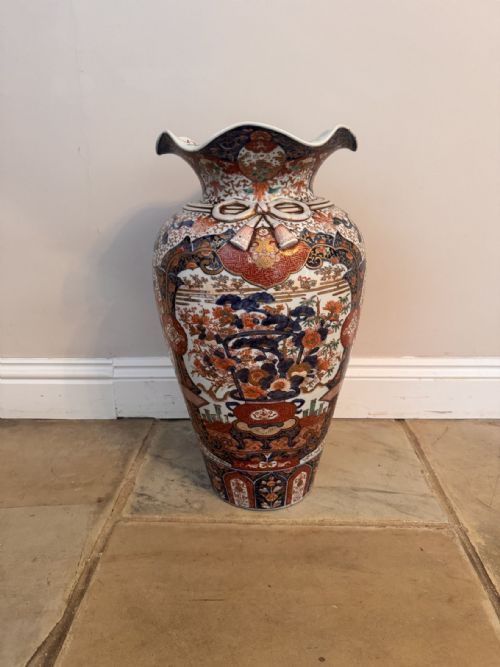
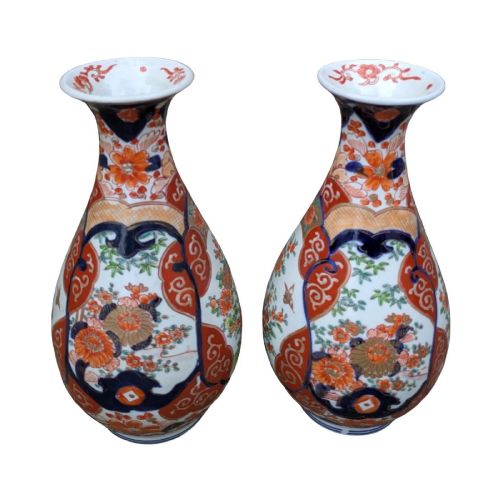


Meiji Imari Baluster Vase
These Japanese meiji imari baluster vase examples bring hand-painted porcelain to a room through traditional cobalt enamel and iron red enamel.
Meiji Imari Baluster Vase
A meiji imari baluster vase combines the curving silhouette of traditional Japanese pottery with the distinctive palette of the Meiji period. Buyers look to these items for their strong decorative presence, whether choosing a single monumental floor standing vessel or a matched pair for a mantelpiece.
The selection here encompasses various forms, from standard decorative vases to large lidded vessels and hexagonal or octagonal shapes. Most date from the late nineteenth century, reflecting the craftsmanship of Japanese kilns during that era.
Materials and Construction
Potters shaped these pieces from fine porcelain, creating sturdy vessels designed to hold flowers or stand alone as ornamental objects. Artisans then applied intricate designs using cobalt enamel for deep blues and iron red enamel for striking contrast.
Many examples incorporate gold leaf and gilt highlights to accentuate the patterns across the ceramic surface. Protective glaze seals the decoration, while select pieces utilise fitted wood components or covers.
Current listings feature porcelain vases from the nineteenth century utilising enamel, gold leaf, and cobalt decoration in the Japanese Imari style.
Assessing the Range
The standard of painting on a meiji imari baluster vase separates simpler production from finer works. Crisp brushwork in the cobalt and iron red enamels, combined with precise application of gold leaf, marks the better examples.
Scale and proportion also define the higher end of the range, particularly with monumental floor standing vessels and matching pairs that maintain symmetry and sharp detailing across both pieces.
The Meiji Imari Baluster Vase Glossary
- Baluster
- A vase shape characterised by a rounded body that tapers toward the base and swells near the lower centre. This traditional profile provides stability and a balanced canvas for decoration.
- Meiji Period
- The era in Japanese history spanning from 1868 to 1912. Objects from this time often reflect the opening of trade with the West alongside traditional craftsmanship.
- Cobalt Enamel
- A blue ceramic pigment used under or over the glaze. It forms the deep foundational tones characteristic of traditional porcelain decoration.
- Iron Red Enamel
- A reddish-orange ceramic pigment derived from iron oxide. Artisans apply this colour alongside cobalt blue to create the vibrant palette seen on these vessels.
Meiji Imari Baluster Vase: Frequently Asked Questions
How were these vases used?
These vessels served primarily as decorative objects within grand interiors during the late nineteenth century. Large floor standing examples stood in hallways or reception rooms, while smaller lidded versions adorned tables and cabinets.
While some were sturdy enough to hold dried arrangements, their primary function was visual display, showcasing Japanese craftsmanship to visitors.
How do I care for my vase?
Dust the porcelain gently with a soft, dry cloth to remove everyday particles. Avoid harsh chemical cleaners or abrasive materials that could damage the delicate gilt and enamel surface.
Keep the vessel away from direct sunlight and areas subject to sudden temperature shifts to protect the glaze and any associated wooden components.
Are these pieces always paired?
Many examples survive as pairs, having been created together to flank a fireplace or furniture centrepiece. However, individual vessels also appear frequently in the listings.
Single vases and pairs share the same decorative qualities, though matched pairs command attention for their balanced visual symmetry.
How can I tell the period?
Look to the combination of porcelain body, enamel colours, and stylistic markers associated with late nineteenth-century Japanese production. The specific use of iron red and cobalt enamels points directly to this era of export ceramics.
Documentation or stylistic cues within the titles often confirm the Meiji period origin of individual pieces.