

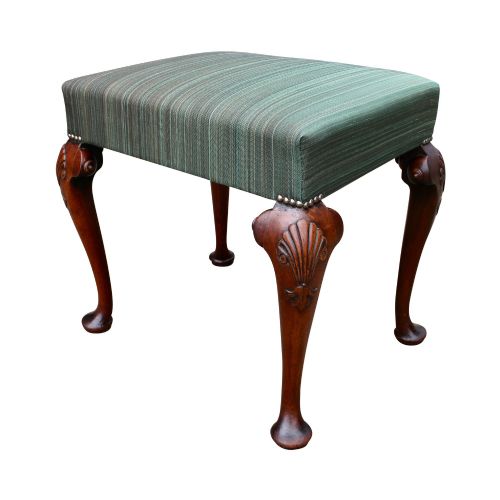
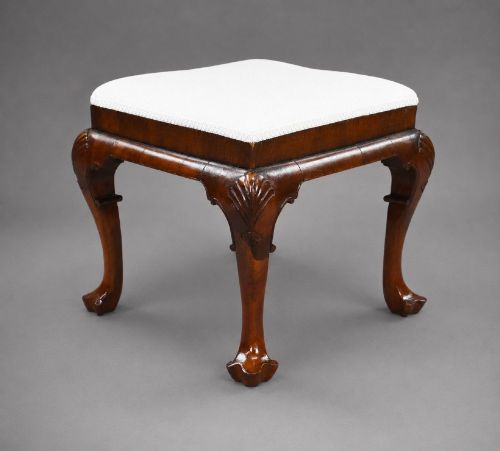
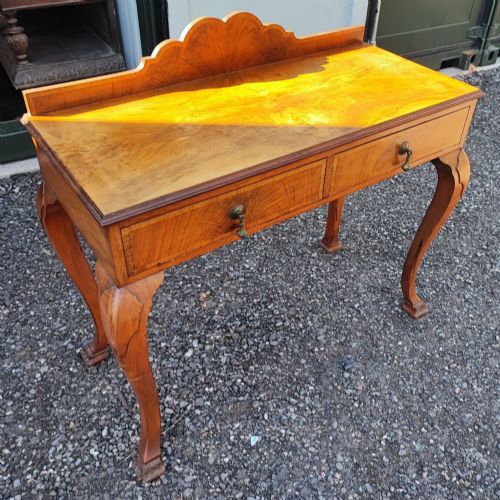
Queen Anne Walnut Table
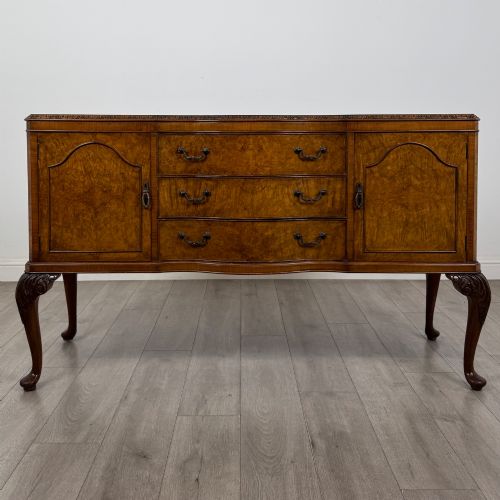
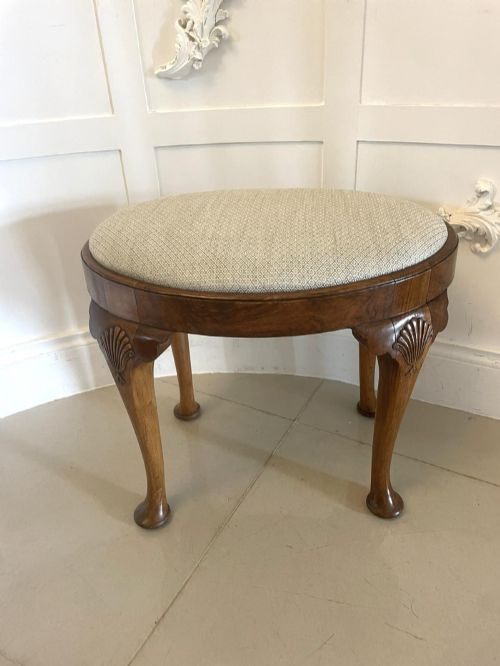
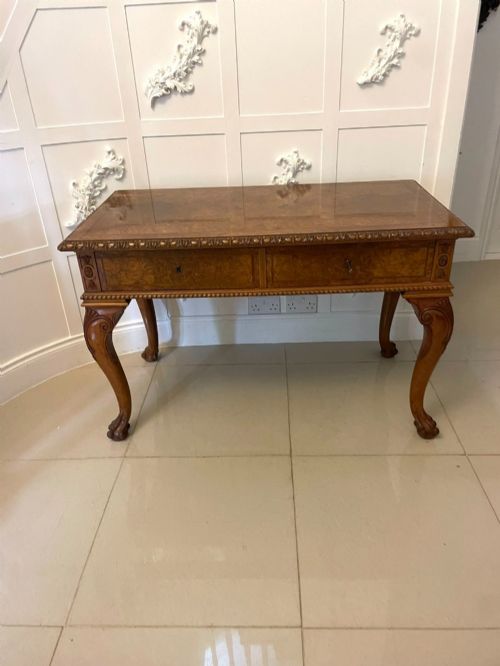
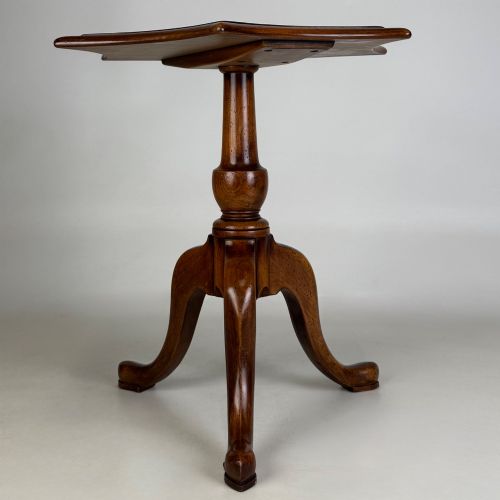
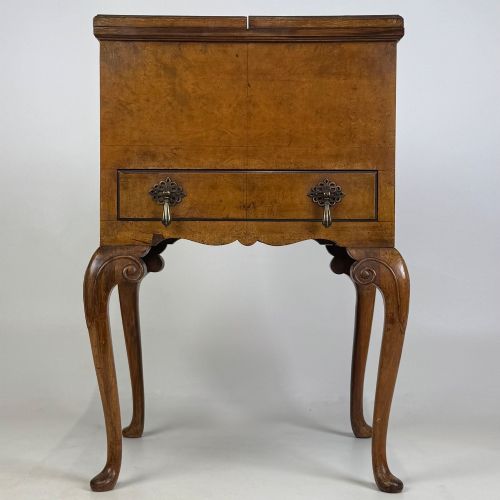
A queen anne walnut table brings subtle warmth and shaped silhouette to a room, drawing the eye with rich figured timber and graceful cabriole supports.
Queen Anne Walnut Table
A queen anne walnut table encompasses diverse forms designed for domestic use, ranging from compact side serving tables and tea tables to large dining surfaces and lowboys. The selection spans authentic 18th-century examples alongside later revival interpretations produced during the Edwardian era and the early decades of the 20th century.
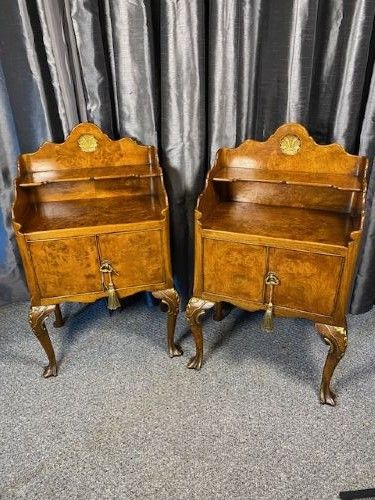
Buyers will encounter occasional tables, writing desks, and console pieces most frequently on this page. These functional items reflect the distinct stylistic shift towards curved lines and cabriole legs that defined early 18th-century English furniture making.
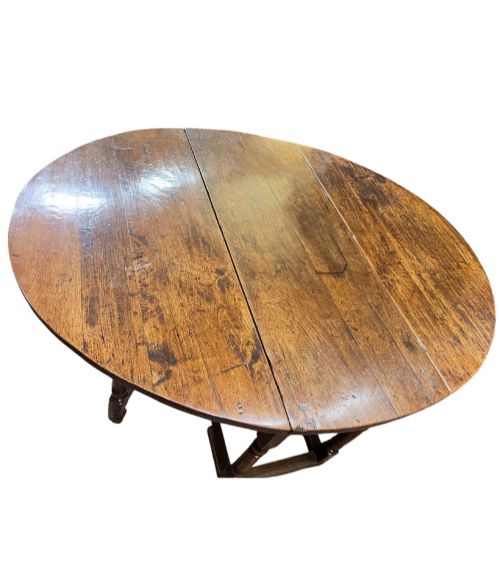
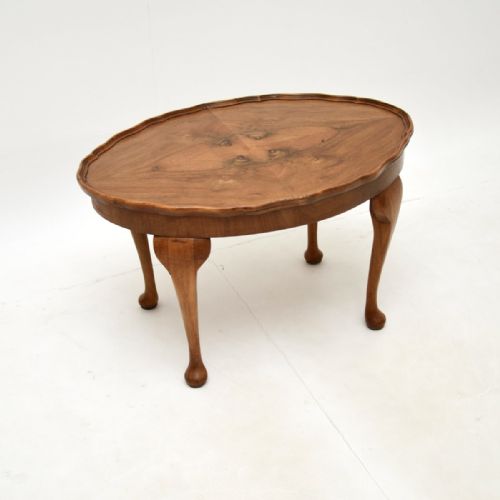
Makers across different periods adopted these classical proportions, applying figured veneers to various foundational forms. Whether selecting an antique gateleg table or a 1920s coffee table, the core character remains rooted in walnut timber.
How they were made
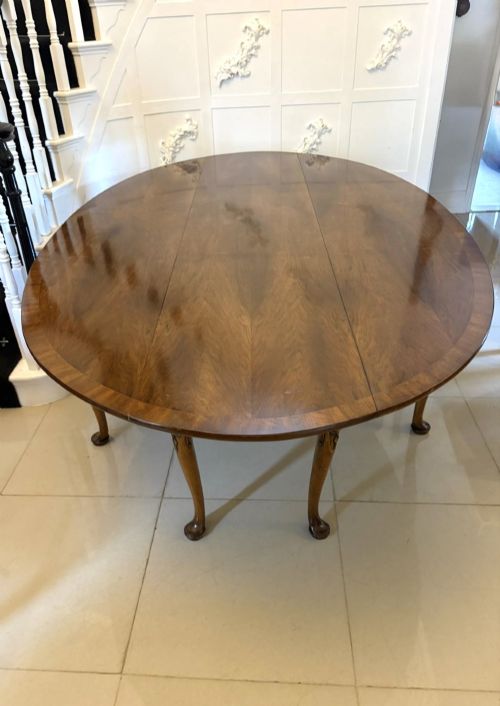
Craftsmen utilised solid walnut for structural integrity while selecting highly figured burr walnut veneers to create decorative patterns across table tops and drawer fronts. These thin slices of timber were laid over secondary woods such as oak, requiring precise adhesive techniques and hand polishing to achieve a lustrous finish.
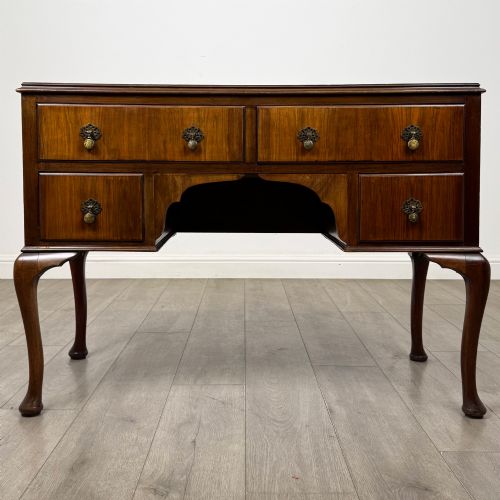
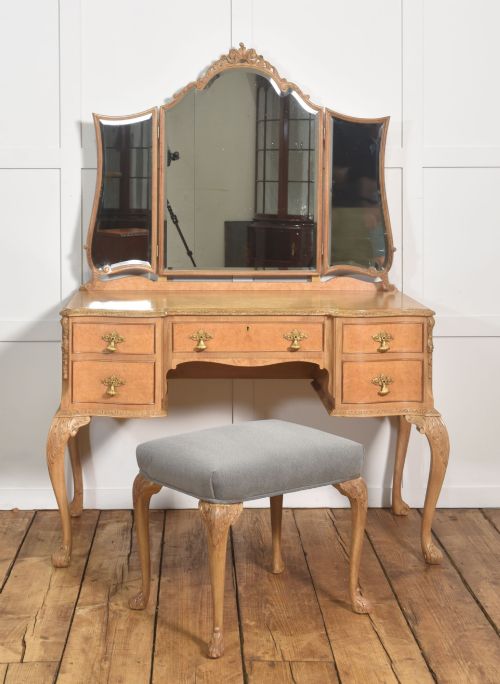
Brass hardware, including swing handles and keyhole escutcheons, complemented the dark timber tones on desks and lowboys. Additional materials such as tooled leather inserts appeared on writing surfaces, whilst glass and fabric occasionally accompanied related dressing pieces.
The listings span pieces from the 18th, 19th, and 20th centuries, uniting early Georgian craftsmanship with Edwardian and 1920s revival interpretations.
What varies in quality
The visual impact of a queen anne walnut table largely depends on the choice and matching of timber veneers. Desirable pieces display symmetrical burr patterns that flow evenly across the surface, whereas lesser examples rely on plain grain or inconsistent veneer placement.
Execution of carved details, such as the shell motifs on cabriole knees and the shaping of aprons, separates standard production from finer work. Proportions and the crispness of edge moulding further distinguish the output of skilled cabinet makers from mass-produced revival items.
Wylie & Lochhead Glasgow·Hille London
The Queen Anne Walnut Table Glossary
- Cabriole leg
- A furniture leg that curves out and then in, mimicking animal limbs with a knee and a foot. This form became a defining feature of early 18th-century seating and tables.
- Burr walnut
- A wood harvested from walnut tree growths that produces intricate, swirling grain patterns. Cabinet makers prized this figured material for decorative veneer panels.
- Lowboy
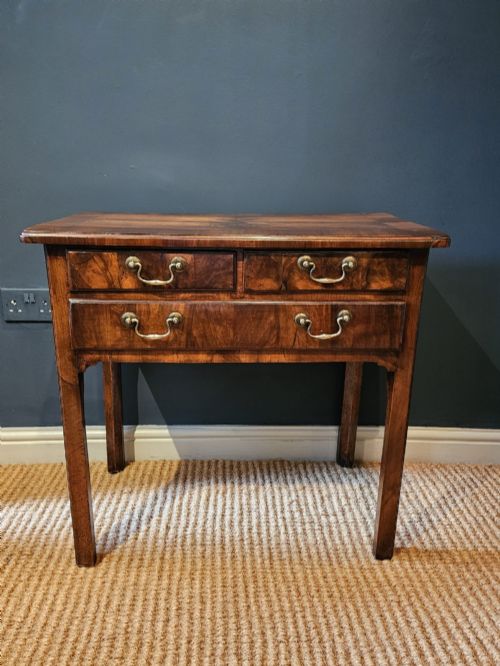
- A small dressing table or side table featuring a low drawer arrangement supported by four long legs. These tables gained popularity during the early 18th century.
- Gateleg table
- A drop-leaf table with hinged legs that swing outward to support the raised flaps. This construction allowed larger surfaces to fold away when not in use.
- Escutcheon
- A protective plate surrounding a keyhole on a drawer or cabinet door. They were typically cast from brass and shaped to complement the furniture style.
Queen Anne Walnut Table: Frequently Asked Questions
What is a lowboy used for?
A lowboy served historically as a small dressing table or side table for holding personal items and grooming tools.
Today, buyers utilise them as writing surfaces, hall tables, or compact desks in smaller rooms.
How do I tell an 18th-century table from a 1920s revival piece?
Examination of construction methods, timber ageing, and secondary woods reveals the true period of manufacture.
Eighteenth-century examples show hand-cut joinery and period-specific timber stocks, whereas 1920s revival pieces often reflect early 20th-century workshop standards while copying the older aesthetic.
How should I care for a walnut table?
Polishing with traditional beeswax maintains the lustre of the timber and protects the delicate burr veneer from drying out.
Keeping the table away from direct sunlight and heat sources prevents the wood from warping or fading over time.
What distinguishes queen anne style from georgian style?
Queen Anne style specifically emphasises curved lines, pad feet, and cabriole supports developed during the early 1700s.
Georgian style encompasses a broader chronological range that later incorporated straight lines, classical symmetry, and different decorative motifs.