

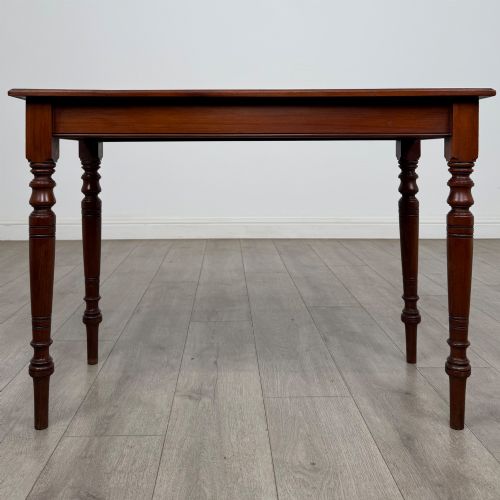
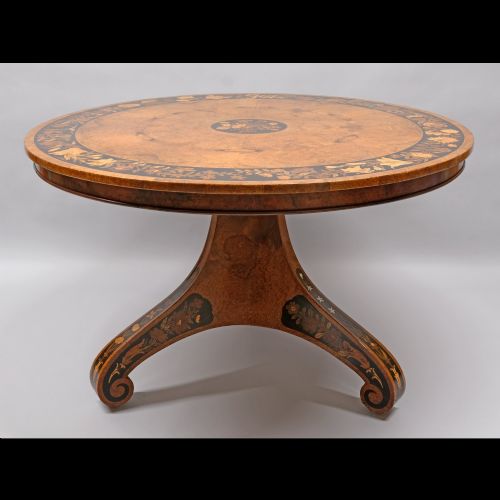
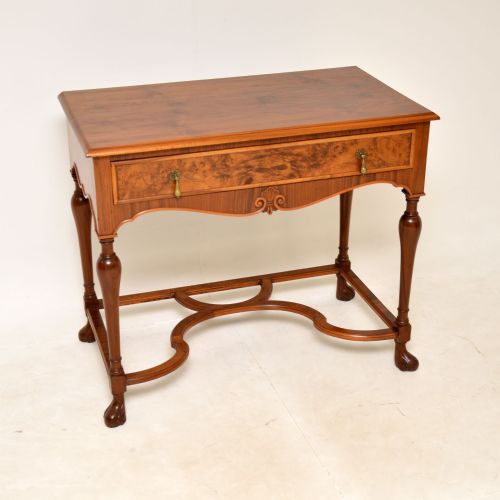
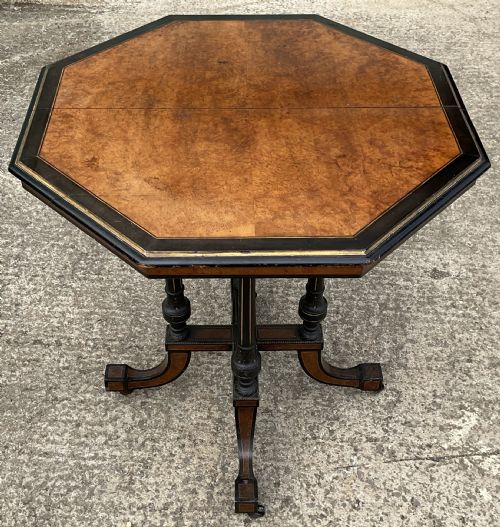

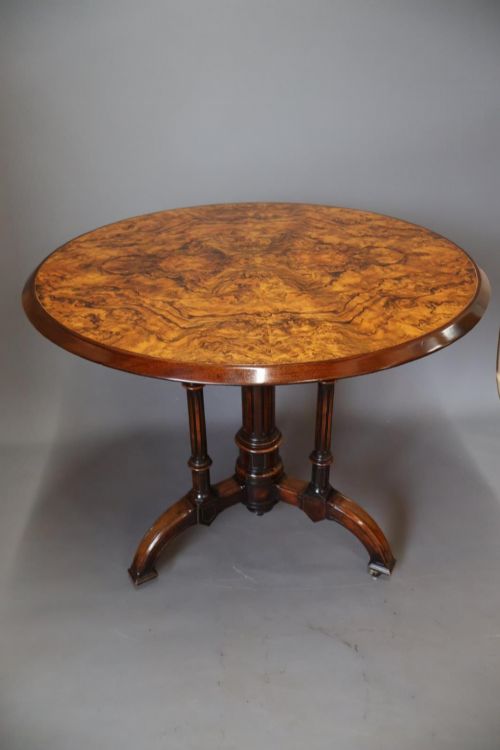
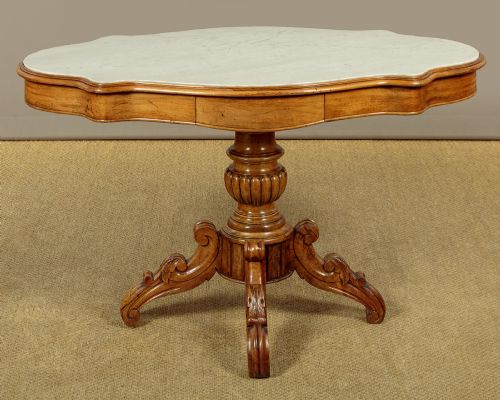
Walnut Foyer Table
A walnut foyer table brings rich grain and presence into an entrance hall, drawing the eye immediately from the front door.

Walnut Foyer Table
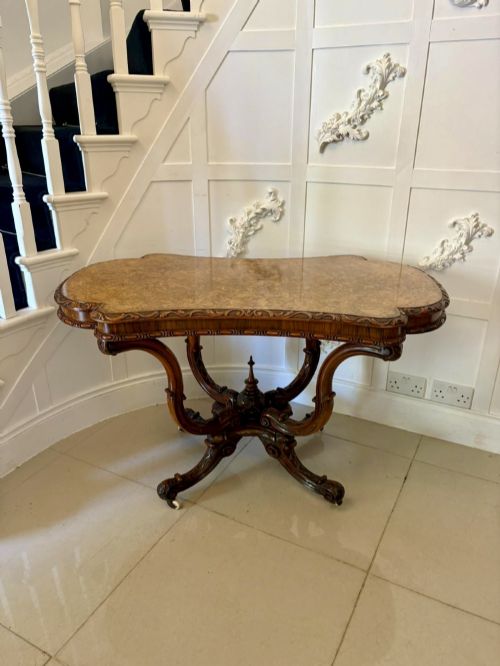
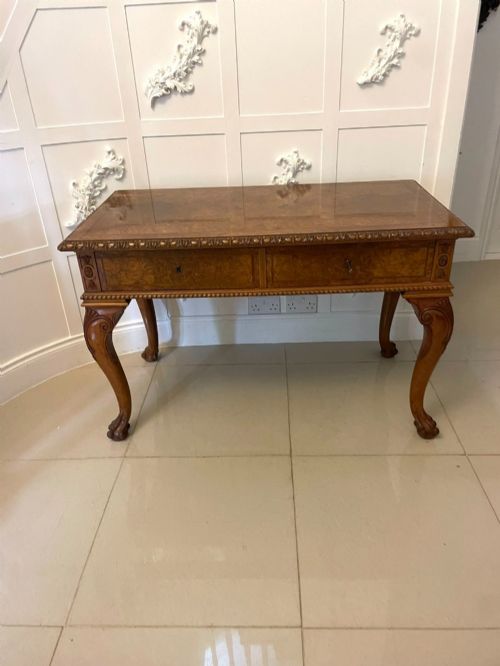
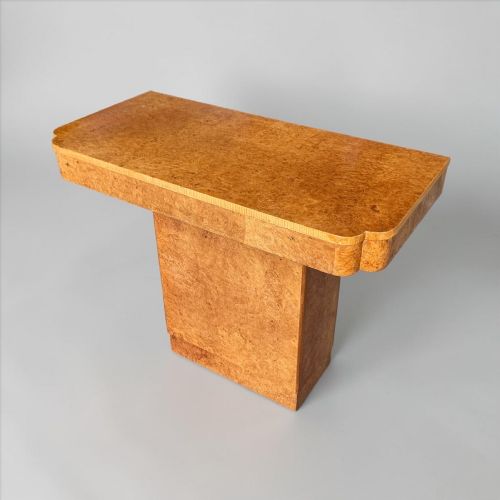
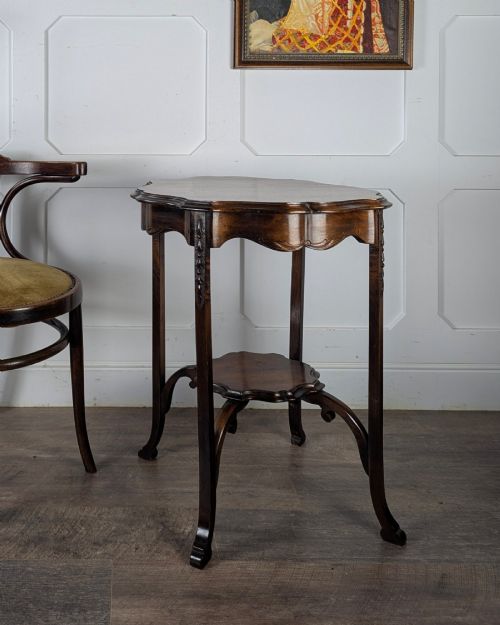
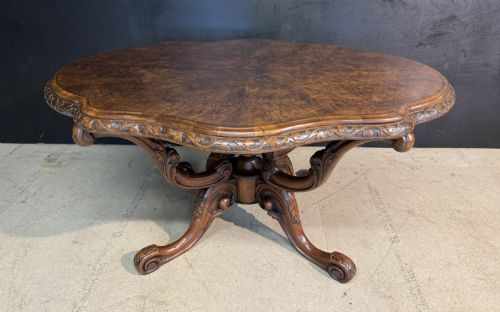
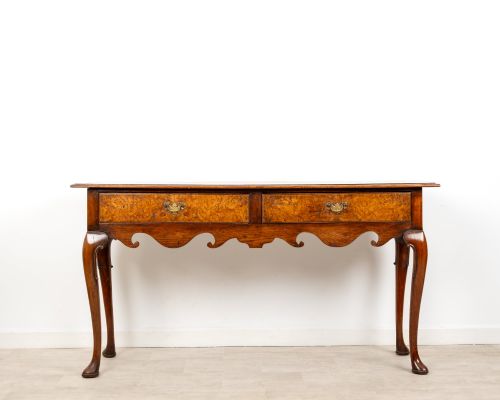
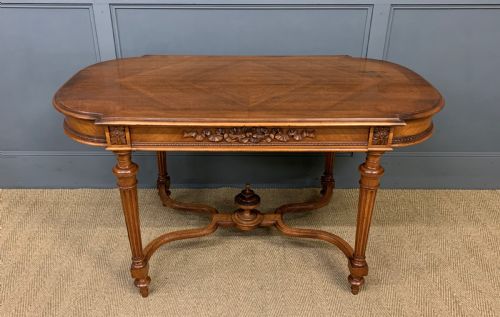
A walnut foyer table encompasses forms designed for entrance halls, corridors and central reception spaces, appearing most frequently as console tables, side tables and centre tables. These pieces serve practical functions for display and placement while establishing a distinct period character in a hallway.
The selection spans numerous eras and aesthetic movements, taking shape in Victorian, Art Deco, Queen Anne Revival and Edwardian styles. Makers utilised diverse formats, ranging from freestanding pedestal bases and serpentine shapes to demilune configurations suited to narrow spaces.
Factors of quality
Quality rests in the selection of the timber veneer, where dense, highly figured burr walnut or intricate marquetry display superior craftsmanship. The precision of the inlay work and the depth of the hand-carved details further distinguish finer examples.
Proportion and structural integrity define the architectural success of each piece, from the stability of a pedestal base to the flush fitting of a marble top. Maker attribution to established firms also elevates the standing of a table.
Some Victorian tables include hidden compartments beneath the top, originally designed for calling cards left by visiting guests.
Hille·Holmes Baldock·Maple and Co
The Walnut Foyer Table Glossary
- Burr walnut
- Timber taken from the growth growths or burls of a walnut tree, producing swirling, highly decorative grain patterns. This material was favoured for high-status cabinet work.
- Console table
- A table designed to stand against a wall, frequently secured with brackets or supported by front legs. These pieces suit entrance halls and narrow corridors.
- Centre table
- A freestanding table intended to occupy the middle of a room rather than sit against a wall. Such tables often feature finished detail on all sides.
- Marquetry inlay
- Decorative patterns formed by fitting small pieces of veneer into a prepared wooden surface. Craftsmen used various tinted and textured woods to create pictorial designs.
- Gueridon
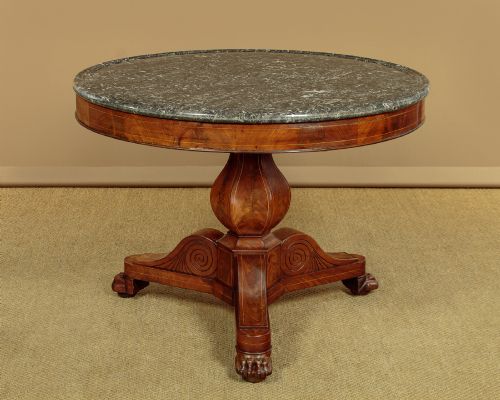
- A small French table supported by one or more columns or figures. These circular tables frequently feature marble tops and decorative wood framing.
Walnut Foyer Table: Frequently Asked Questions
Where should I place a walnut foyer table?
These tables fit naturally against entrance hall walls or in central reception areas where visitors first enter the home. Their surfaces accommodate decorative items like lamps or card trays.
Freestanding centre versions work well in larger vestibules if space permits clear circulation around the perimeter.
How do I care for burr walnut veneer?
Burr walnut requires protection from direct sunlight and excessive heat fluctuations to prevent the delicate veneer from drying out or splitting. Routine dusting with a soft, dry cloth preserves the polished surface.
Occasional application of appropriate wax polish maintains the moisture and lustre of the timber grain.
What is the difference between a console and a side table?
Console tables traditionally stood against a wall, sometimes requiring wall fixings for stability due to their narrow footprints. They often served decorative roles in formal halls.
Side tables generally feature four independent legs and offer greater versatility for placement throughout domestic interiors.
How do I identify an Art Deco walnut table?
Art Deco pieces display clean geometric lines, streamlined silhouettes and smooth, polished burr walnut surfaces without excessive carving. They frequently date from the 1920s and 1930s.
These designs prioritise the natural beauty of the wood grain over applied ornamentation.