

Inlaid Loo Table
When you search for an inlaid loo table, you enter a world of mid-nineteenth-century walnut and marquetry designed for evening card games and parlour gatherings.
Inlaid Loo Table
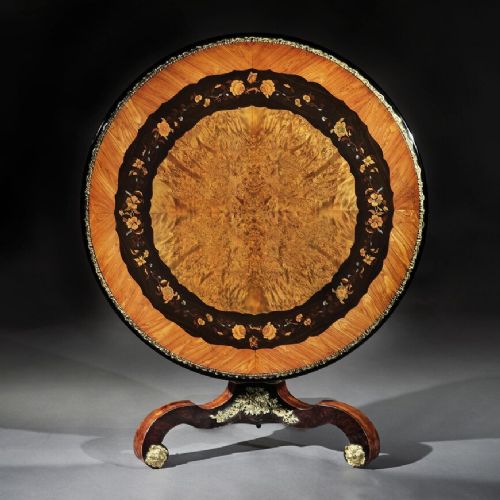
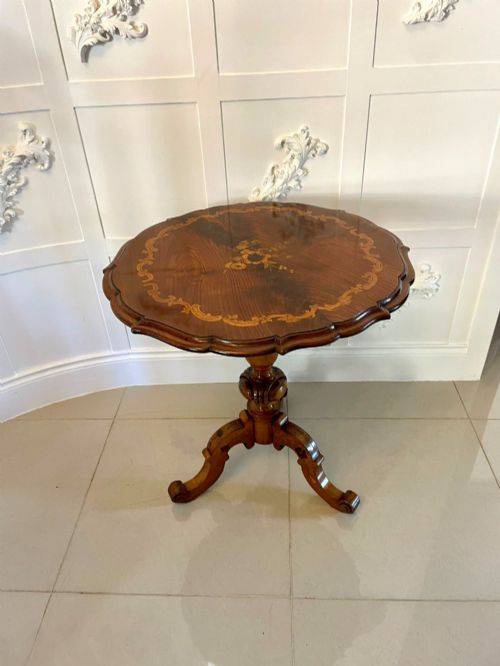
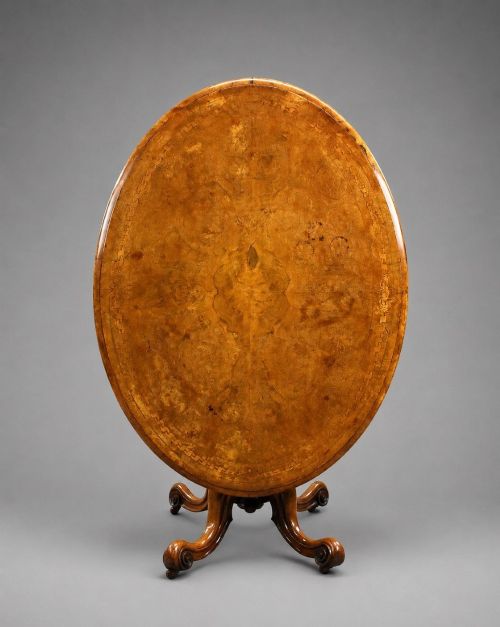
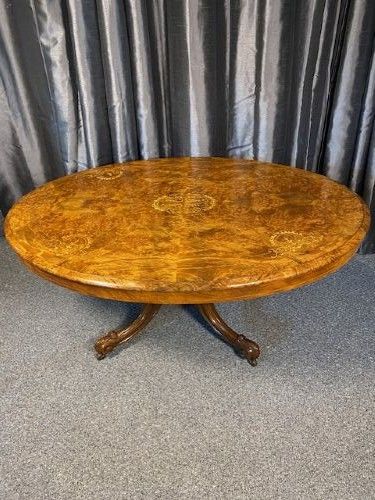
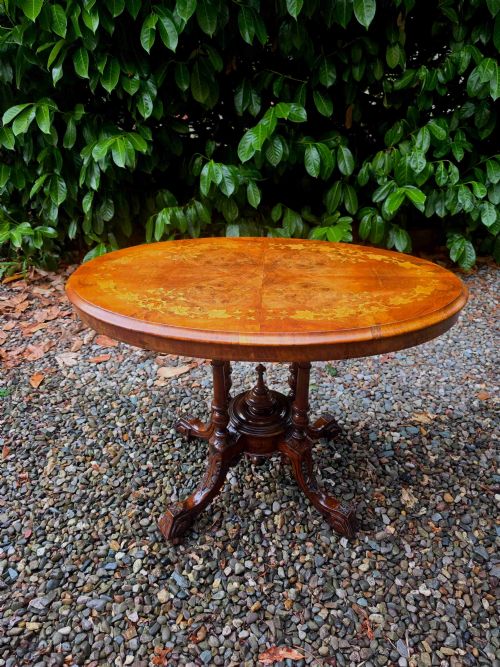
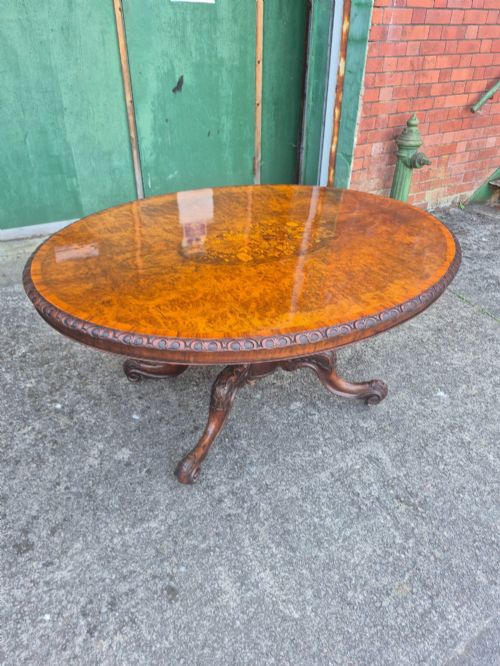
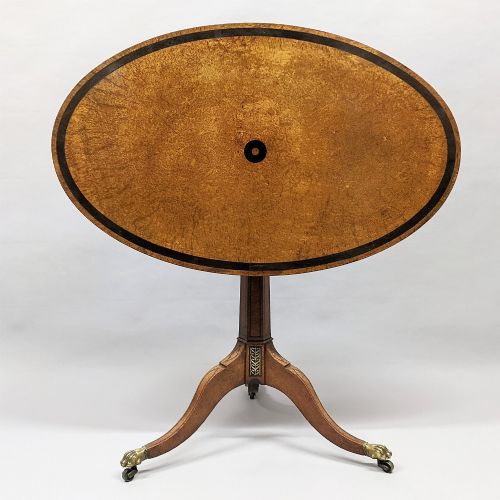
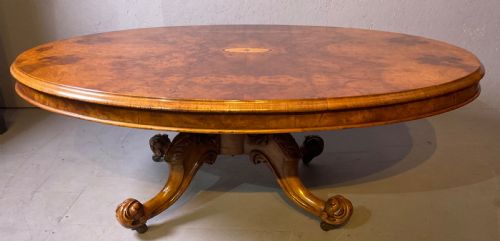
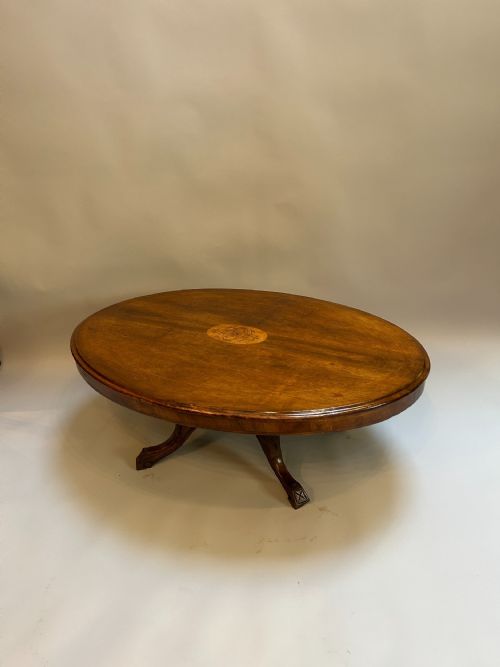
An inlaid loo table is primarily a Victorian creation, heavily represented in the evidence by oval burr walnut examples dating from the 1850s to the 1880s. These pieces typically feature a tilt-top or snap-top mechanism mounted on a central pillar with a multi-footed or quadruped base.
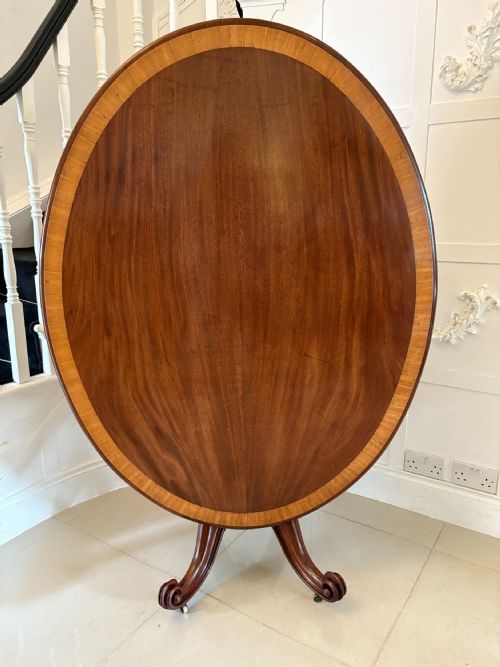
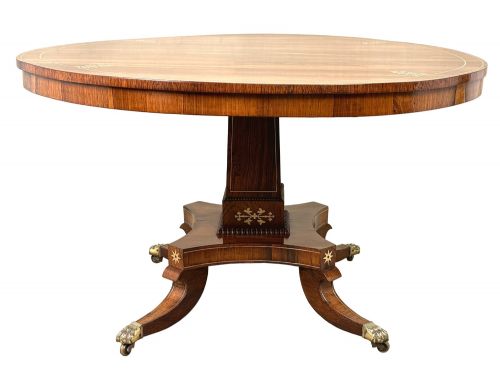
While the core of the selection comprises Victorian walnut and marquetry pieces, the wider category extends to Regency rosewood tables with brass inlay and occasional mahogany breakfast tables. The overarching form serves multiple functions as a centre table, occasional table, or dining surface.
How they were made
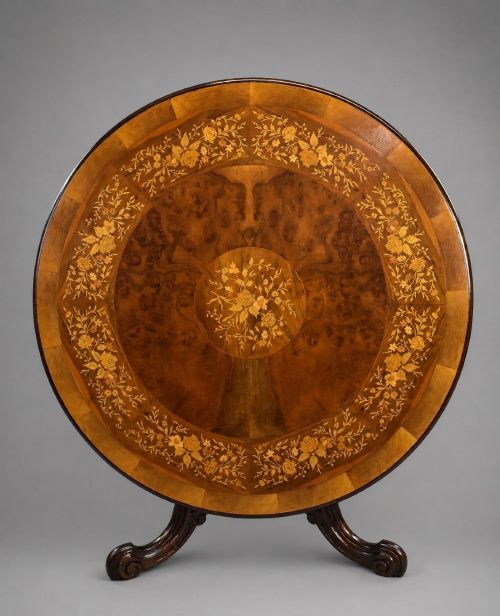
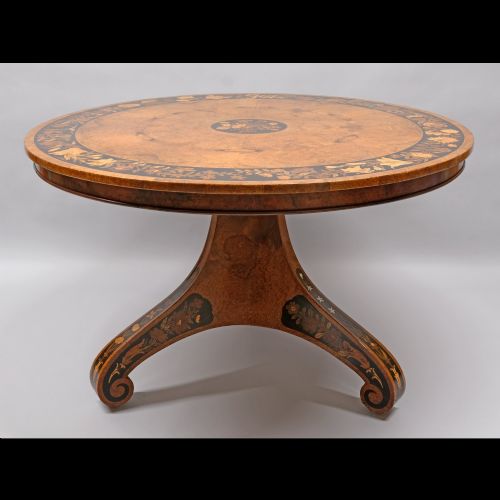
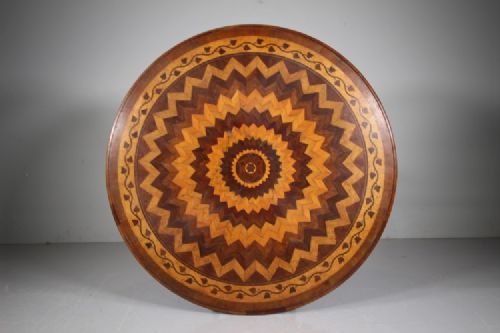
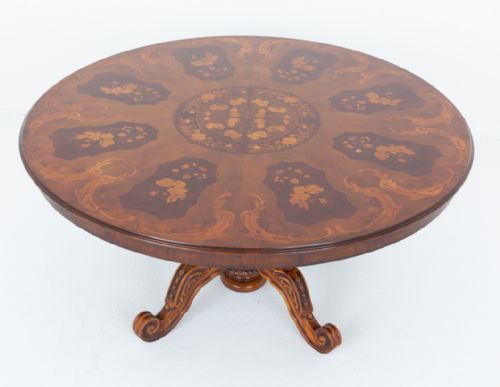
Cabinet makers utilised rich timbers like burr walnut, rosewood, amboyna, and pollard oak, often applying veneers over solid secondary woods to create highly figured surfaces. These surfaces received intricate decorative work through wood inlay, boxwood details, and elaborate marquetry floral or geometric motifs.
Structural engineering focused on the tilt-top mechanism, allowing the large oval tops to pivot upright for storage against a wall when not in use. Heavy pillar supports and carved or freestanding bases provided stability for the substantial timber tops.
Some Victorian tables secretly wanted to be walls, spending half their lives tipped vertically to save space.
What varies in quality
The sophistication of the marquetry and the choice of timber set finer pieces apart from standard production, with dense burr walnut and multi-coloured wood inlay commanding higher regard. Maker attribution, such as pieces associated with Edward Holmes Baldock or Gillows, introduces significant distinction.
Proportion and the execution of the tilt-top mechanism influence the overall standing of an item. Superior examples balance heavy oval tops securely on sturdy pillar bases without wobble or misaligned pivoting hardware.
Edward Holmes Baldock·Gillows
The Inlaid Loo Table Glossary
- Loo table
- A large nineteenth-century parlour table designed for the card game loo, featuring an oval top that frequently tilts vertically. These tables doubled as general centre or breakfast tables in larger homes.
- Marquetry
- The art of applying decorative pieces of veneer to a structure to form intricate pictorial or geometric designs. Craftsmen used various tinted woods and boxwood to achieve contrasting tones.
- Tilt top
- A pivoting table top mechanism mounted on a central pillar that lets the surface lock flat for use or tilt upright for storage. This engineering was especially common on nineteenth-century breakfast and loo tables.
- Burr walnut
- A highly prized timber harvested from the wart-like growths on walnut trees, yielding swirling grain patterns full of movement. It served as the primary decorative veneer for high-end Victorian tables.
- Killarney ware
- Irish decorative woodwork typically featuring distinctive local timbers and intricate marquetry motifs associated with the region. Pieces often display intricate inlaid shamrocks or local architectural scenes.
Inlaid Loo Table: Frequently Asked Questions
Why do these tables tilt?
The tilting mechanism allowed the large oval tops to be stored flat against a parlour wall when the room needed to be cleared for dancing or other evening activities.
This practical design feature also made it easier to move the heavy furniture between rooms in grand nineteenth-century houses.
What is loo?
Loo was a popular eighteenth and nineteenth-century card game played around these very tables, often involving stakes and multiple players.
The tables were specifically dimensioned to accommodate the players comfortably during these social evening gatherings.
How do I date a walnut table?
Dating relies on combining the timber choice, such as burr walnut, with the structural form of the base, pillar, and edge banding. Most examples on record cluster tightly within the Victorian period from 1850 to 1880.
Cabinet-making techniques and the complexity of the marquetry inlay also offer strong clues to the exact decade of manufacture.
Can I use one as a dining table?
Many six-seater and large oval examples served historical domestic functions that easily translate to modern dining or kitchen use. Their sturdy pedestal bases provide ample leg room for guests seated around the perimeter.
Care must be taken with the polished wood surfaces, requiring protective mats during everyday meals to preserve the delicate marquetry.