
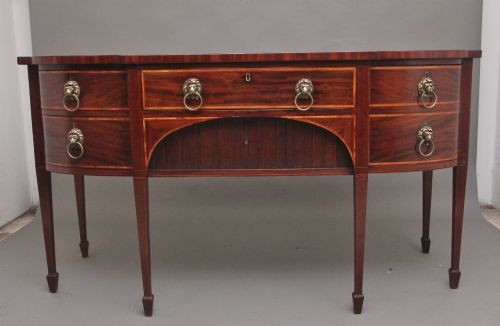
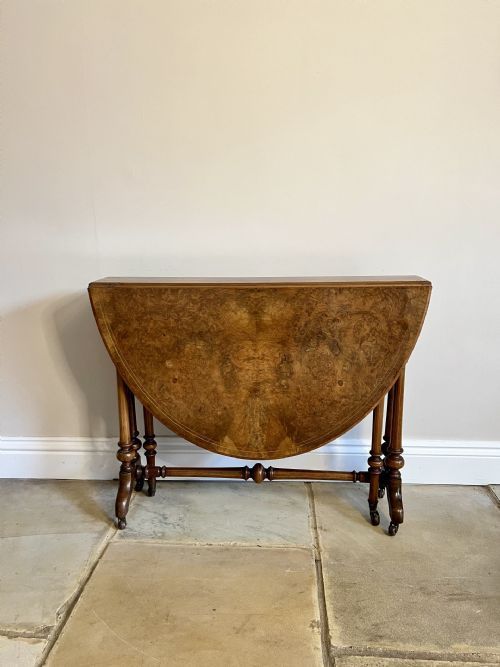
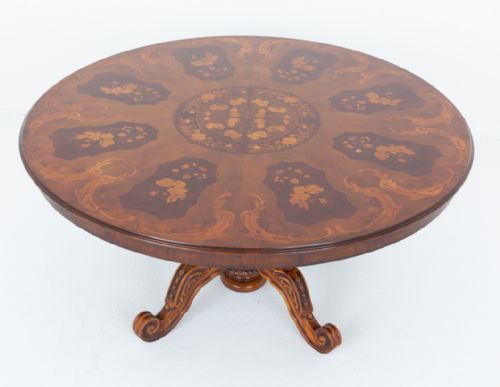


Victorian Inlaid Dining Table
A victorian inlaid dining table brings rich timber figure and delicate marquetry together for formal dining or grand entertaining.
Victorian Inlaid Dining Table
A victorian inlaid dining table combines functional scale with decorative cabinetmaking from the nineteenth century. These pieces serve as the focal point of a room, merging large timber surfaces with detailed ornamentation.
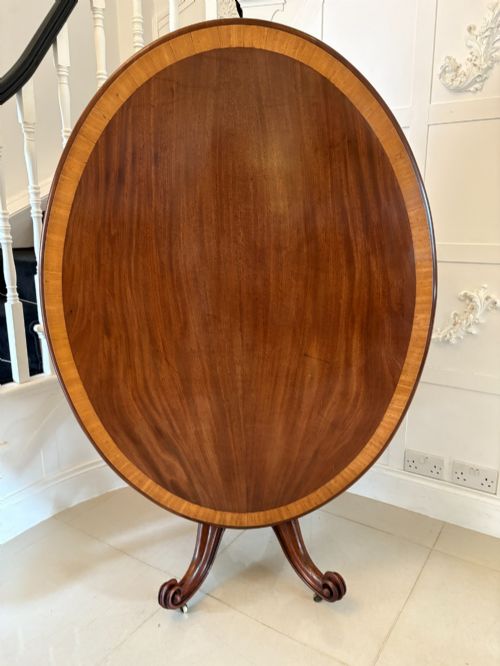
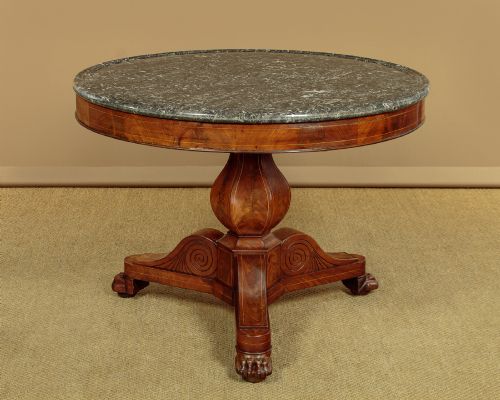
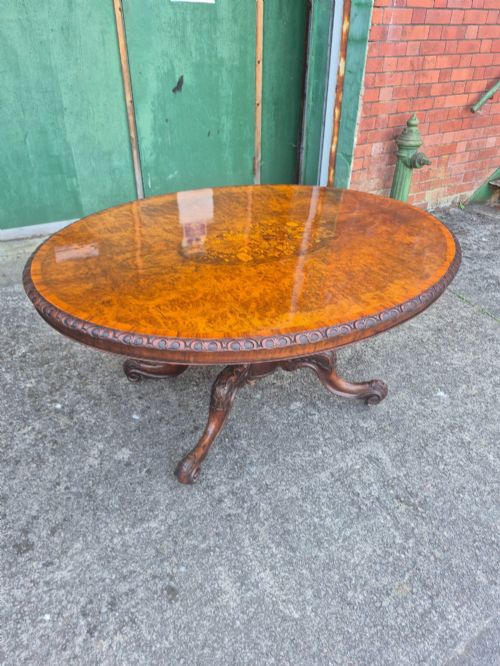
Most examples found here date from the mid to late nineteenth century, appearing as extended dining surfaces, oval tilt-top breakfast tables, or large round centre pieces that double as dining options.
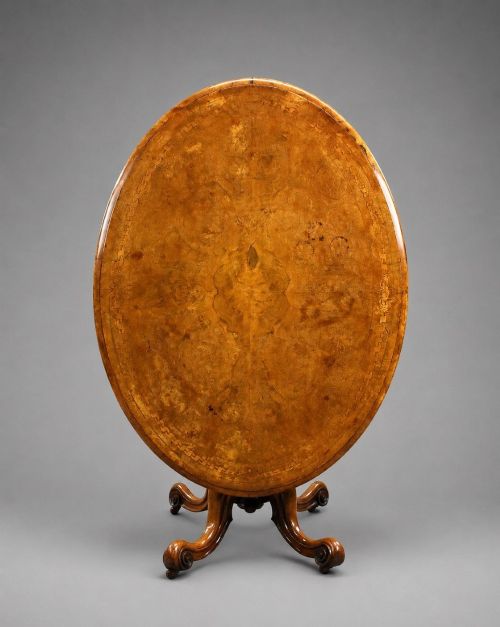
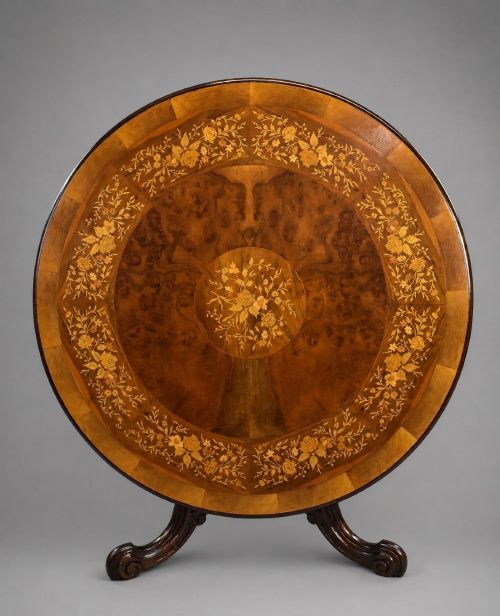
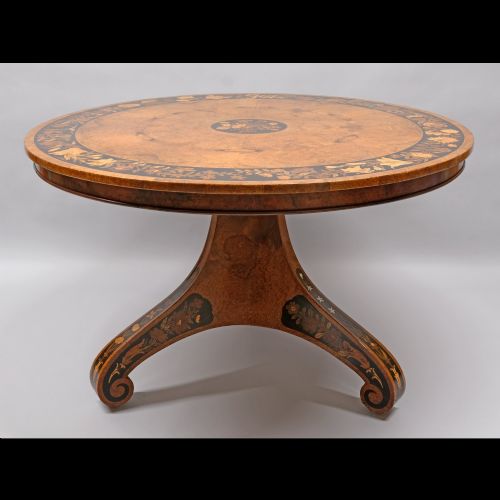
Makers of this era utilised substantial timbers like burr walnut and mahogany, decorating the tops with intricate marquetry and boxwood details to suit formal drawing rooms and dining spaces.
Materials and construction methods
Makers constructed these tables using a solid timber frame beneath selected veneers, frequently choosing burr walnut, figured mahogany, and rosewood for their distinctive grain patterns.
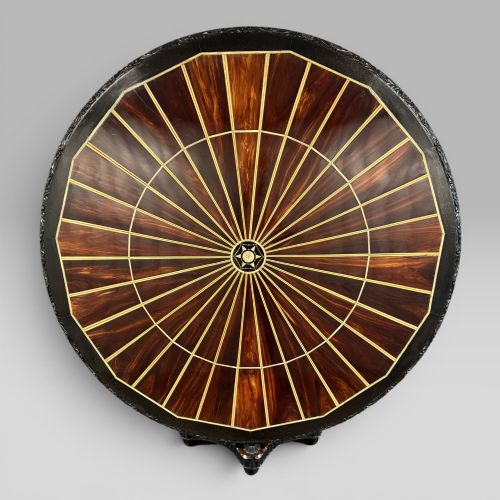
Marquetry and boxwood inlay form intricate geometric or floral motifs across the table tops, contrasting light and dark woods to create depth and visual movement.
Pedestal bases, tilt mechanisms, and multi-part extending frames required sophisticated carpentry, allowing large tabletops to remain stable and balanced.
Listings feature nineteen-century walnut, burr walnut, mahogany, and rosewood, incorporating marquetry and boxwood inlay alongside brass hardware.
Elements that define superior examples
The quality of a victorian inlaid dining table rests on the depth of the timber figuring and the precision of the marquetry. Superior pieces display crisp, tightly fitted inlay work without gaps or heavy modern repairs.
Construction integrity dictates daily usability, particularly in extending mechanisms or tilt-top pivots which should operate smoothly and hold the weight of the timber securely without sagging.
Original surface finishes, such as hand-applied polish, preserve the warm tones of the walnut or mahogany, whereas heavy refinishing can obscure the subtle variations in the grain.
Holmes Baldock·Holland and Sons·Gillows·Robson and Sons·John Kendal
The Victorian Inlaid Dining Table Glossary
- Marquetry
- Decorative veneer work arranged in pictorial or geometric patterns on the surface of the timber. This technique utilises contrasting woods to create detailed motifs.
- Burr Walnut
- Timber taken from a growth on the walnut tree, prized for its swirling, highly figured grain patterns. Cabinetmakers used burr veneers on prominent tabletops to create visual impact.
- Loo Table
- A round or oval nineteenth-century table originally used for the card game loo. These pieces frequently feature tilt-top mechanisms for convenient storage.
- Crossbanding
- A border of veneer laid around the edge of a tabletop with the grain running perpendicular to the centre panel. This technique frames the primary timber and protects the edges.
- Tilt Top
- A hinged tabletop mechanism that allows the surface to rotate vertically when not in use. This design saved space in formal rooms during the nineteenth century.
Victorian Inlaid Dining Table: Frequently Asked Questions
How do I care for a walnut tabletop?
Keep the timber away from direct heat sources and strong sunlight to prevent the wood from drying out or fading over time. Apply a microcrystalline wax occasionally to protect the polished surface from moisture.
Avoid using modern chemical sprays or silicone polishes, which can degrade the historic finish. A soft, dry cloth is best for routine dusting.
Can I use these tables every day?
Many of these pieces were built for active family use and remain sturdy enough for regular dining. Protecting the surface with felt pads or table mats prevents heat and moisture damage.
Take care when operating extending mechanisms or tilt-top pivots to avoid straining the original nineteenth-century hardware. Gentle handling preserves the structural integrity.
How do I identify a tilt-top table?
Look underneath the central pillar for a brass catch or wooden locking mechanism that releases the tabletop. When unlocked, the surface tilts ninety degrees to stand vertically.
This clever nineteenth-century design allowed large tables to be pushed against walls when dining rooms needed to be cleared for other activities.
What is the difference between a centre table and a dining table?
Centre tables were designed to stand free in the middle of a room, often featuring decorative work all around and sometimes built with tilt mechanisms. Dining tables prioritized length and stability, often incorporating extending leaves.
Many larger nineteenth-century examples bridged both categories, serving as grand display pieces that could accommodate dinner guests when needed.