


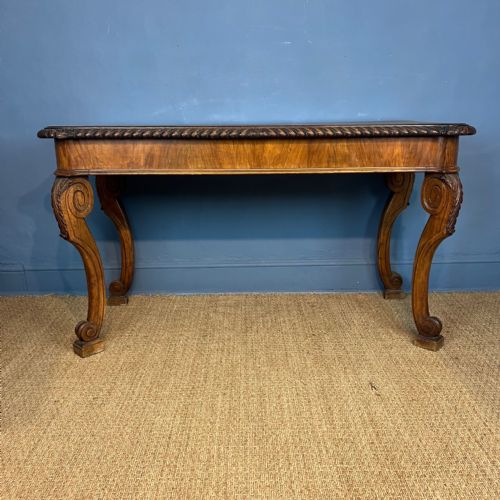


Walnut Entryway Table
These walnut entryway table pieces bring warmth and architectural character to a hallway, offering practical surface space rooted in centuries of cabinet-making history.

Walnut Entryway Table
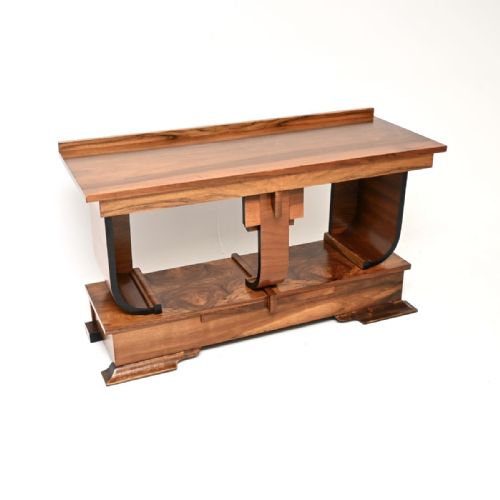
A walnut entryway table functions as a welcoming focal point in a hallway or landing, traditionally taking the form of a console or centre table. The selection here leans heavily towards continental European craftsmanship, particularly French and Italian examples dating from the eighteenth to the early twentieth century.
Buyers will encounter various structural configurations designed for narrow spaces, including wall-anchored console tables and demi-lune shapes. Centre tables and serving tables also appear, adapted from larger rooms to serve narrow hallway spaces.
The periods represented span from the eighteenth century through the Victorian era and into Art Deco design, showing how makers adapted these tables for grand foyers. French Empire, Rococo Revival, and Louis styles dominate the aesthetic range of the pieces currently available.
Materials and construction methods
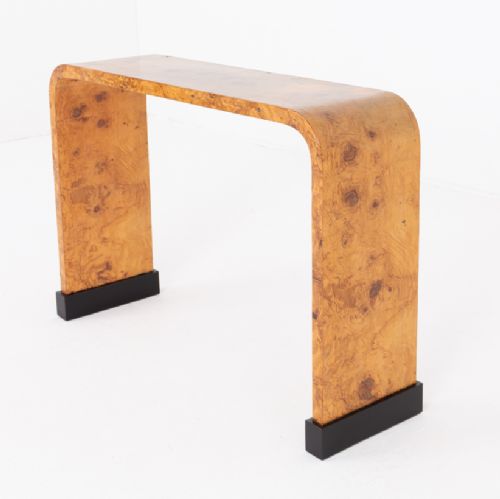
Makers utilised solid walnut and decorative veneers such as burr and figured walnut to create striking grain patterns across the top surfaces. Parcel gilt highlights and ebonised wood details frequently accent the primary timber to provide visual contrast.
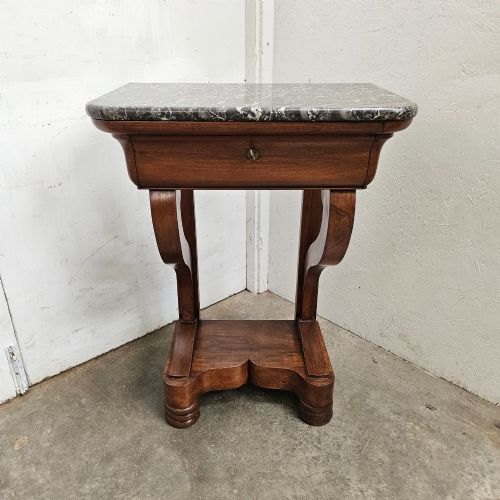
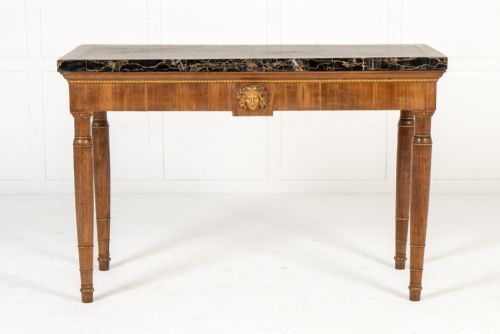
Many examples incorporate heavy marble tops, ranging from plain white slabs to specimen marble configurations requiring precise stone-cutting skills. Brass mounts and subtle marquetry work further distinguish the construction of these hallway furnishings.
Walnut Entryway Table Retail Price Guide 2026
Typical asking prices for walnut entryway table among the pieces listed under this phrase on Sellingantiques today, from the lower quarter to the upper quarter. They describe what is for sale here now, not the wider market.
Listings feature walnut entryway tables spanning the eighteenth century to the nineteen-thirties, incorporating materials like marble, parcel gilt, and ebonised wood.
Factors that separate the grades
Quality rests primarily on the selection of the timber and the depth of the grain, with highly figured burr walnut and carefully matched veneers commanding greater visual interest. The integration of structural elements, such as carved parcel gilt details or substantial marble slabs, dictates the overall refinement of the piece.
The integrity of the joinery and the preservation of the original surface finish determine the lasting value of the furniture. Tables that retain their original marble inserts and untreated timber patination demonstrate superior historical authenticity.
The Walnut Entryway Table Glossary
- Console table
- A table designed to stand against a wall, traditionally fixed with brackets or resting on front legs. These pieces suit narrow hallways where floor space is limited.
- Centre table
- A freestanding table intended to be viewed from all sides, often placed in the middle of a spacious foyer or reception room rather than against a wall.
- Burr walnut
- A prized timber harvested from a growth on the walnut tree, yielding swirling, complex grain patterns used for decorative veneer work on tabletops.
- Parcel gilt
- A decorative technique where selected carved areas of the wood are partially covered with gold leaf, highlighting specific ornamentation against the dark walnut.
- Demi-lune
- A half-moon shape characteristic of tables designed to sit flush against an entryway wall with a curved front edge.
- Specimen marble
- A tabletop composed of various coloured geometric or inlaid marble pieces arranged to create a decorative mosaic effect.
Walnut Entryway Table: Frequently Asked Questions
How do I style a walnut entryway table?
Pair the table with a matching mirror or a piece of artwork hung directly above to anchor the arrangement in the hallway. Keep the surface uncluttered with a single lamp or a small ceramic bowl for everyday items.
Ensure the scale of the table matches the proportions of your hallway without obstructing pathways. The natural warmth of the walnut pairs effectively with neutral walls and metallic accents.
Are these tables sturdy enough for daily use?
Most antique console tables were built to support substantial decorative objects and heavy marble slabs, making them structurally robust for normal hallway duties. Wall-anchored consoles rely on proper installation against the wall for absolute stability.
Freestanding centre tables offer reliable weight distribution through solid timber frames and sturdy leg construction. Avoid placing excessive dynamic loads on antique cantilevered designs.
How do I clean walnut and marble surfaces?
Dust the walnut timber regularly with a soft, dry cloth and apply a quality beeswax periodically to maintain the lustre of the grain. Avoid silicone-based sprays that can damage the historical finish of the wood over time.
Clean marble tops with a damp sponge and mild, pH-neutral soap, drying the surface immediately to prevent water spots. Acidic liquids like citrus juice or vinegar will etch marble and must be wiped away instantly.
How can I tell different historical periods apart?
Eighteenth-century examples often display hand-carved walnut details and robust proportions, while nineteenth-century pieces frequently adopt revival styles such as Rococo or French Empire. Art Deco tables from the nineteen-thirties feature streamlined geometric forms and highly figured veneers without historical revival ornamentation.
Examine the construction marks underneath the tabletop and the style of the legs to determine the era of production. Hardware such as brass mounts also provides a clear stylistic indicator of the manufacturing period.